Korean Kimbap Rolls
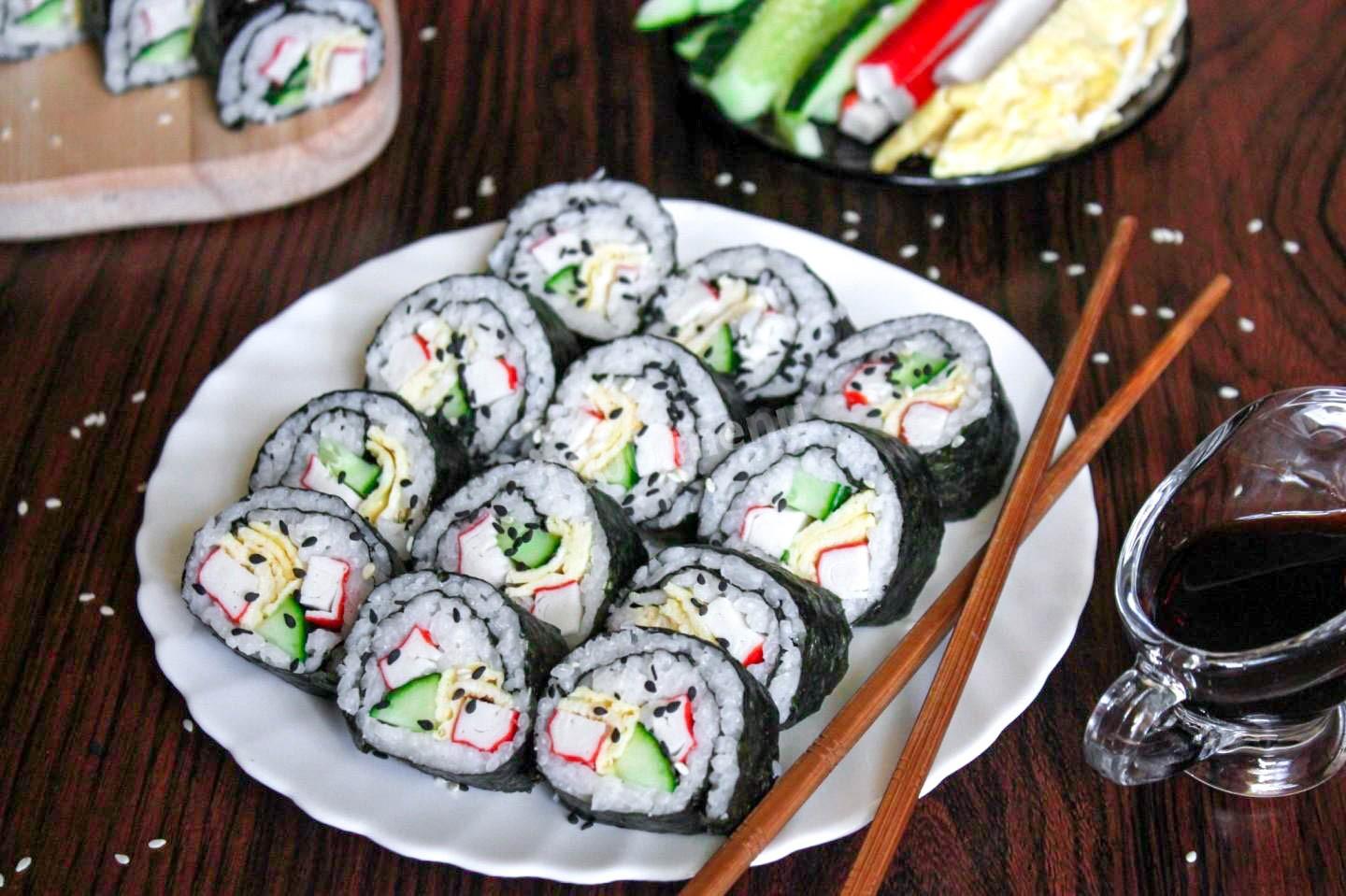
Original, savory, out of the ordinary, and really tasty! Kimbap is the Korean take on Japanese-style rolls. They're heartier, since the filling includes an omelet, and the rice is dressed with sesame oil instead of the usual vinegar-sugar-salt mix.

Cooking method
-
Step 1:
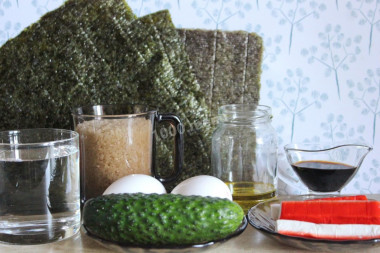
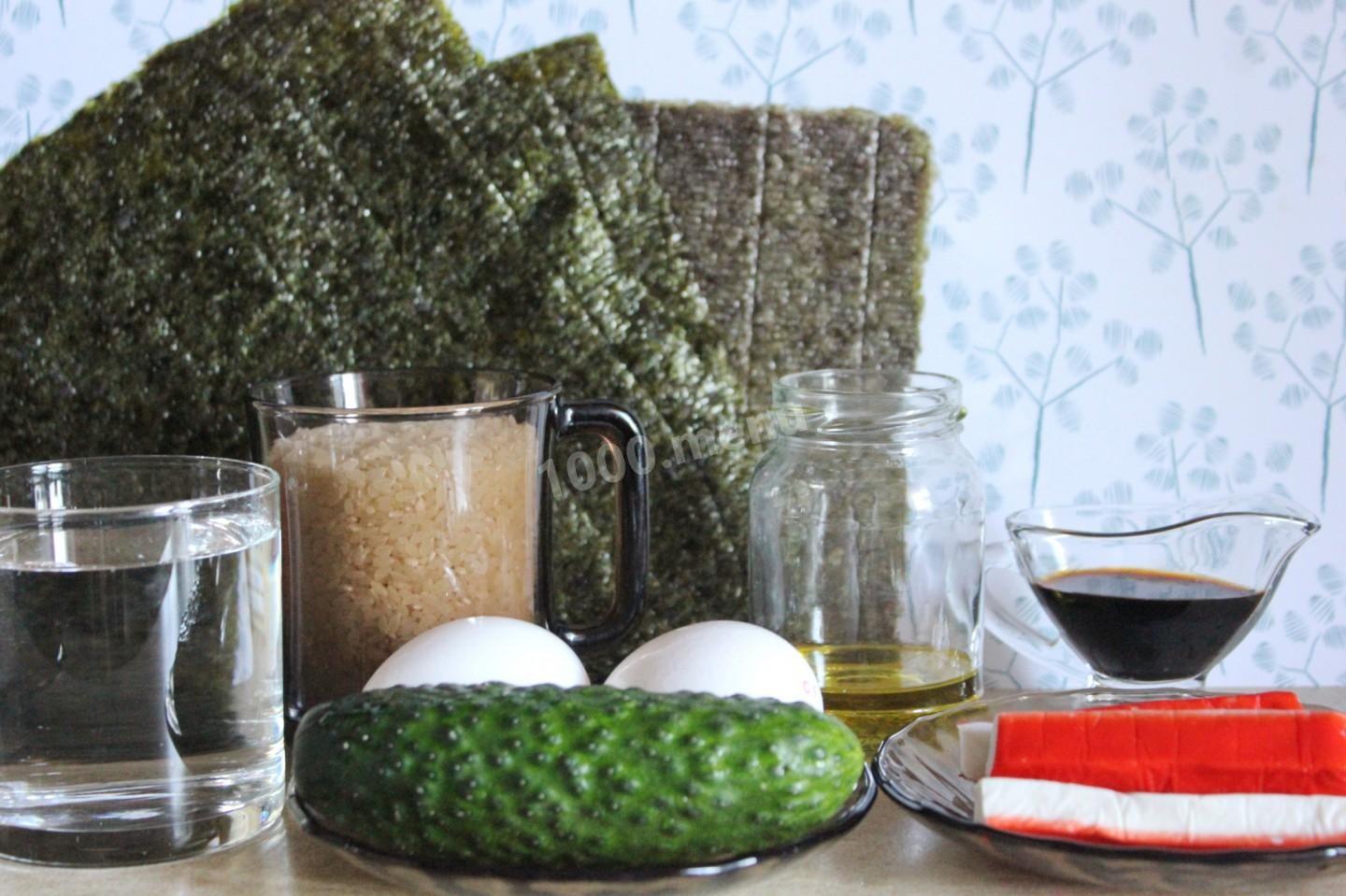
How do you make Korean kimbap? Gather your ingredients. Despite the exotic name, the ingredients couldn't be simpler. Use sushi rice if you have it; if not, plain short-grain rice works just fine.
-
Step 2:
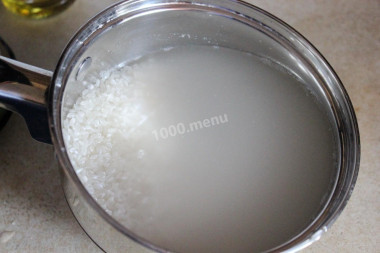
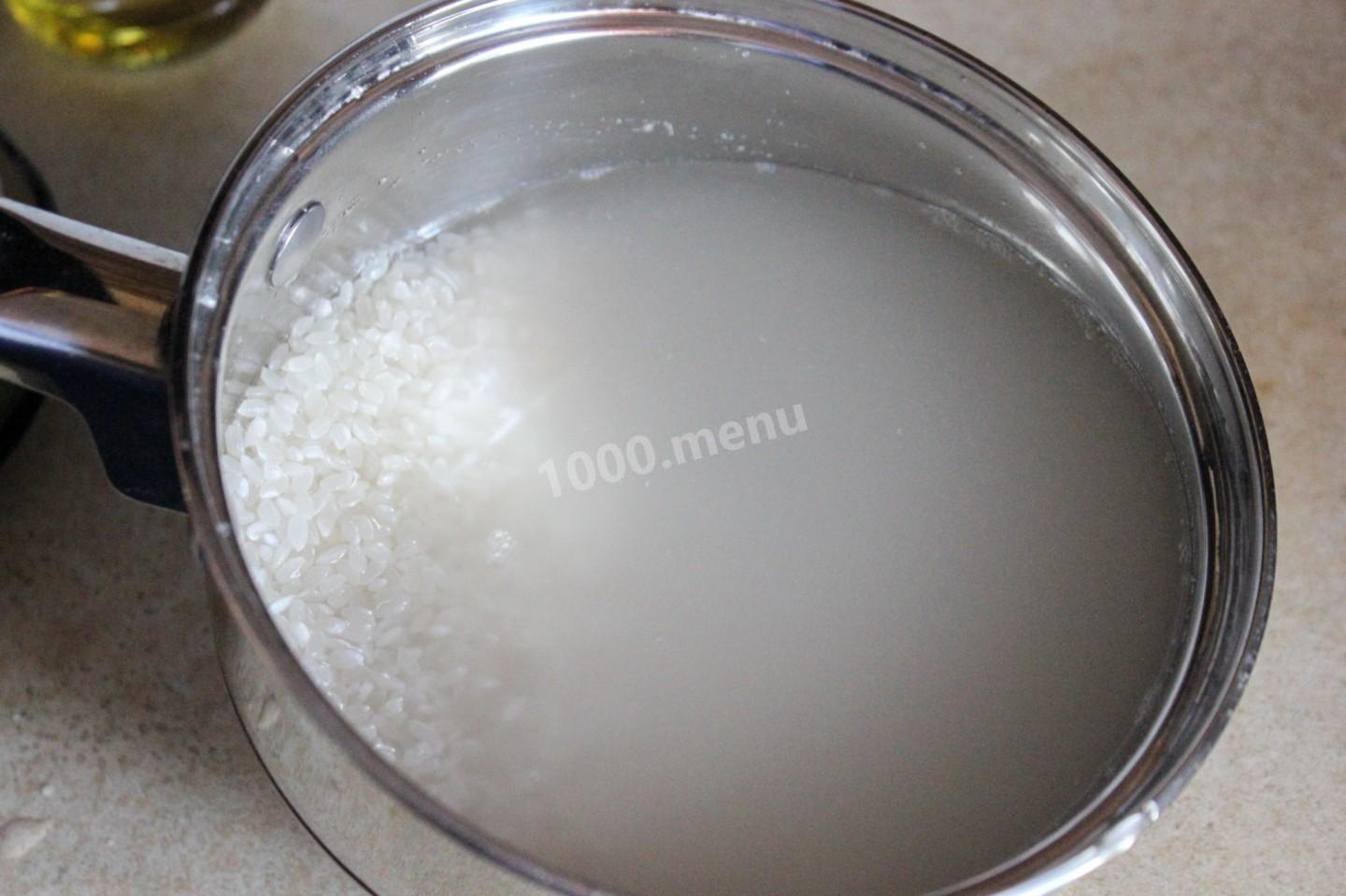
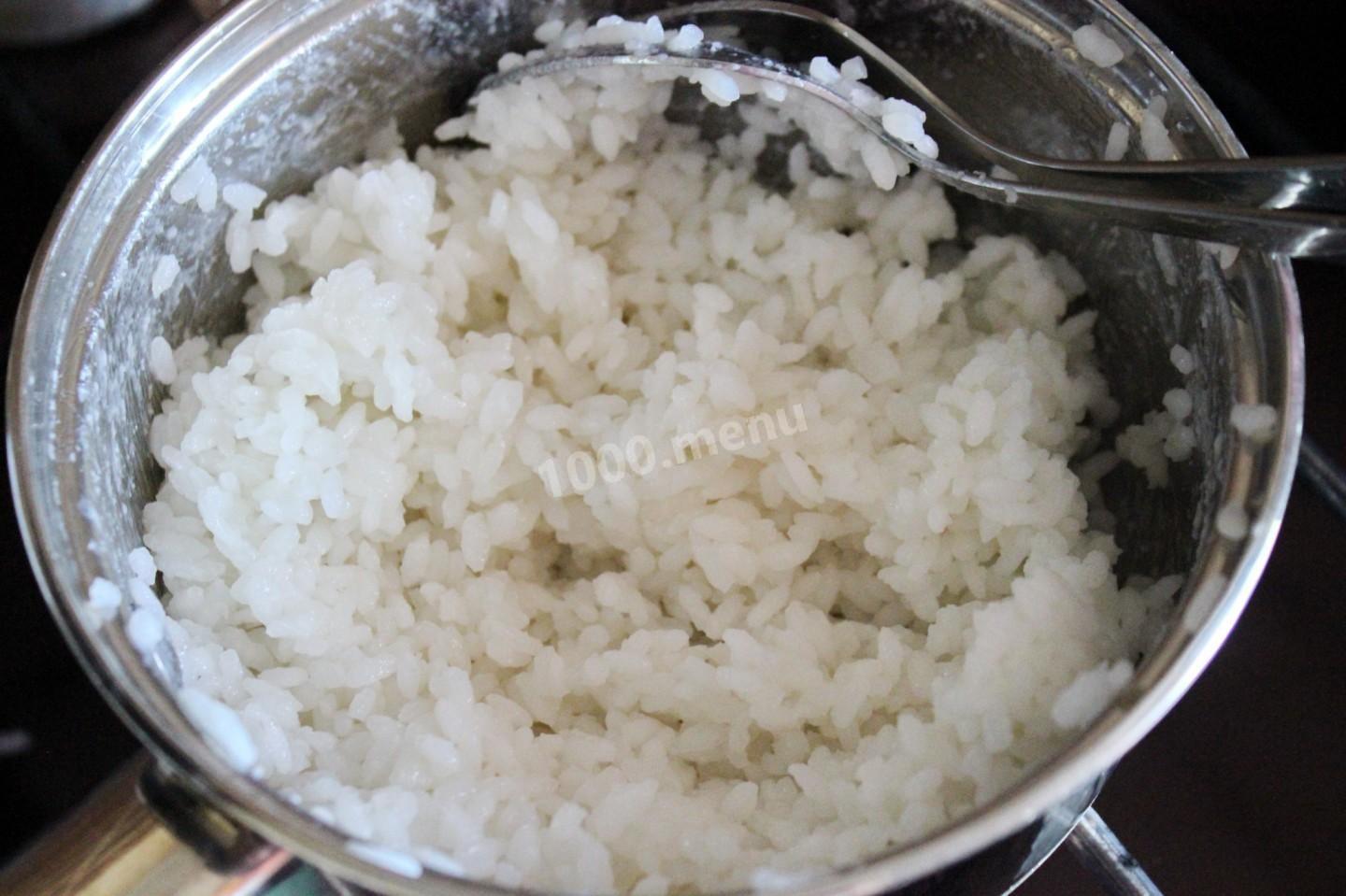
Cook the rice for the rolls. How do you cook it? First, rinse it well in several changes of water until the water runs clear.
-
Step 3:
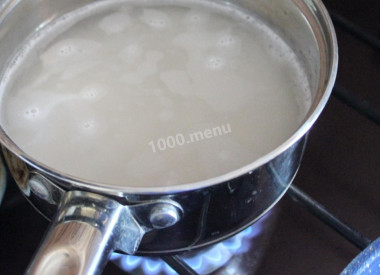
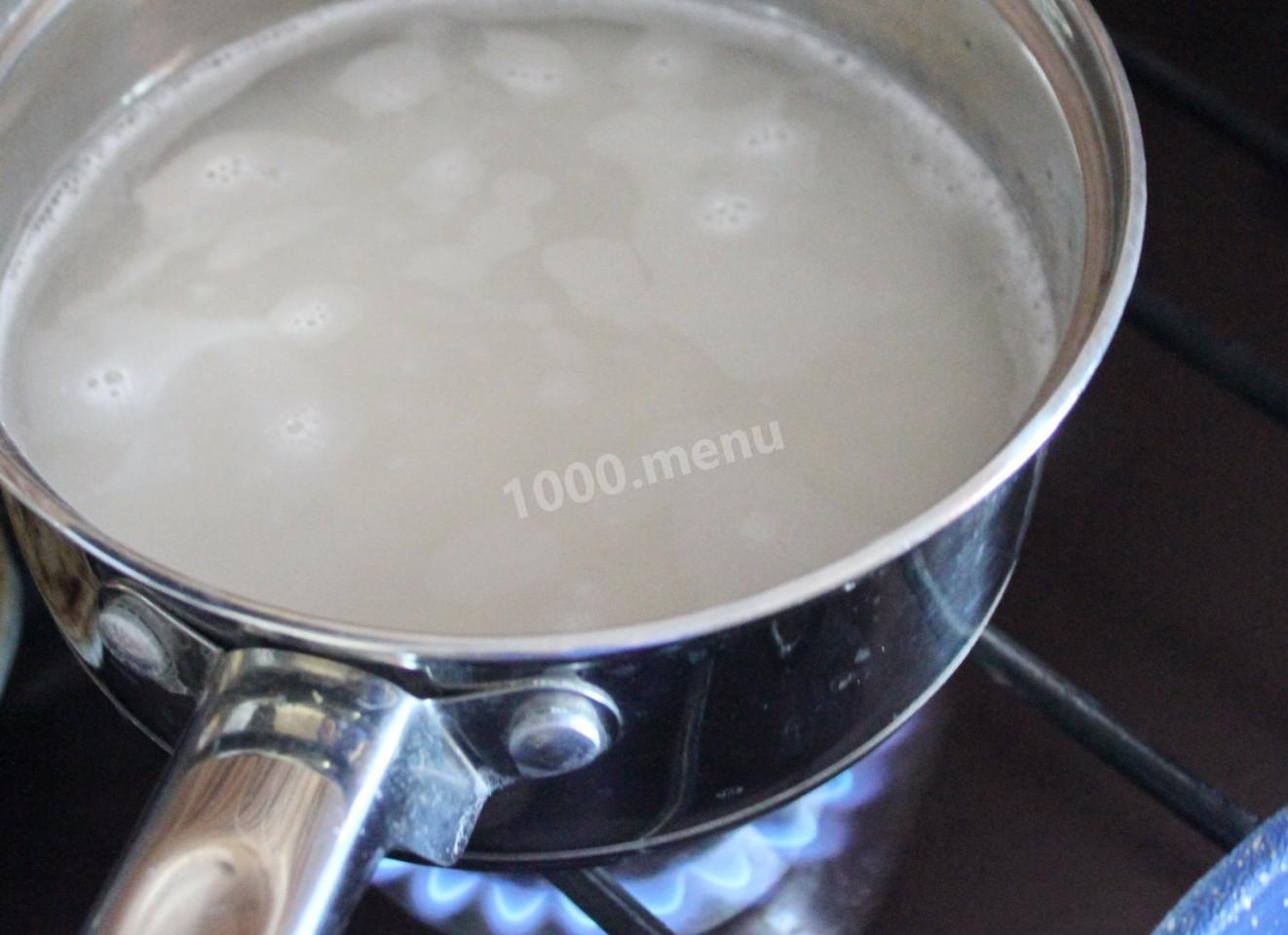
Then cook the rice over low heat with water in a 1:2 ratio — two cups of water for every cup of rice. It's done when all the liquid has been absorbed, which usually takes 15–20 minutes.
-
Step 4:
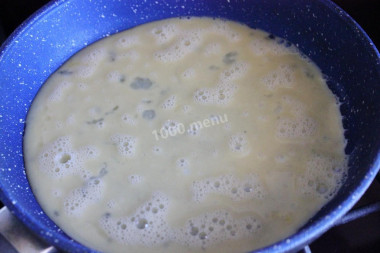
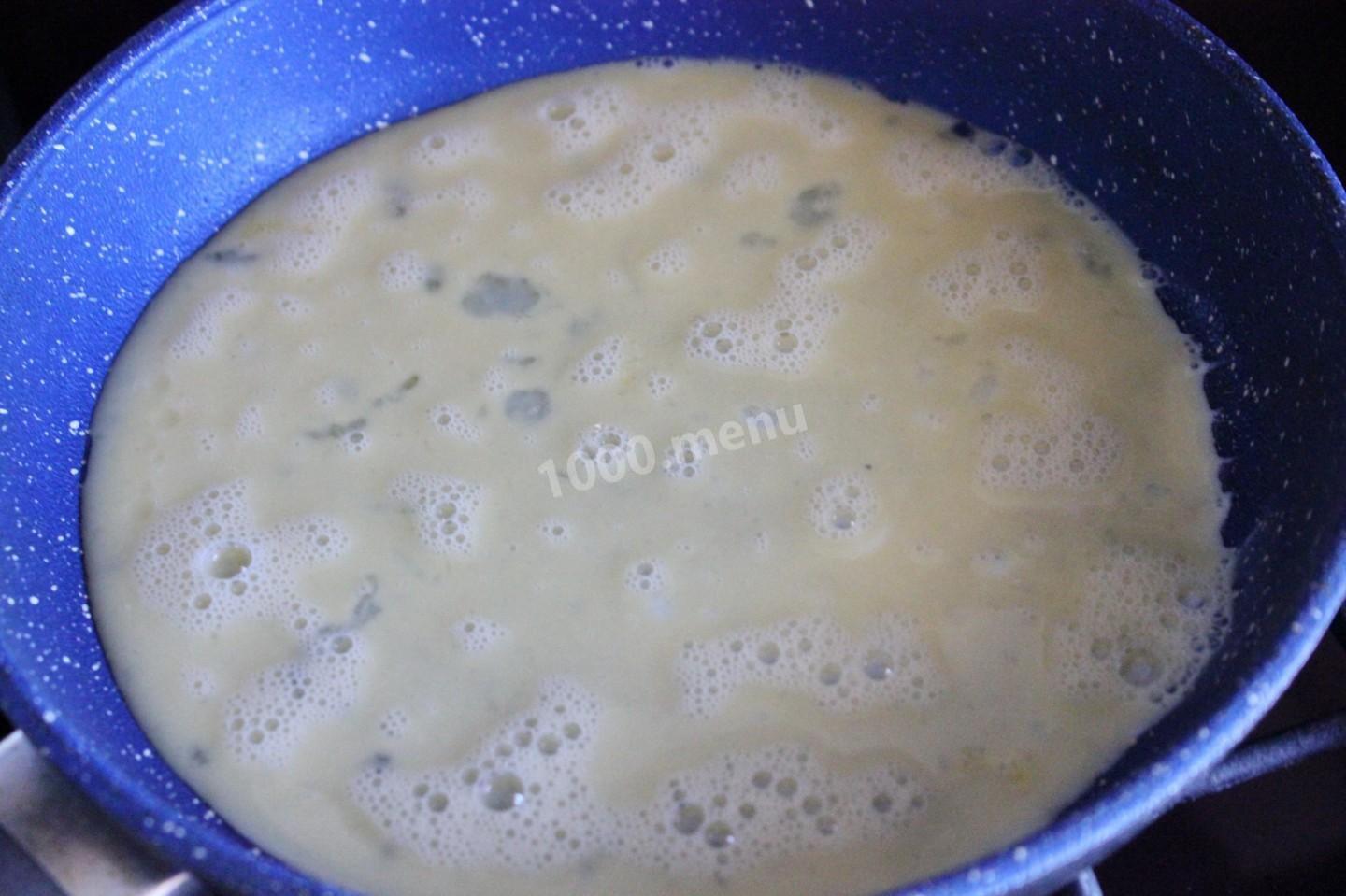
While the rice cooks, make the omelet. How do you make it? Crack the eggs into a deep bowl, add a splash of water and salt to taste. Beat well with a fork or whisk and pour into a preheated skillet with a little vegetable oil. Cook the omelet over low heat, covered.
-
Step 5:
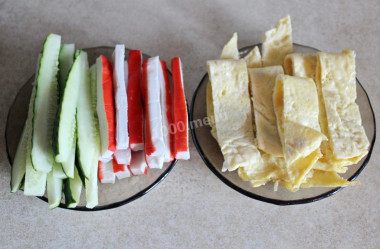
While the omelet cooks, cut the crab sticks in half lengthwise and cut the cucumber into strips. Cut the finished omelet into strips about ¾ inch (2 cm) wide.
-
Step 6:
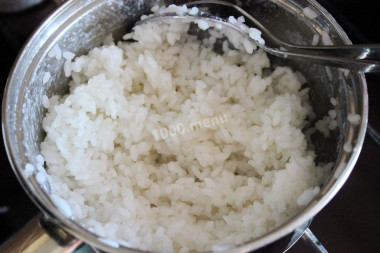
When the rice is cooked and has cooled a bit, dress it with the sesame oil and mix thoroughly. Let it cool to about 100°F (38–40°C).
-
Step 7:
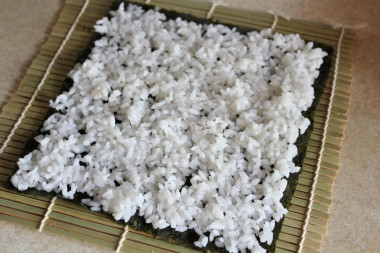
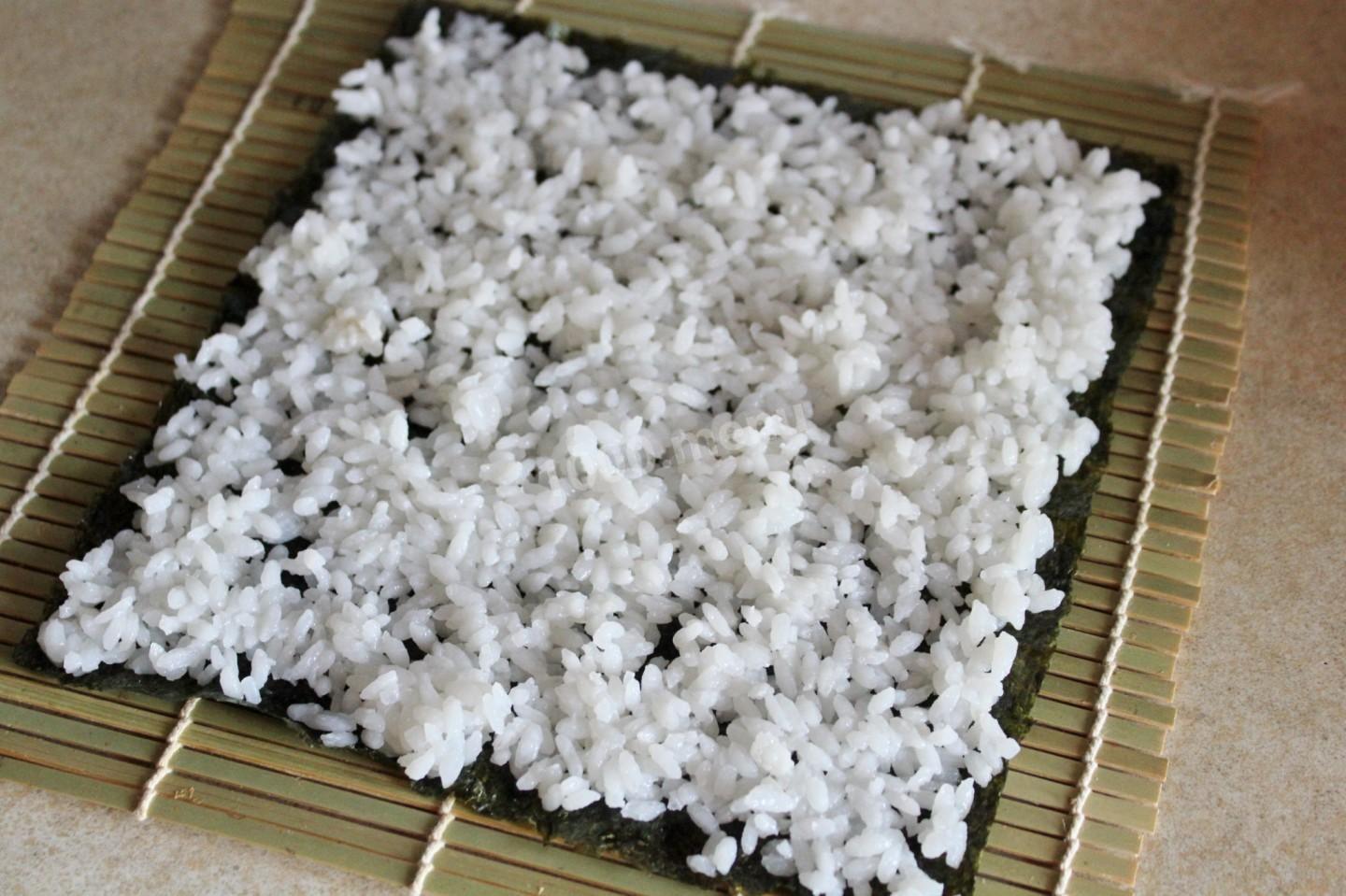
Once the rice has cooled, set a nori sheet shiny-side down on a bamboo mat, then spread the rice in a thin, even layer over the whole sheet. One cup of dry rice should make 4 rolls.
-
Step 8:
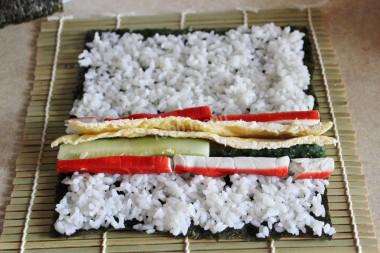
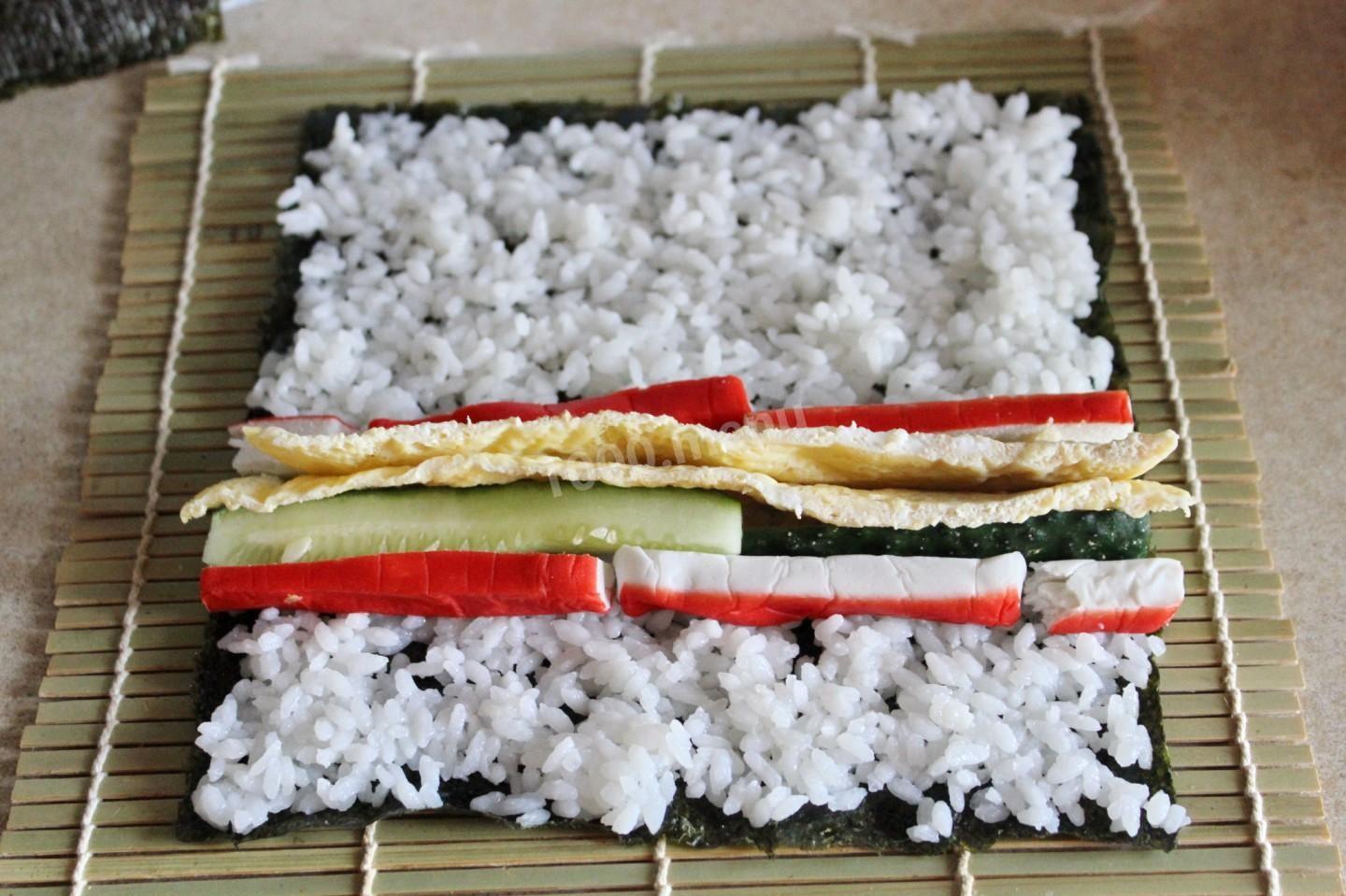
Arrange the filling evenly near the bottom edge.
-
Step 9:
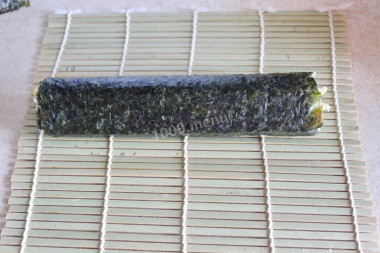
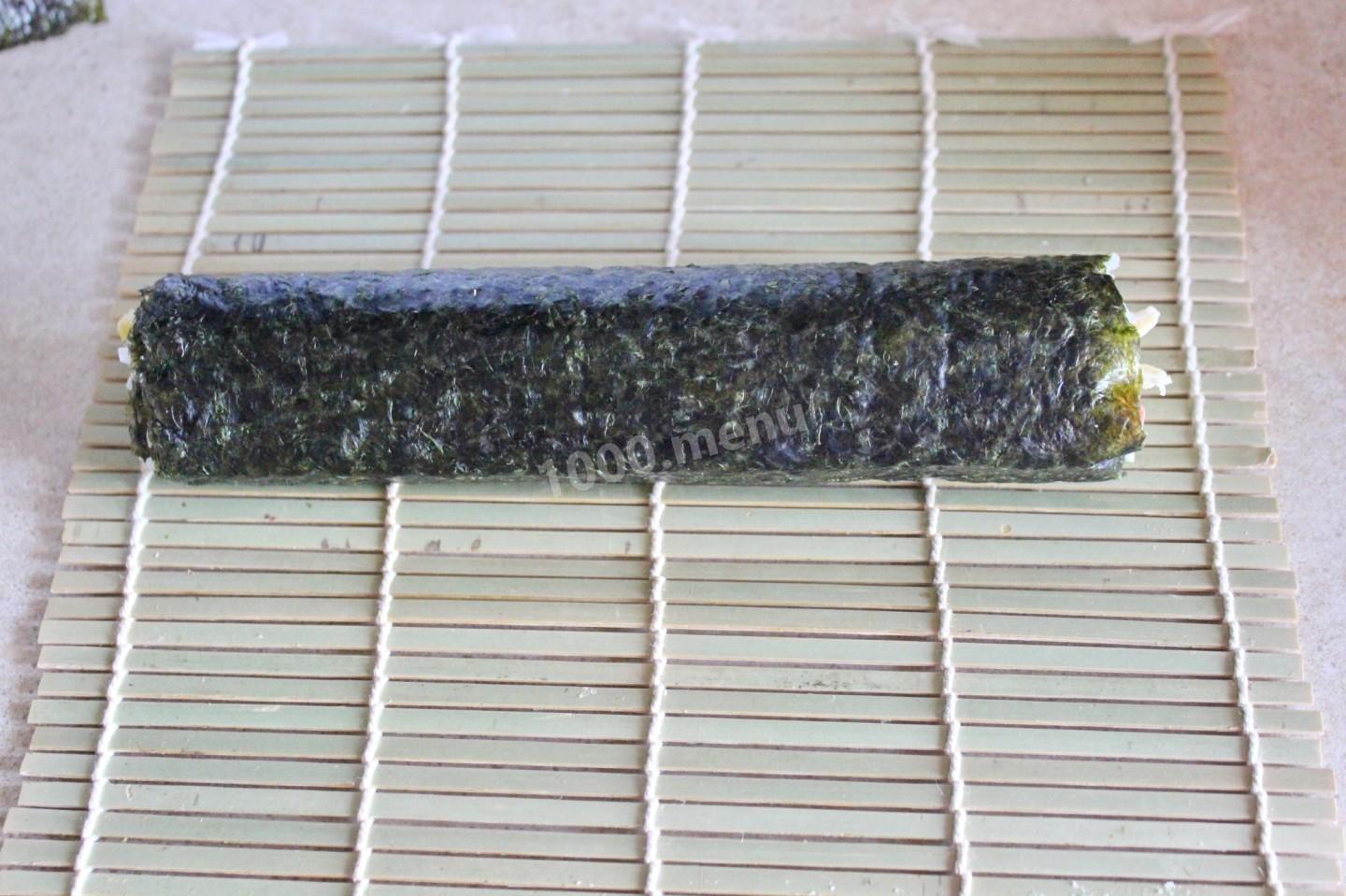
Starting from the bottom edge, carefully roll it up, pressing gently with the bamboo mat as you go to keep it tight. Then slice the roll into individual pieces — I got 8. Serve with soy sauce. Enjoy!
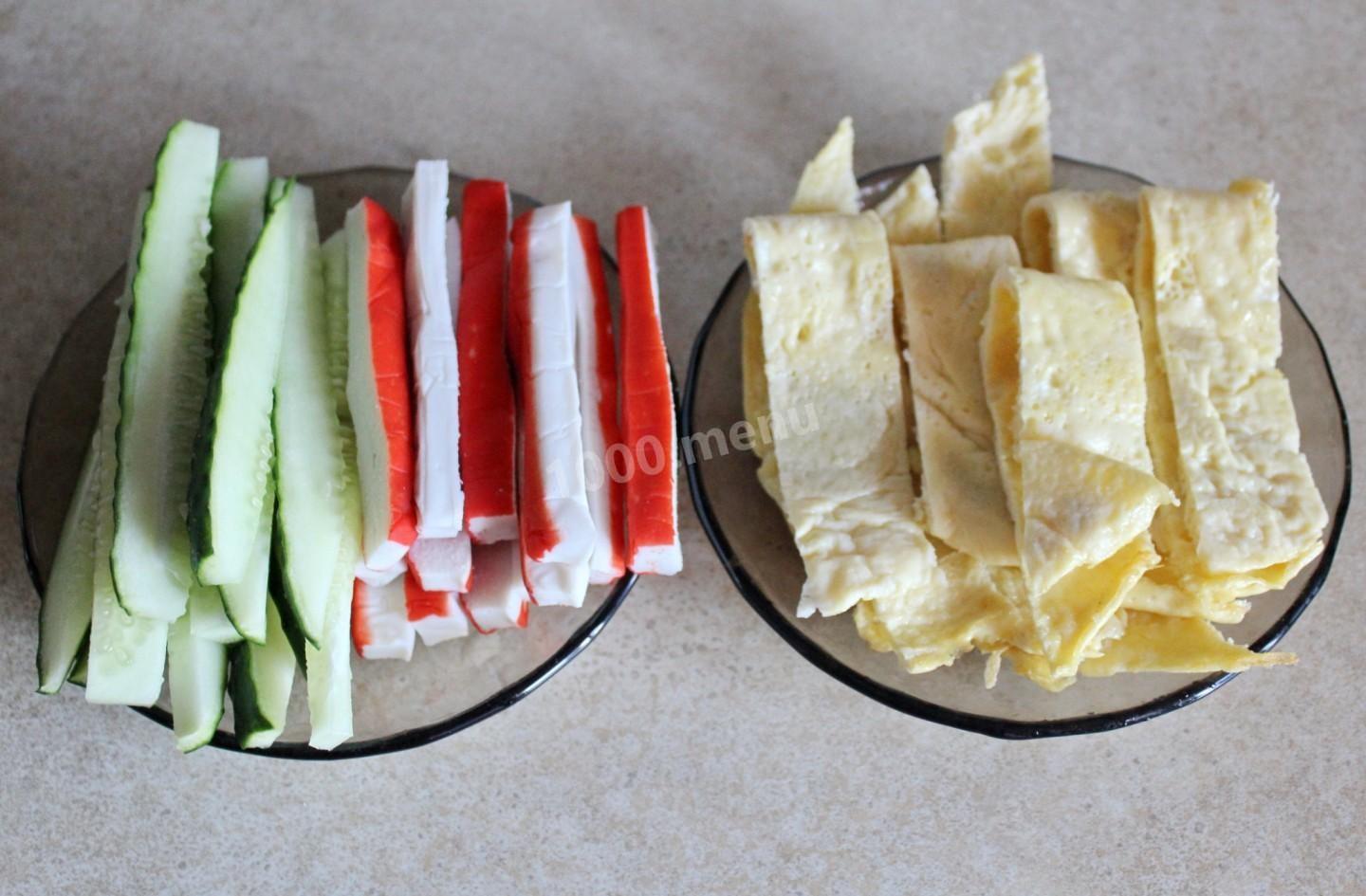
- Kimbap isn't all that different from its Japanese cousins. The main difference is that the rice is dressed with sesame oil instead of vinegar, sugar, and salt. The fillings vary widely — egg omelet, roasted chicken, fried sausage, crab sticks, sautéed or raw vegetables, and pickled vegetables, meat, and fish. For this recipe I made kimbap with crab sticks, cucumber, and omelet. You can also make the rolls with these fillings: (1) vinegar-pickled carrot, roasted chicken, cucumber, and omelet; (2) smoked sausage, pickled carrot, bell pepper, and omelet. Pickled daikon works in place of the carrot. There are plenty of other options. Korean rolls are usually served with a dipping sauce made from 6 tbsp soy sauce, 1 tbsp sweet soy sauce (or honey, to taste), 1 tsp chili sauce, and ½ tsp sesame oil.
- Always wash your eggs before using them — even a shell that looks clean can carry harmful bacteria. A food-safe brush and a little dish soap work best.
- Important! For rice dishes that come out perfect every time, read the article on the ins and outs of choosing rice and the secrets of cooking it.
- How do you pick good crab sticks? Always check the expiration date. Surimi (minced white fish) should be first on the ingredient list. Important: don't buy them if there's frost on the package — that's a sign they've been refrozen. Fresh crab sticks should be free of gray or yellow spots, firm, and slightly moist. If they're sticky, they've gone bad.
Caloric content of the products possible in the composition of the dish
- Fresh cucumbers - 15 kcal/100g
- Chicken egg - 157 kcal/100g
- Egg white - 45 kcal/100g
- Egg powder - 542 kcal/100g
- Egg yolk - 352 kcal/100g
- Ostrich egg - 118 kcal/100g
- Crab sticks - 73 kcal/100g
- Vici juicy crab sticks - 73 kcal/100g
- Crab sticks meridian snow crab - 140 kcal/100g
- Miramar crab sticks - 140 kcal/100g
- Crab sticks santa bremor snow crab - 70 kcal/100g
- Vegetable oil - 873 kcal/100g
- Nori - 3 kcal/100g
- Salt - 0 kcal/100g
- Water - 0 kcal/100g
- Sesame oil - 899 kcal/100g
- Round rice - 330 kcal/100g