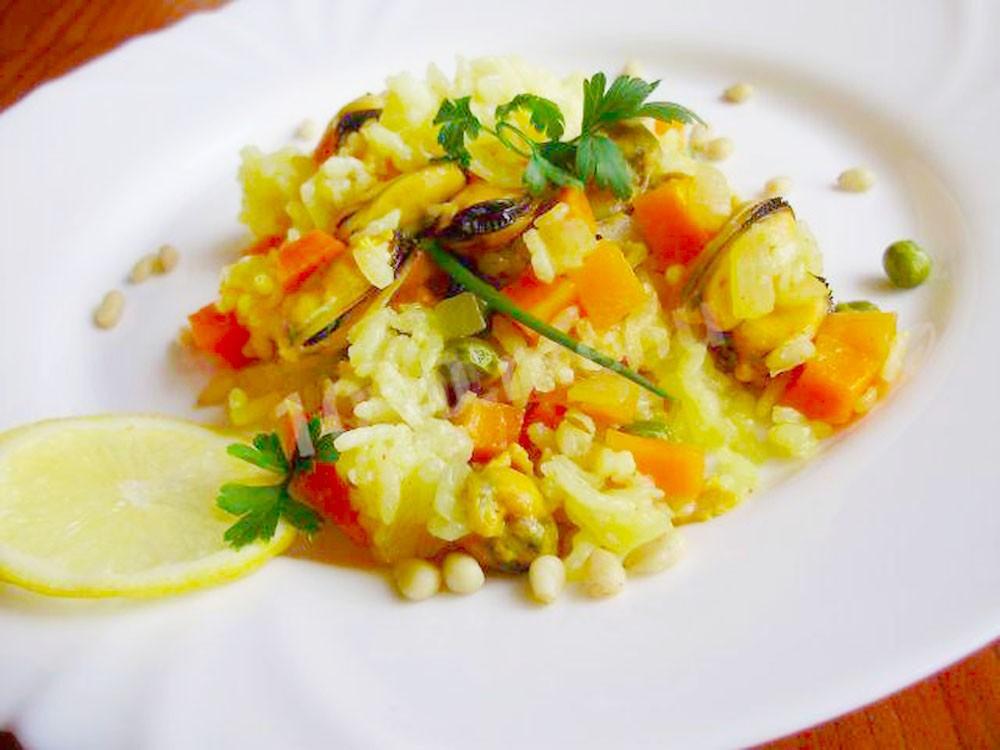
Seafood Pilaf with Mussels
A great way to shake up your usual weeknight rotation. This unexpected take on pilaf is for anyone who likes to play in the kitchen — the surprising pairing of rice and seafood is exactly what makes it special. The results are well worth it, and it's really not hard to pull off.

Cooking method
-
Step 1:

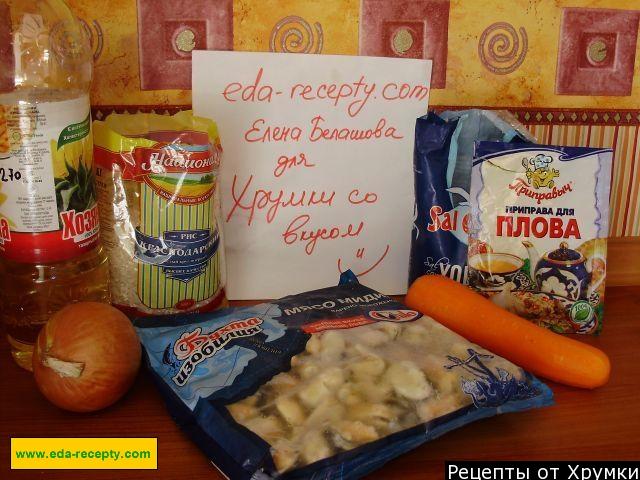
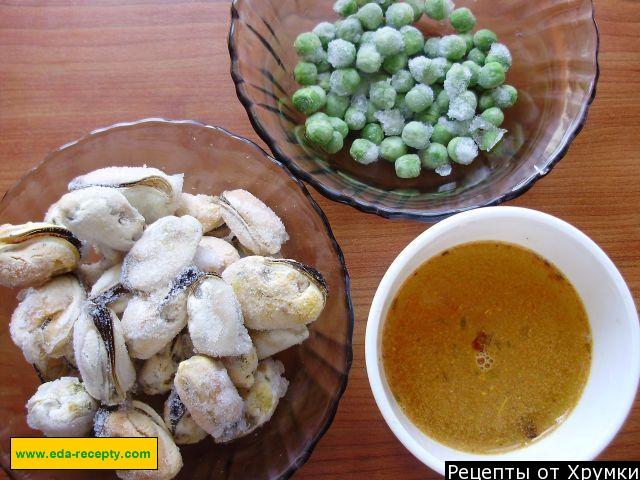
In this recipe I'll show you how to make seafood pilaf. To start, gather all the ingredients you'll need.
-
Step 2:
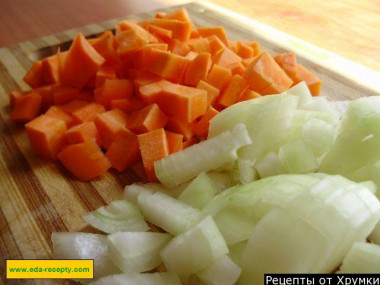
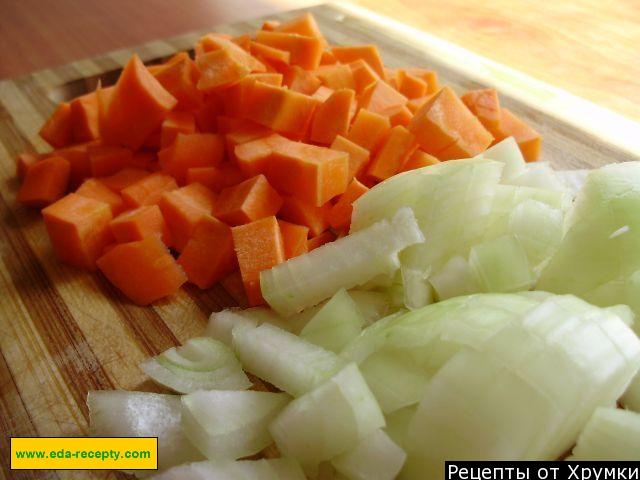
Peel the onion and carrot, then chop them. Everyone cuts their vegetables differently — I like small, even cubes, so that's how I'd do the carrot and onion here. If you prefer, slice the onion into thin half-moons and cut the carrot into matchsticks instead.
-
Step 3:
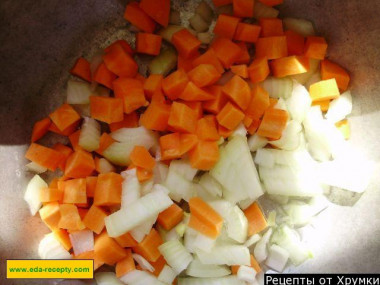
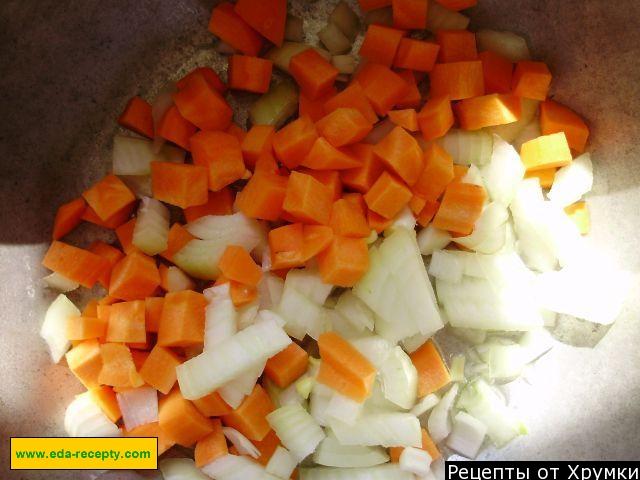
Sauté the chopped vegetables in vegetable oil over medium heat, stirring. Sesame oil would give the pilaf a wonderful flavor, but I just used regular refined sunflower oil.
-
Step 4:
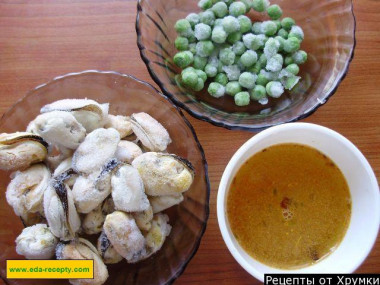
I used frozen green peas — let them thaw at room temperature. My mussels were peeled and frozen too, so give them time to thaw as well. Meanwhile, make the seasoning liquid: stir your pilaf spice blend together with salt and dissolve it in a little water.
-
Step 5:
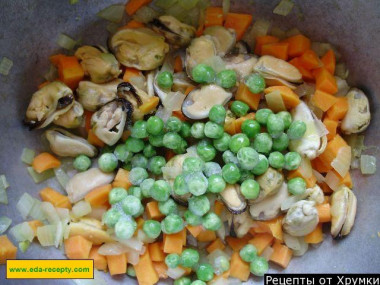
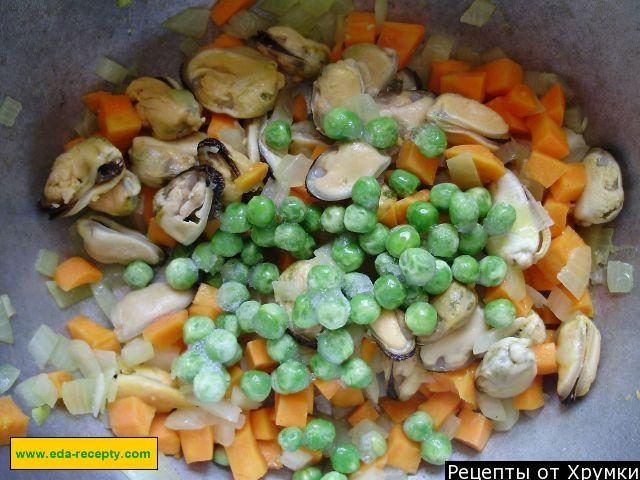
Add the green peas and mussels to the sautéed vegetables and simmer for about 5 minutes. For a special touch, splash in a little white wine.
-
Step 6:
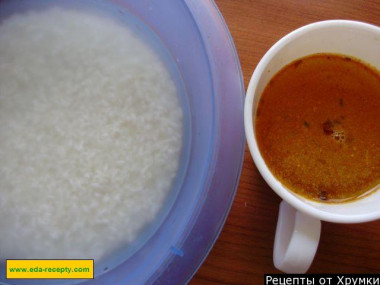
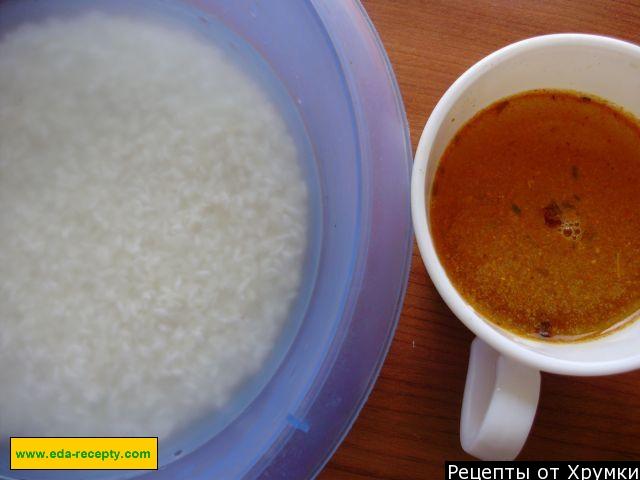
Rinse the rice in several changes of water until it runs clear.
-
Step 7:
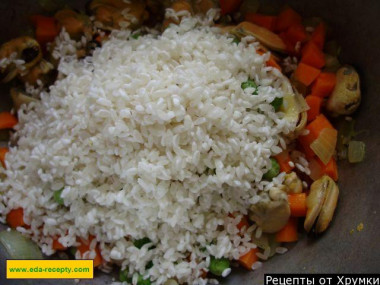
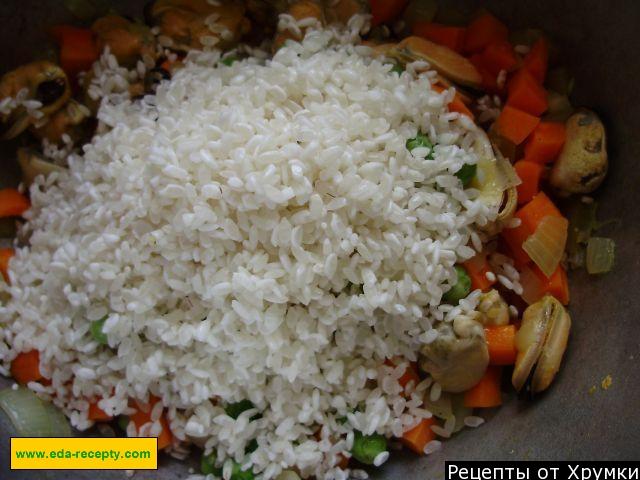
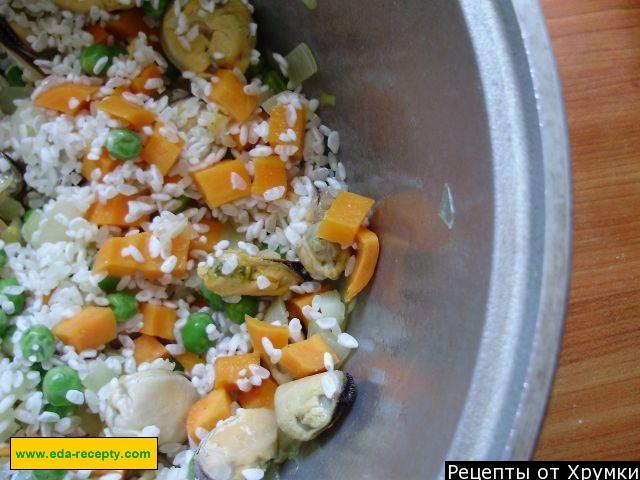
Add the rice to the rest of the ingredients.
-
Step 8:
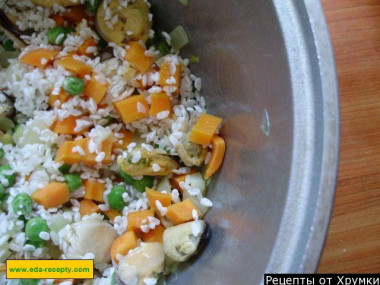
Stir everything together thoroughly.
-
Step 9:
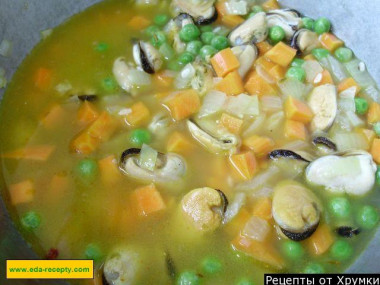
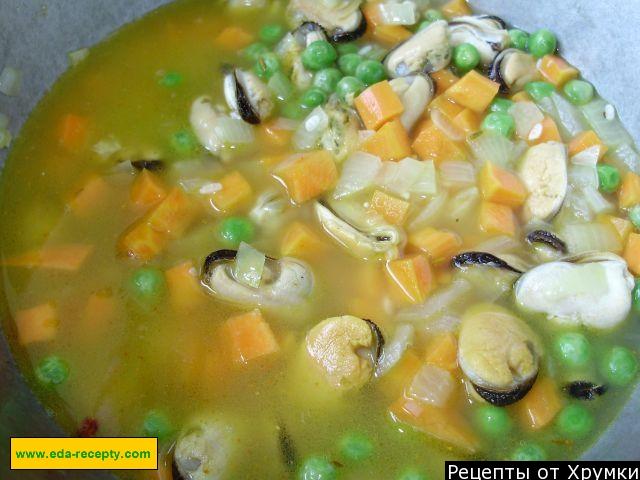
Pour in the salted, spiced water. Use the same water-to-rice ratio you'd normally use for pilaf.
-
Step 10:
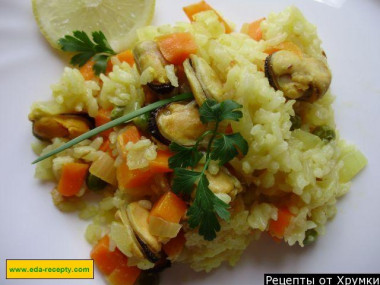
Cook until the rice is tender — about 20 minutes. I simmered it uncovered over medium heat, then covered the pan, turned off the heat, and let it rest.
-
Step 11:
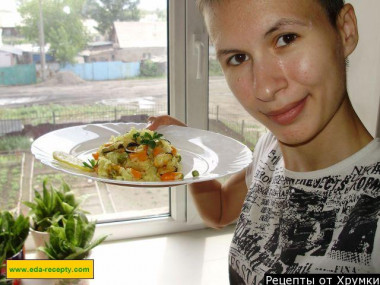
Our pilaf is ready — enjoy!
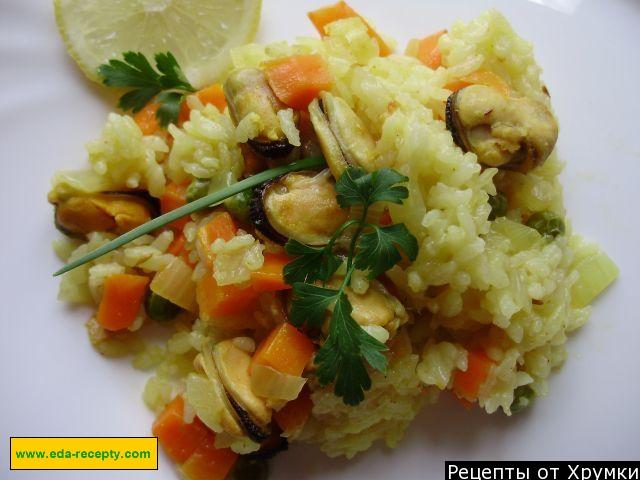
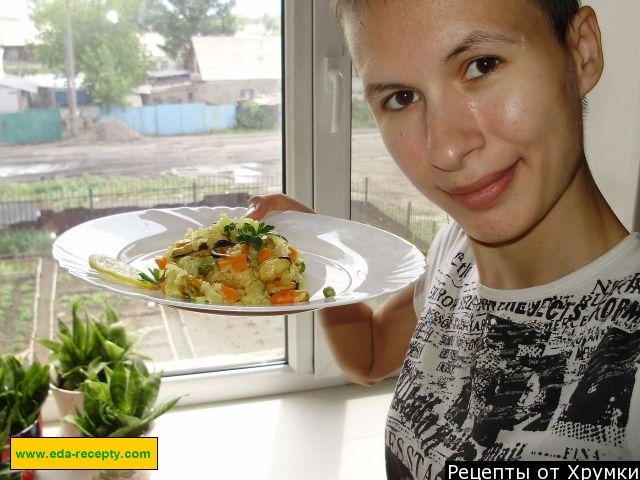
- This comes together fast — seafood pilaf takes just 30 minutes, including chopping the vegetables and rinsing the rice, plus about 10 minutes to rest under the lid while it fills the kitchen with its aroma. I'd gotten a little curious about the Mediterranean diet and decided to try a seafood pilaf; I went with mussels, and I have to say it turned out really well. It's an unusual recipe for me, since I'd only ever made classic pilaf before, even if in different variations. This version struck me as something special, so I'd recommend it to anyone.
Caloric content of the products possible in the composition of the dish
- Wild rice, raw - 353 kcal/100g
- Brown rice, raw - 360 kcal/100g
- Brown rice, cooked - 119 kcal/100g
- White rice, enriched, raw - 363 kcal/100g
- White rice, enriched, cooked - 109 kcal/100g
- White rice, parboiled, long-grain, raw - 369 kcal/100g
- White rice, parboiled, long-grain, cooked - 106 kcal/100g
- Instant rice, dry - 374 kcal/100g
- Instant rice, ready to eat - 109 kcal/100g
- Rice - 344 kcal/100g
- Carrot - 33 kcal/100g
- Dried carrot - 275 kcal/100g
- Carrot, boiled - 25 kcal/100g
- Fresh green peas - 280 kcal/100g
- Canned green peas - 55 kcal/100g
- Vegetable oil - 873 kcal/100g
- Mussels, fried - 59 kcal/100g
- Mussels, boiled - 50 kcal/100g
- Onion - 41 kcal/100g
- Dry seasoning blend - 240 kcal/100g