Classic beet borscht
One of the most delicious first courses for lunch. Borscht is a constant fixture on our table. It's especially tasty and aromatic with garlic. Many people add it right into the pot, but I like to add garlic to an individual serving. And now I'll share my borscht recipe with you.



Cooking method
-
Step 1:
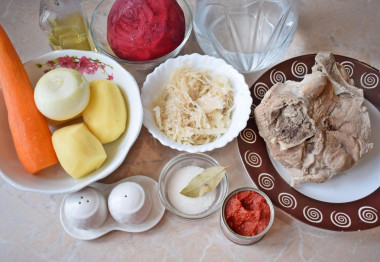
To make the borscht, gather all the ingredients you need. The meat can be pork or beef, but it should be bone-in — that's the cut that gives a hearty, rich broth. The cabbage can be fresh, vinegar-pickled, or sauerkraut. Peel all the vegetables and rinse off any dirt under running water. Cover the meat with cold water and cook it in boiling water until done. This takes 1 to 1.5 hours.
-
Step 2:
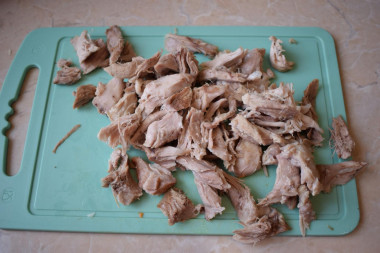
Foam will form as it comes to a boil — be sure to skim it off. Fish the cooked meat out of the broth, let it cool a little, and separate it from the bones. Cut the meat into pieces and return it to the strained broth. Bring it all back to a boil.
-
Step 3:
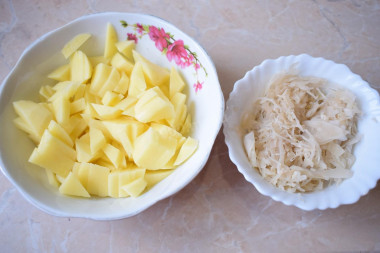
Cut the peeled potatoes into small pieces and add them to the pot along with the cabbage. I use pickled cabbage for borscht.
-
Step 4:
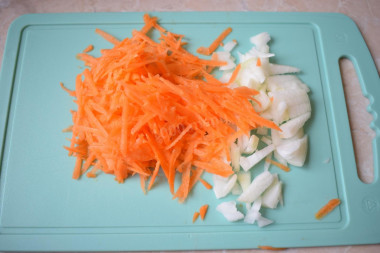
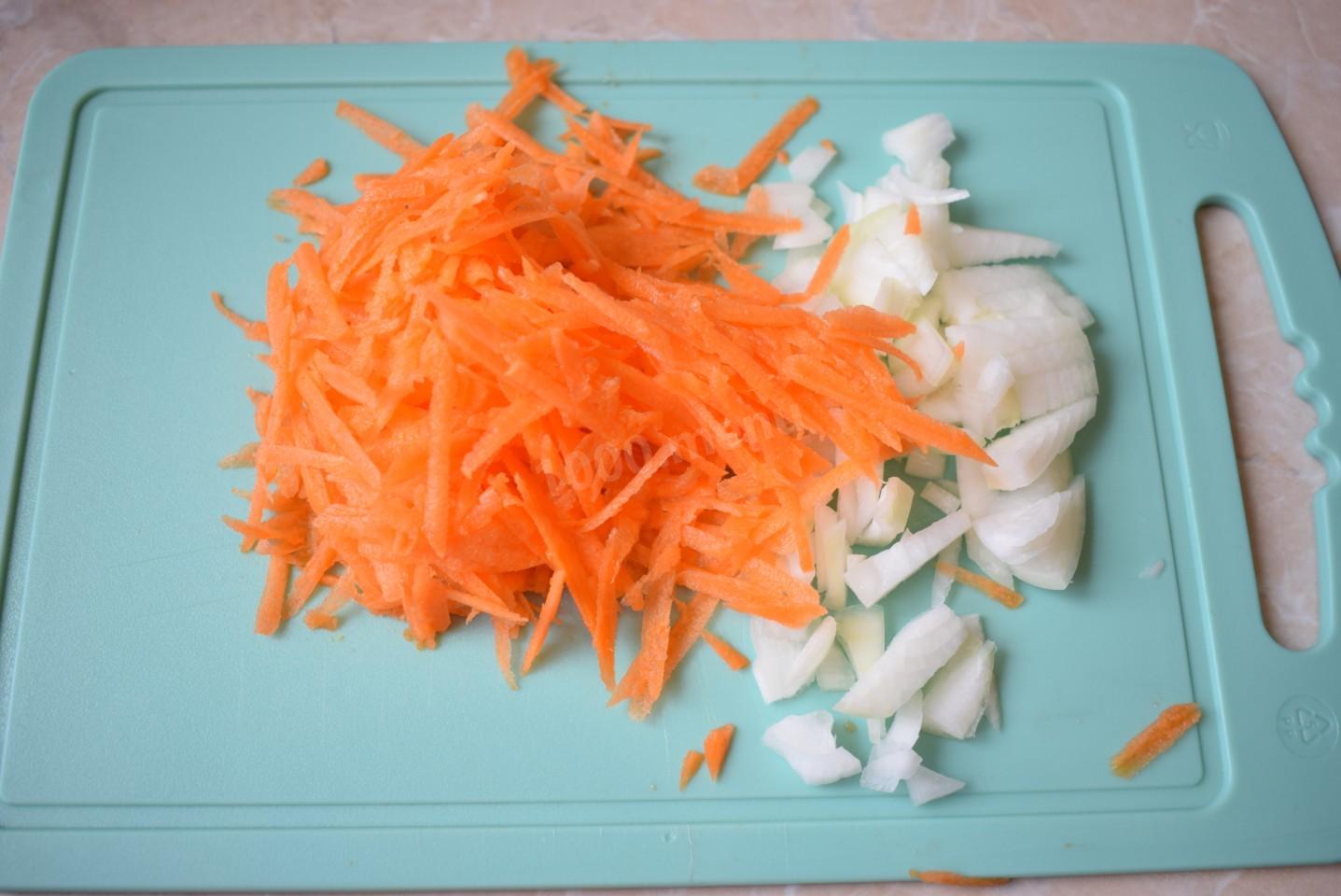
Next, chop the onion and grate the carrot. Saute the onion and carrot for 3 to 5 minutes in a little vegetable oil over medium heat. Don't forget to stir so the vegetables don't scorch.
-
Step 5:
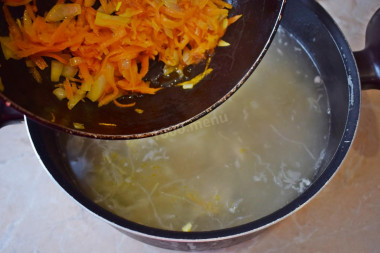
Then add the finished saute to the broth in the pot.
-
Step 6:
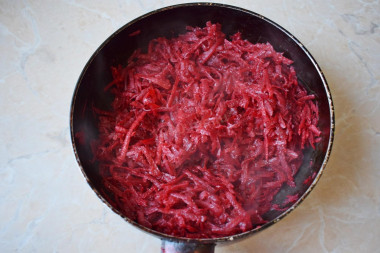
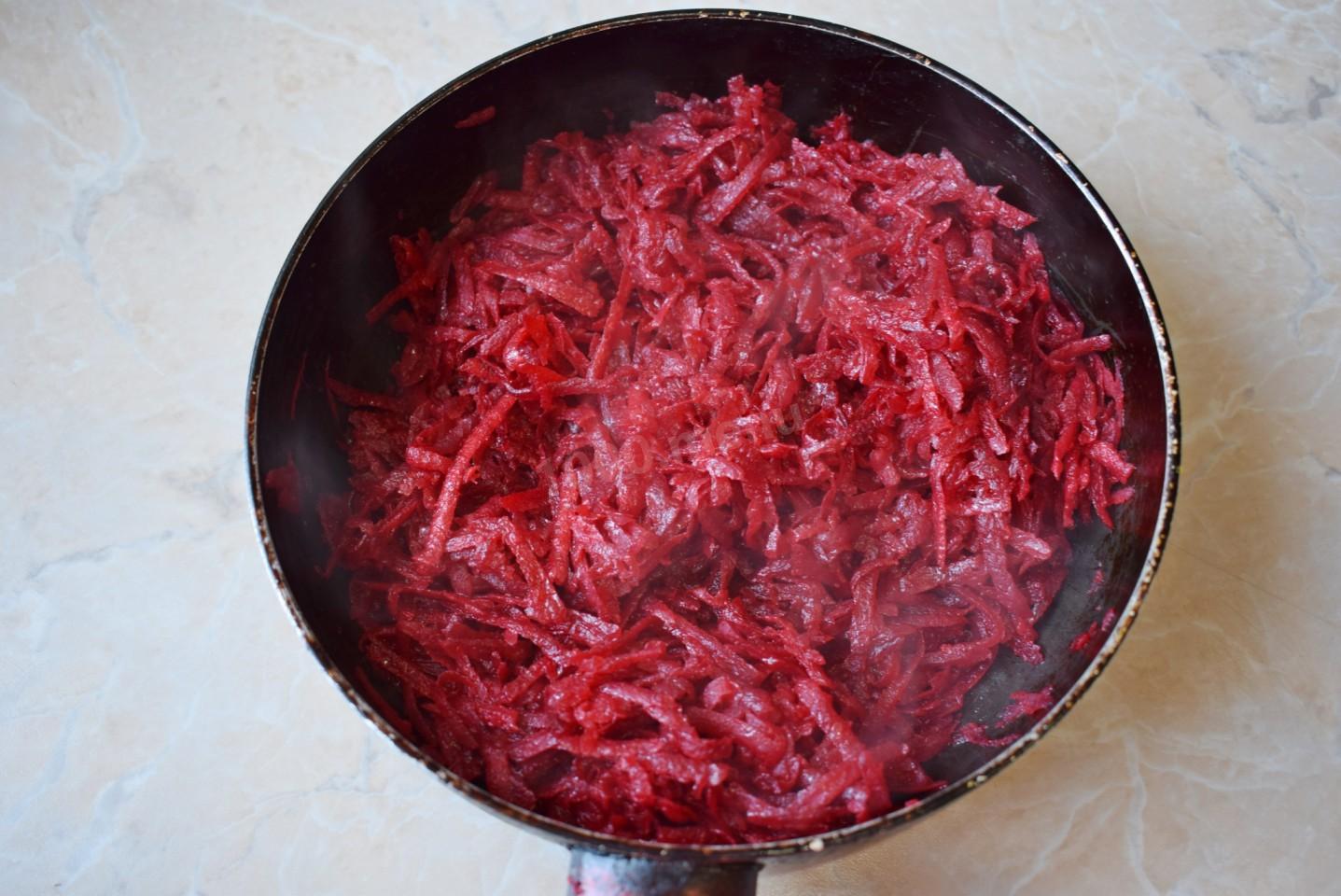
Grate the beet on the coarse side of a grater and saute it for 5 to 7 minutes in a little vegetable oil. Stir occasionally so it doesn't scorch.
-
Step 7:
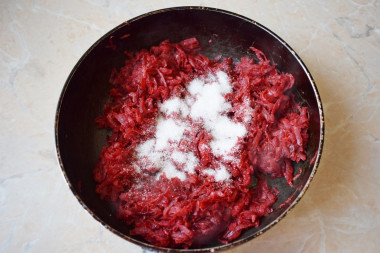
As it cooks, the beet will shrink. Now add the sugar to it. Why add sugar? The sugar caramelizes the beet a little, which helps the finished borscht keep its color. Stir and keep it on the heat for another 2 to 3 minutes.
-
Step 8:
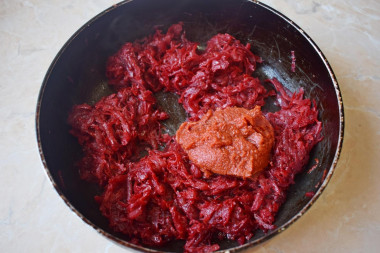
Then add the tomato paste to the beet, stir, and heat everything through well.
-
Step 9:
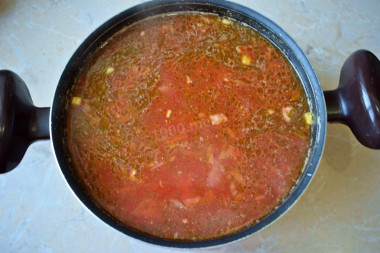
While you were cooking the vegetables, the potatoes in the broth have already cooked through. So add a little salt to taste, the bay leaf, and the beet saute. Stir well and bring it to a boil. Take the finished borscht off the heat, cover it, and let it rest for at least 30 minutes. Borscht needs this time for all the flavors and aromas to come together.
-
Step 10:
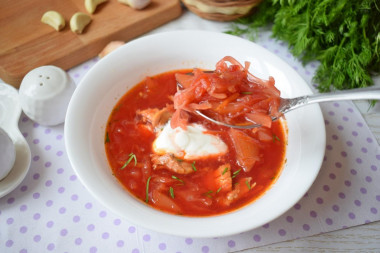
Ladle the finished borscht into bowls and serve. You can top it with a spoonful of sour cream and minced garlic. Enjoy!





Caloric content of the products possible in the composition of the dish
- Onion - 41 kcal/100g
- Ripe potatoes - 80 kcal/100g
- Baked potatoes - 70 kcal/100g
- Mashed potatoes - 380 kcal/100g
- Boiled potatoes - 82 kcal/100g
- Potatoes in their skins - 74 kcal/100g
- Fried potatoes - 192 kcal/100g
- Green cabbage - 46 kcal/100g
- Fresh frozen green cabbage in a package - 45 kcal/100g
- Fatty pork - 333 kcal/100g
- Pork meat - 357 kcal/100g
- Pork - low-fat roast - 184 kcal/100g
- Pork chop on the bone - 537 kcal/100g
- Pork - schnitzel - 352 kcal/100g
- Pork shoulder - 593 kcal/100g
- Wild boar leg - 113 kcal/100g
- Pork - 259 kcal/100g
- Beet - 40 kcal/100g
- Dried beet - 278 kcal/100g
- Boiled beets - 49 kcal/100g
- Carrots - 33 kcal/100g
- Dried carrots - 275 kcal/100g
- Boiled carrots - 25 kcal/100g
- Bay leaf - 313 kcal/100g
- Granulated sugar - 398 kcal/100g
- Sugar - 398 kcal/100g
- Vegetable oil - 873 kcal/100g
- Tomato paste - 28 kcal/100g
- Salt - 0 kcal/100g
- Water - 0 kcal/100g
Similar recipes
- National cuisine
- Classic recipes
- Soups
- Meat and meat products
- Vegetables
- Sweet
- Spices seasonings spices
- Fats and oils
- Other
- Bay leaf
- Salt
- Vegetable oil
- Water
- Tomato paste
- Ukrainian cuisine
- Classic borscht
- Classic soups
- Cooking
- Borscht
- Meat soup
- Cabbage soup
- Tomato soup
- Potato soup
- Pork
- From carrots
- From beets
- From potatoes
- From cabbage
- From onion
- No eggs
- Recipes for lean dishes without butter
- Sugar