Baked Sushi Rolls with Salmon, Crab, and Cucumber
Amazing baked sushi rolls — better than takeout! These rolls are bright, tender, and at the same time spicy, a little sweet, and crunchy, and as surprising as it sounds, every ingredient comes together in perfect harmony!

Cooking method
-
Step 1:
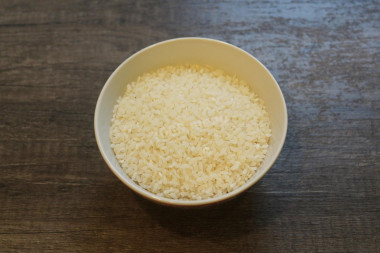
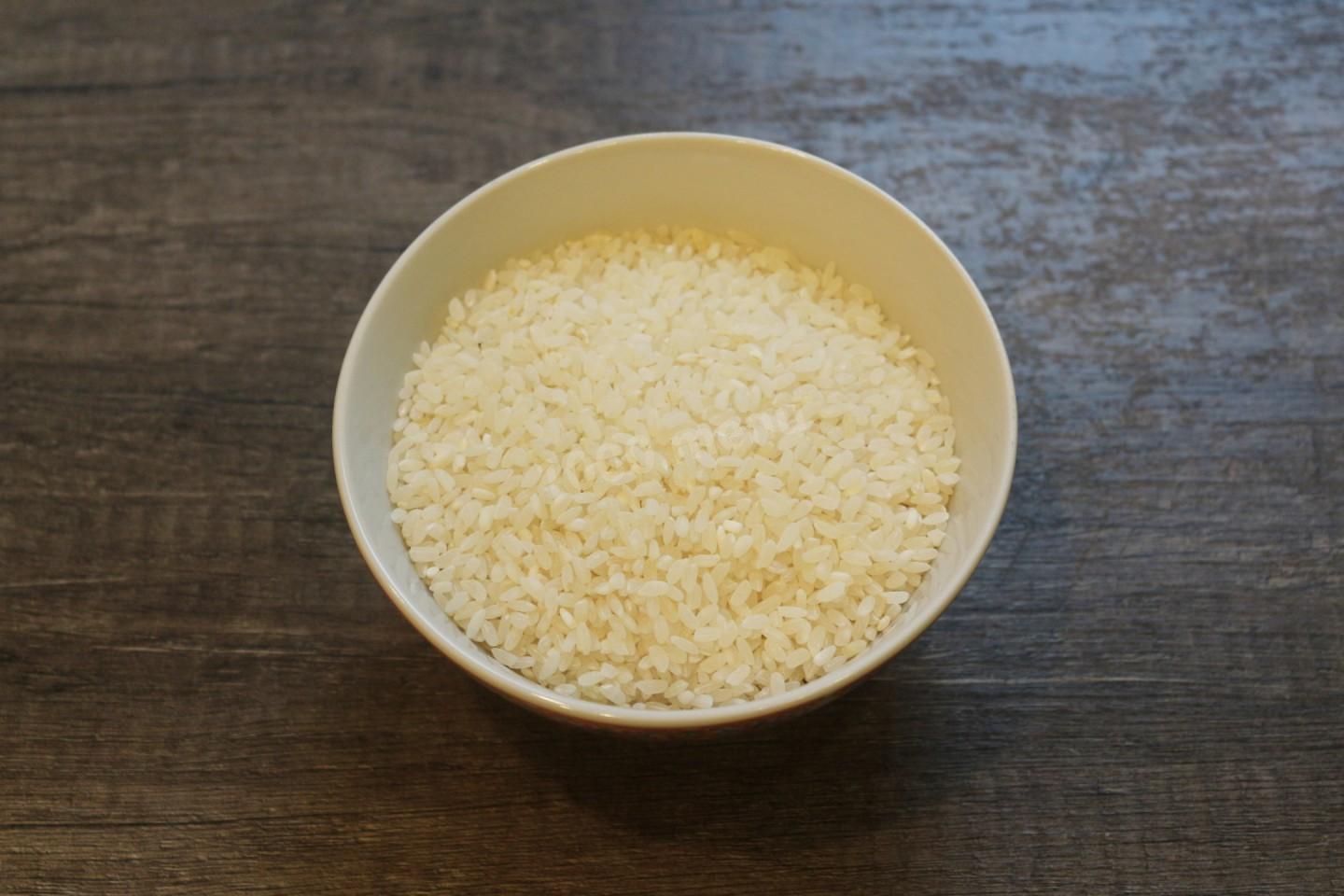
Make the rice for the rolls. Use short-grain rice or rice labeled for sushi — it has the starch needed to hold the rolls together. With other kinds of rice, the rolls are likely to fall apart. Put the rice in a bowl and rinse it 4 times, until the water runs clear. Transfer the rice to a pot and add water in a 1:1 ratio. Cover the pot and set it over the heat.
-
Step 2:
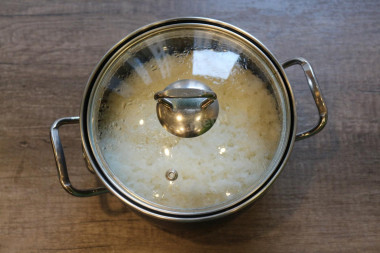
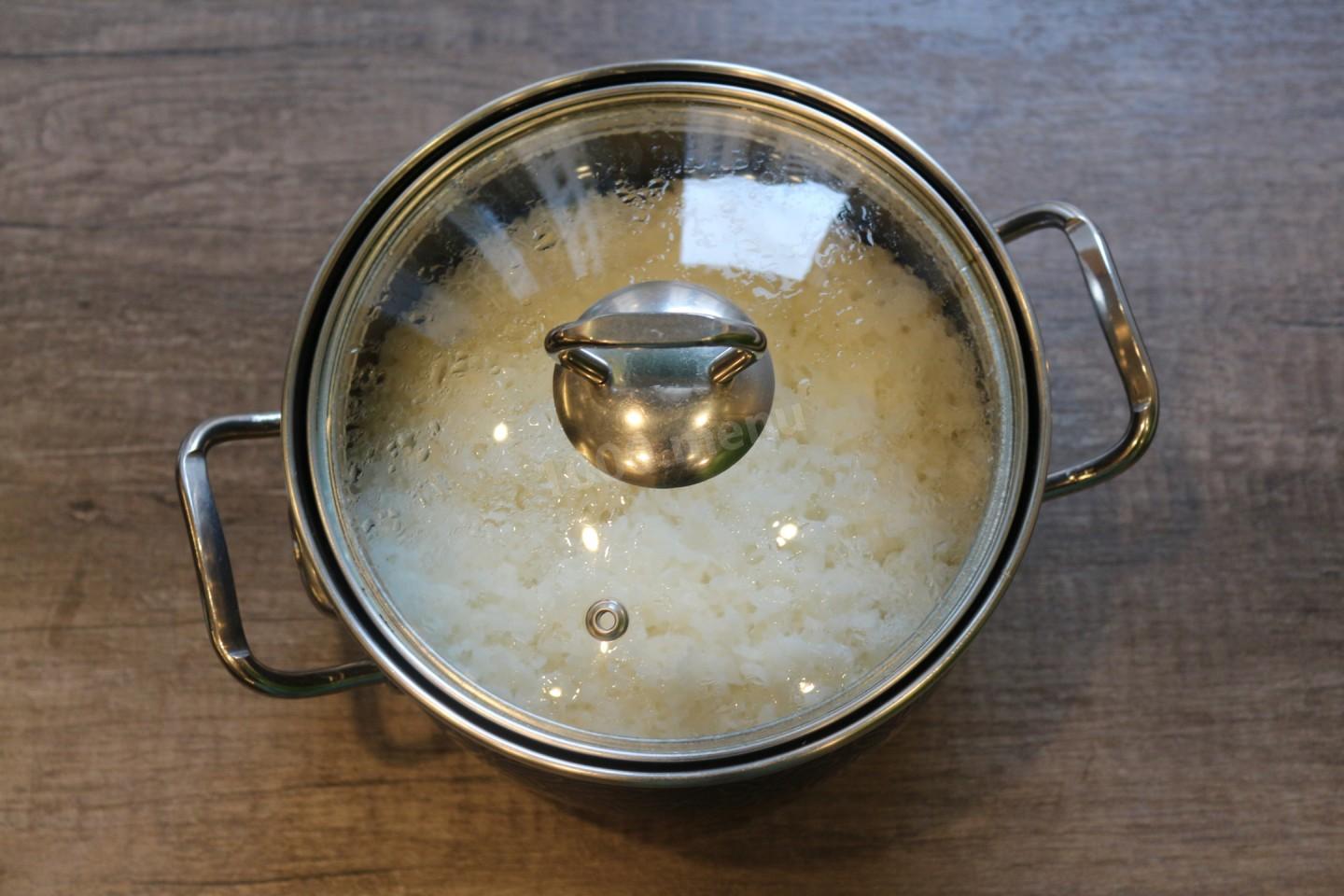
Bring the water to a boil (don't lift the lid during the entire cooking time). Once it boils, reduce the heat to low and keep cooking the rice for 15 minutes — all the liquid will evaporate in that time. Then turn off the heat and let the rice finish, covered, for another 10 minutes. This brings it to the right texture. The cooked rice doubles in volume.
-
Step 3:
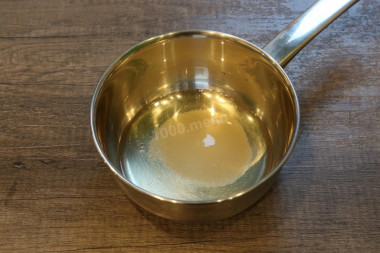
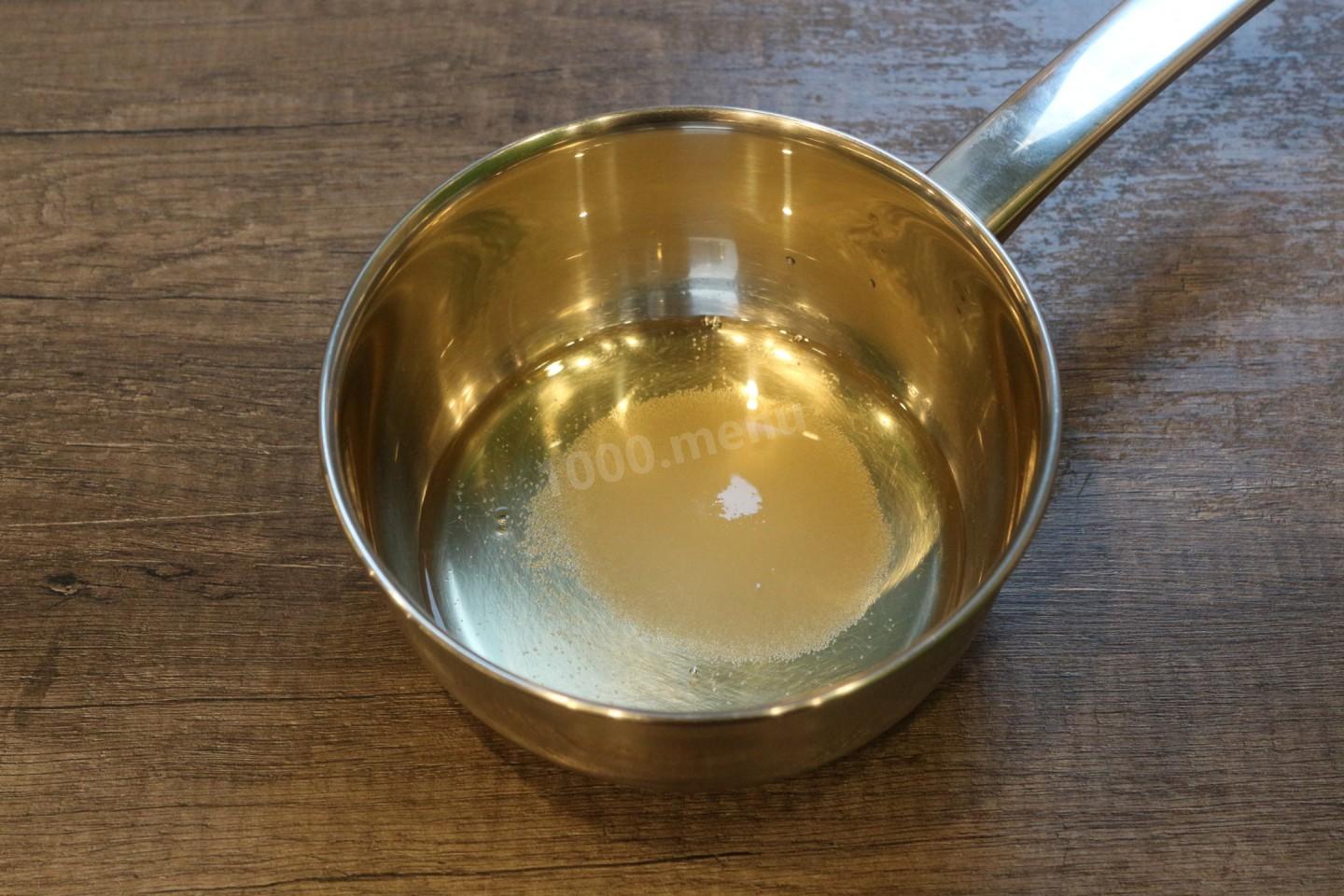
Now, in a separate small saucepan, combine the rice vinegar, sugar, and salt. Set it over low heat and dissolve the sugar and salt in the vinegar without letting it come to a boil.
-
Step 4:
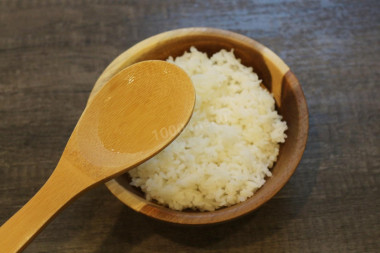
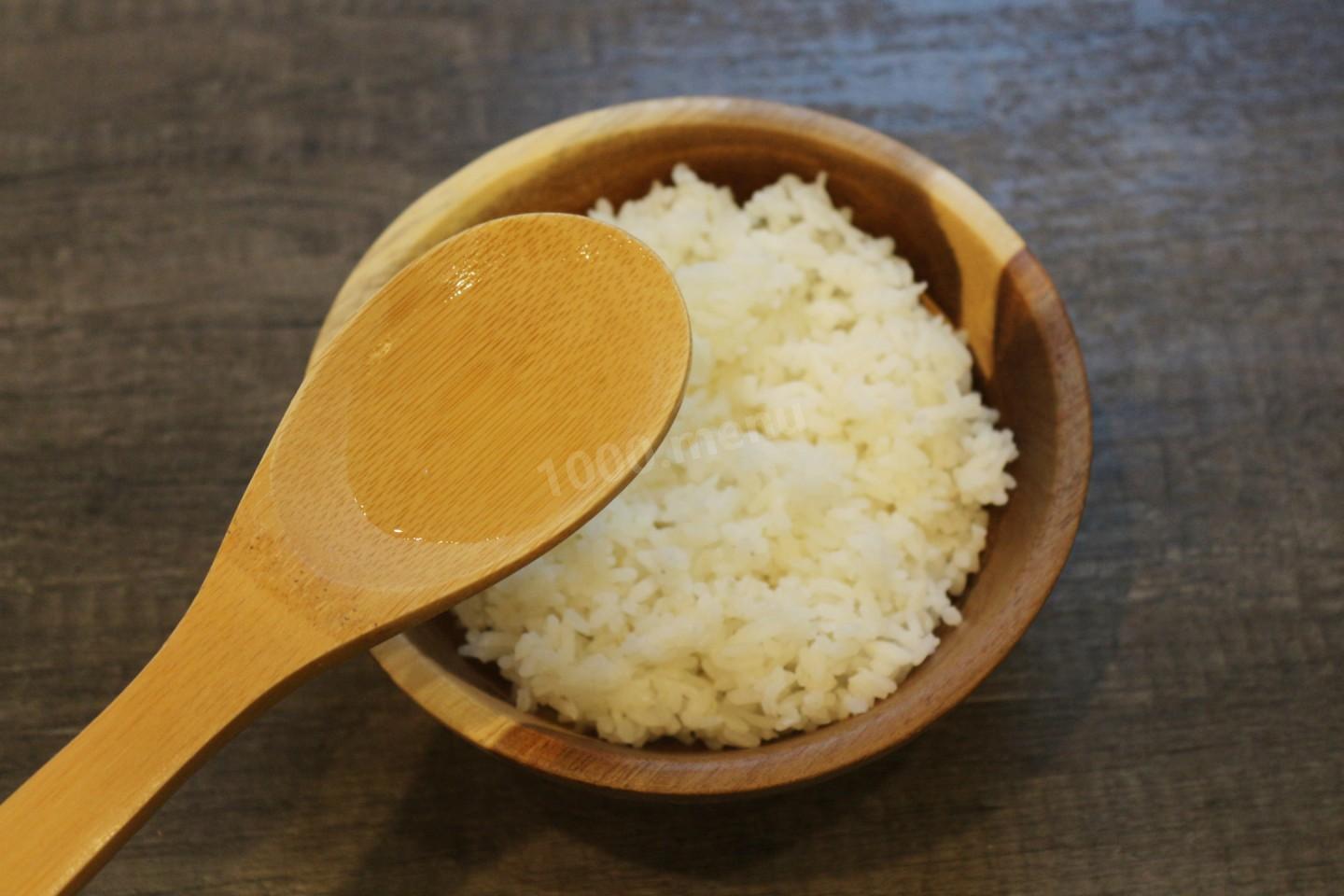
Take a wooden bowl and wipe it down with damp paper towels so the rice won't stick to it. Transfer the cooked rice to the bowl. Pour the vinegar mixture onto a wooden spoon a little at a time, then drizzle it from the spoon over the rice in a thin stream, covering it evenly. Gently fold the rice and dressing together with a wooden paddle. Then let the rice cool completely, covered with a damp towel.
-
Step 5:
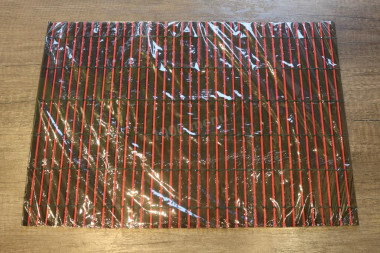
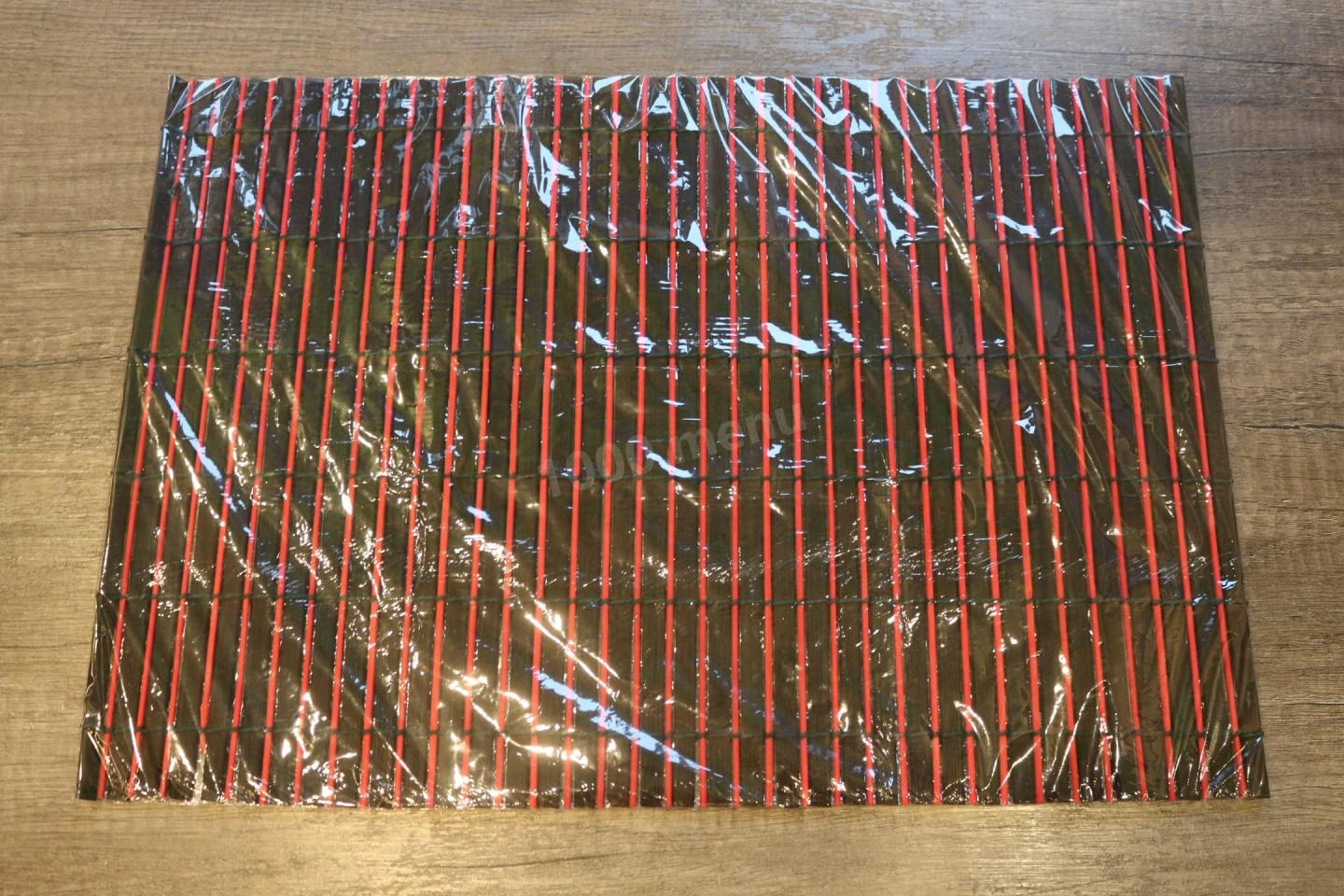
Wrap your bamboo rolling mat in plastic wrap. This keeps things sanitary and makes the mat easier to work with — nothing sticks to it, it stays clean, and it lasts longer, since rice and filling can't work their way between the slats and you have to dampen it less often.
-
Step 6:
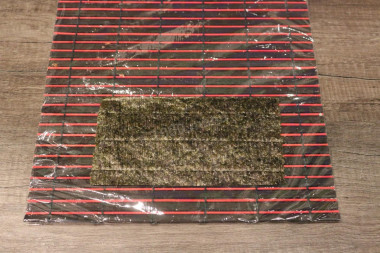
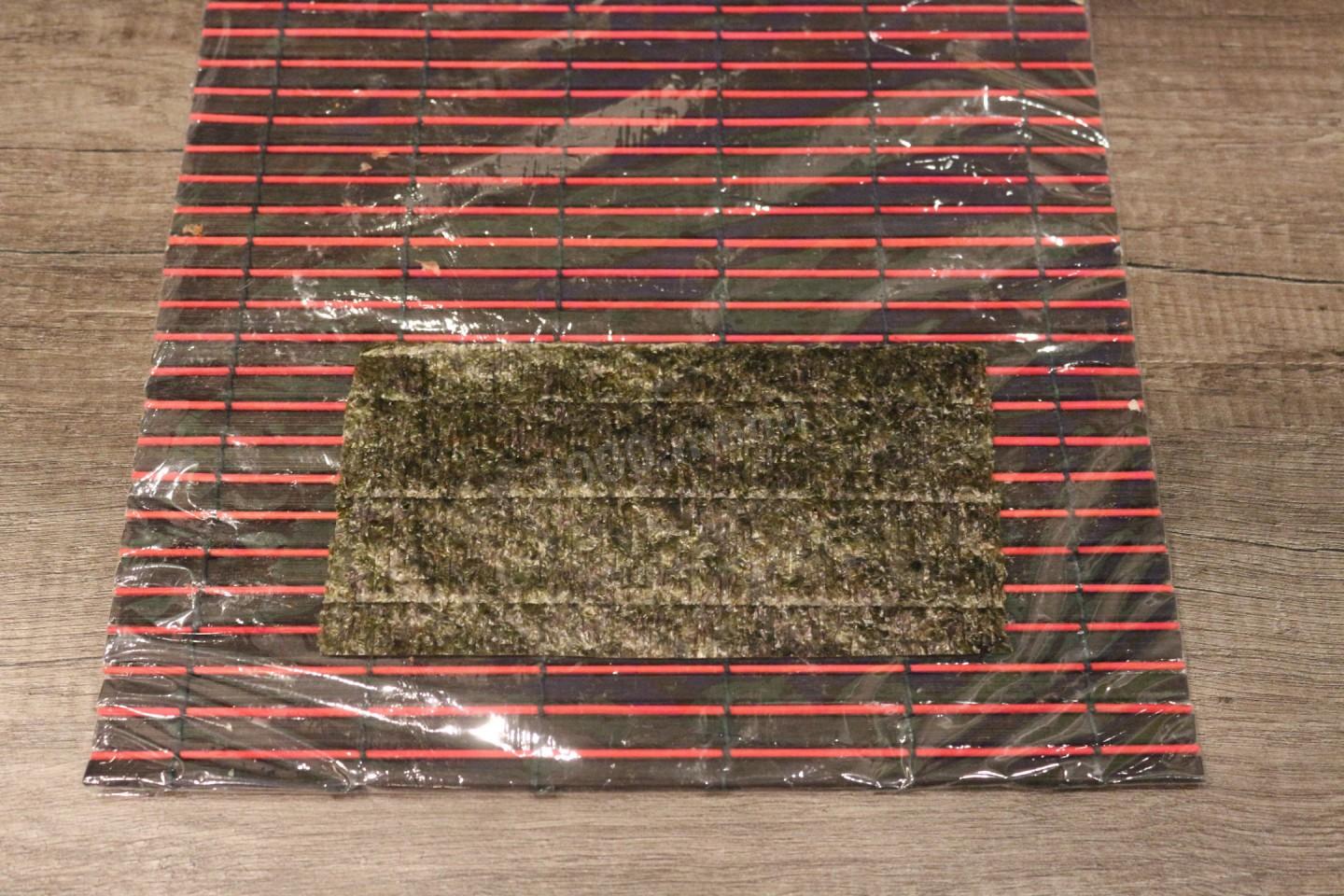
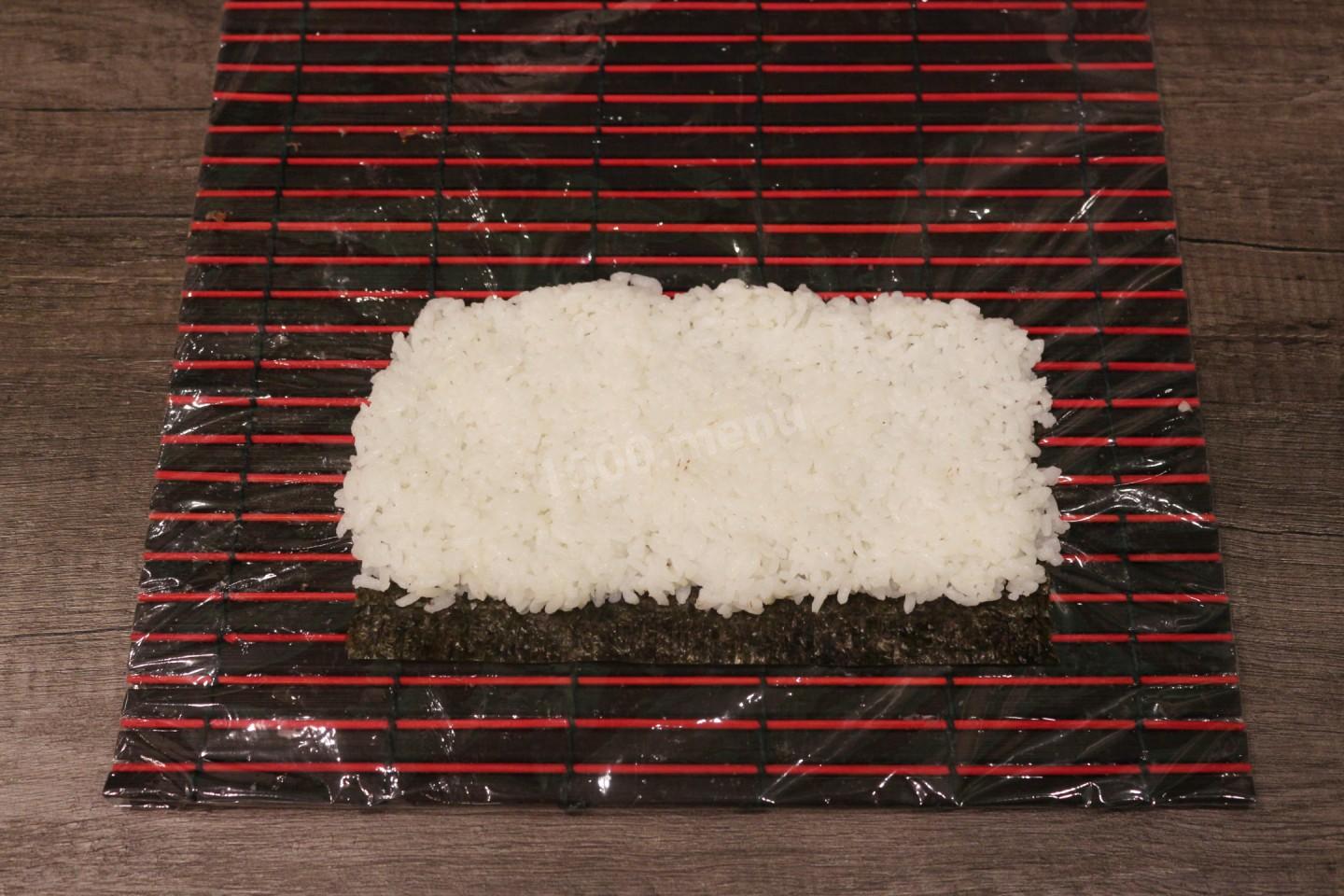
Cut the nori sheet in half with scissors. Lay a piece of nori on the mat, shiny side down. Prepare a hand-dipping liquid: in a small bowl, mix rice vinegar and water in a 1:3 ratio. Wetting your hands in it makes the rice much easier to handle. Use filtered water, since it goes straight into the food without any further cooking.
-
Step 7:
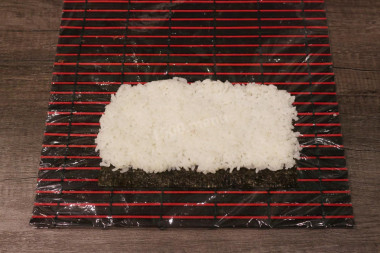
Dampen your hands in the vinegar liquid, take 150 grams of rice, and spread it over the nori. Smooth the rice evenly across the whole sheet so that the far edge has rice extending about 1 cm past the nori, while the near edge has about 1 cm of bare nori with no rice.
-
Step 8:
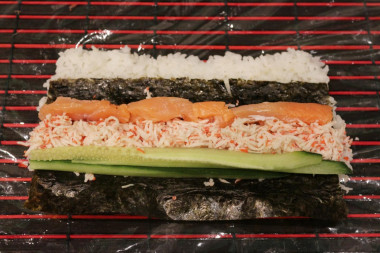
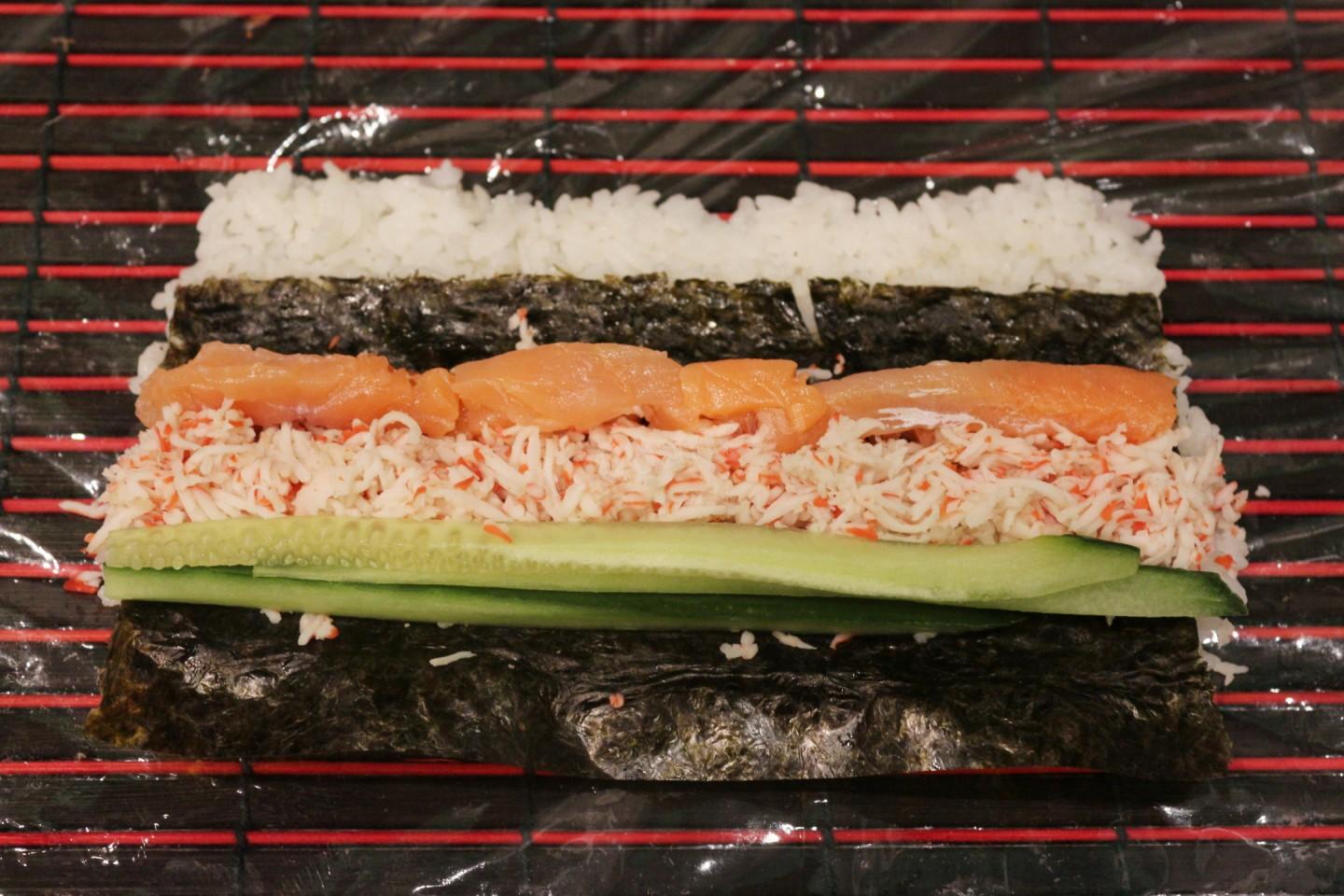
Flip the sheet over so the glossy side is up and the rice is on the bottom. Prep the filling (best done ahead). Grate the crab meat on a fine grater — fine is key, as it makes the roll taste lighter and more delicate. Cut the cucumber into long strips and the salmon into medium-thick strips. Lay the crab meat down the center of the nori. Place the salmon strips on one side of the crab and the cucumber strips on the other.
-
Step 9:
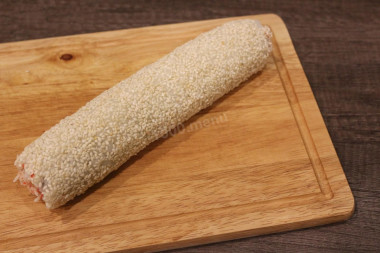
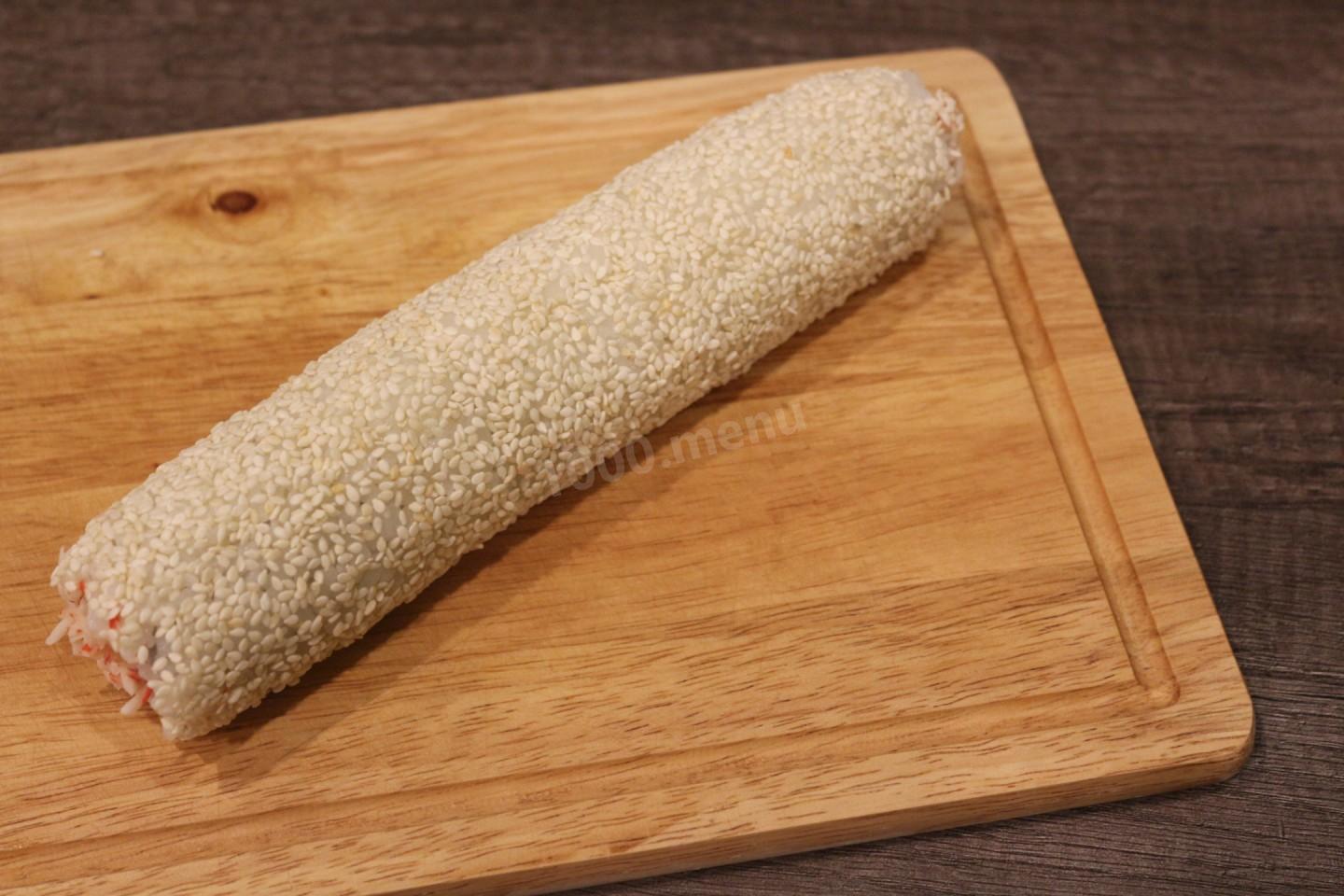
Holding the filling in place, begin rolling away from you so the rice on the far edge meets the rice on the nori. Press the roll firmly with the mat, keeping it tight and round. Set the rolled-up log at the edge of the mat and tap in the sides. Do the same from the other end. You'll end up with an even, round roll. Roll it in the sesame seeds to coat.
-
Step 10:
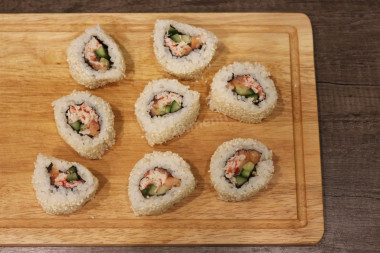
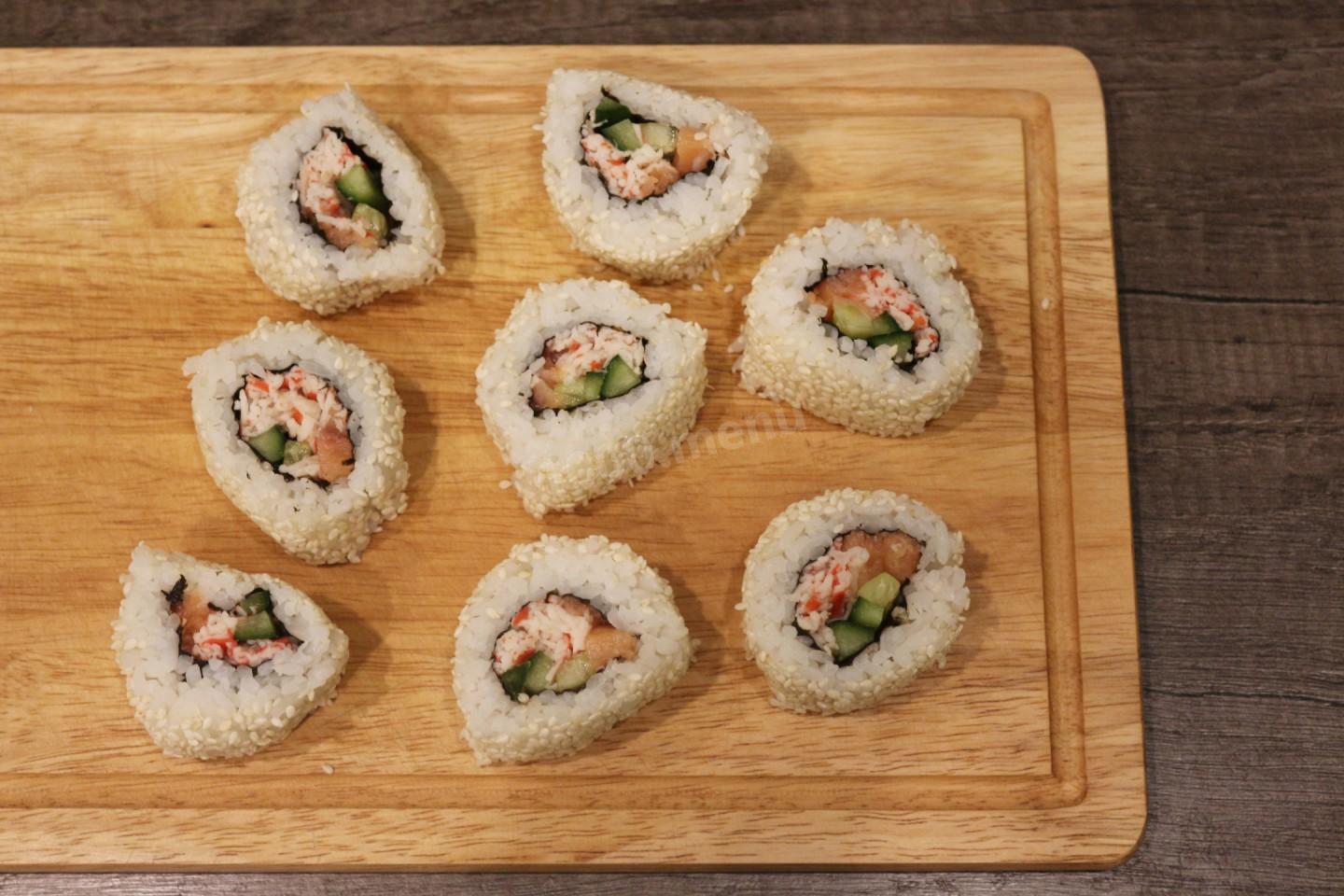
Cut the roll into 8 equal pieces with a sharp knife. Dip the knife in the vinegar water as you slice — it keeps the rice from sticking and the pieces from getting squashed. Set the cut pieces on the work surface, cut side up.
-
Step 11:
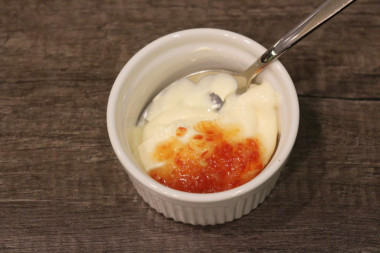
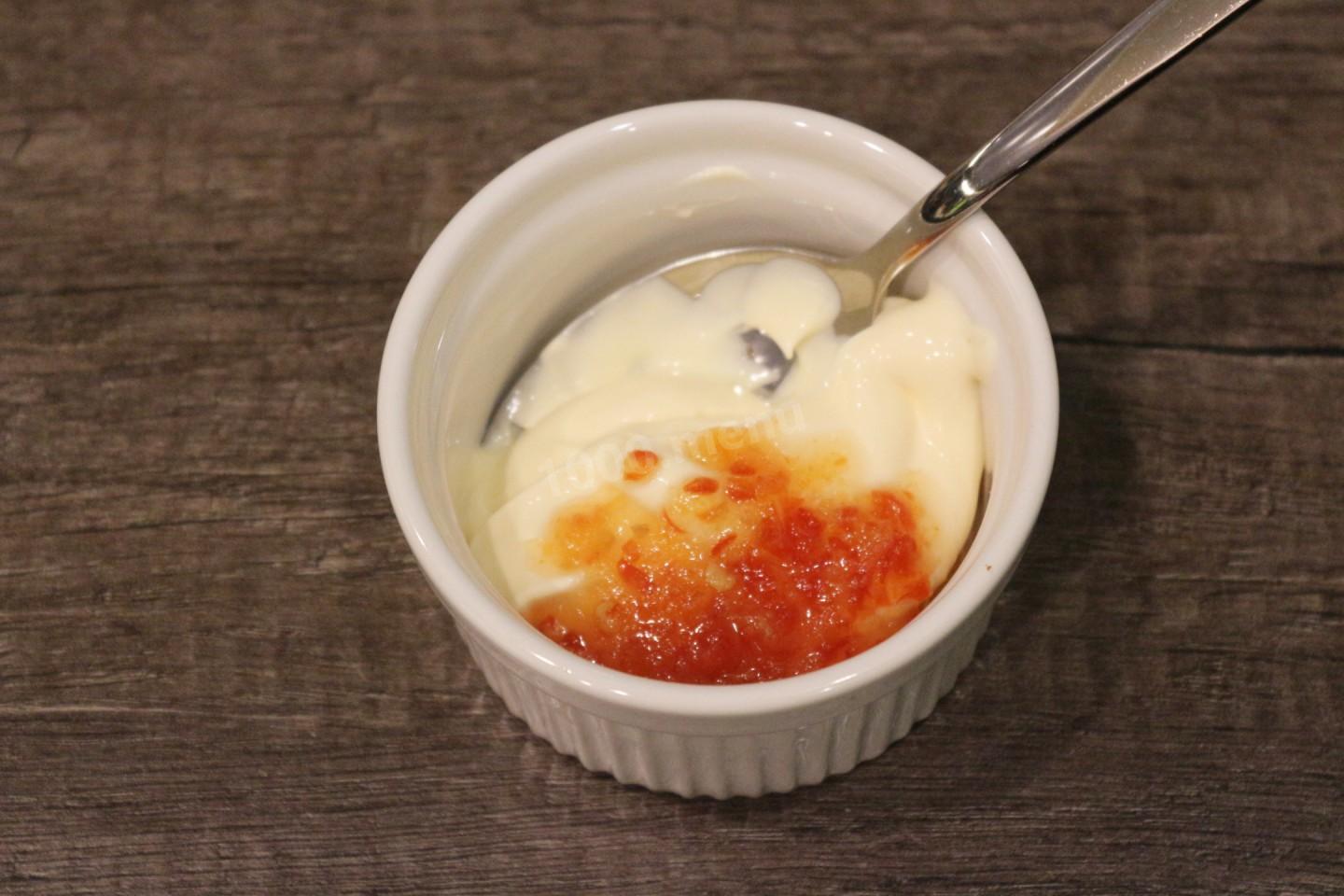
Make the spicy sauce. Mix the mayonnaise and sweet chili sauce. Transfer it to a piping bag and snip off the tip.
-
Step 12:
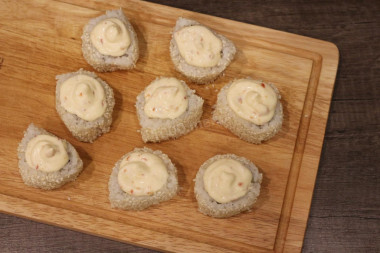
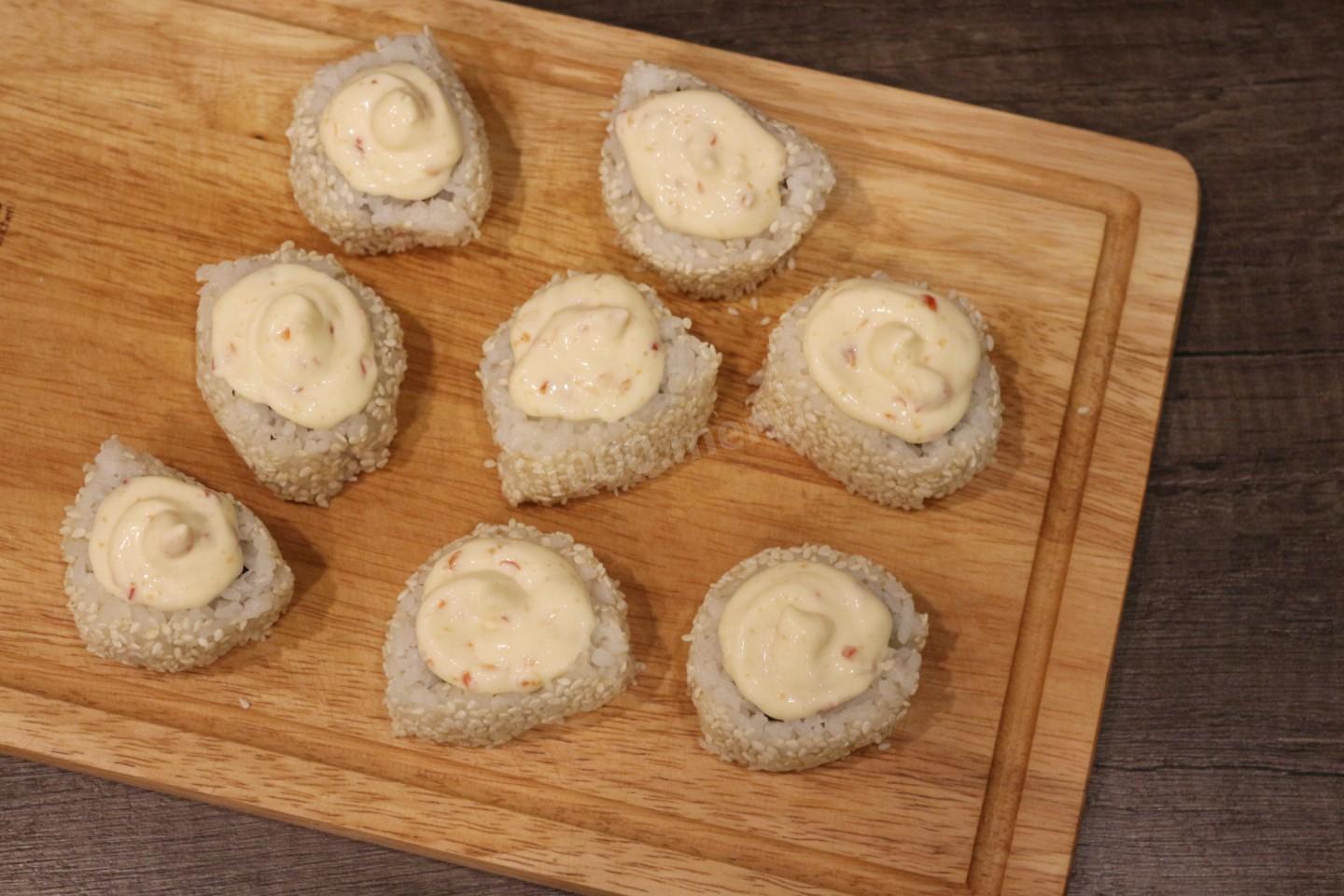
Pipe a little mound of the sauce on top of each piece — these "caps" will brown in the oven.
-
Step 13:
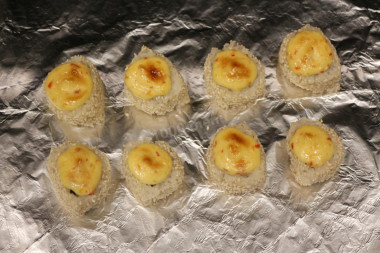
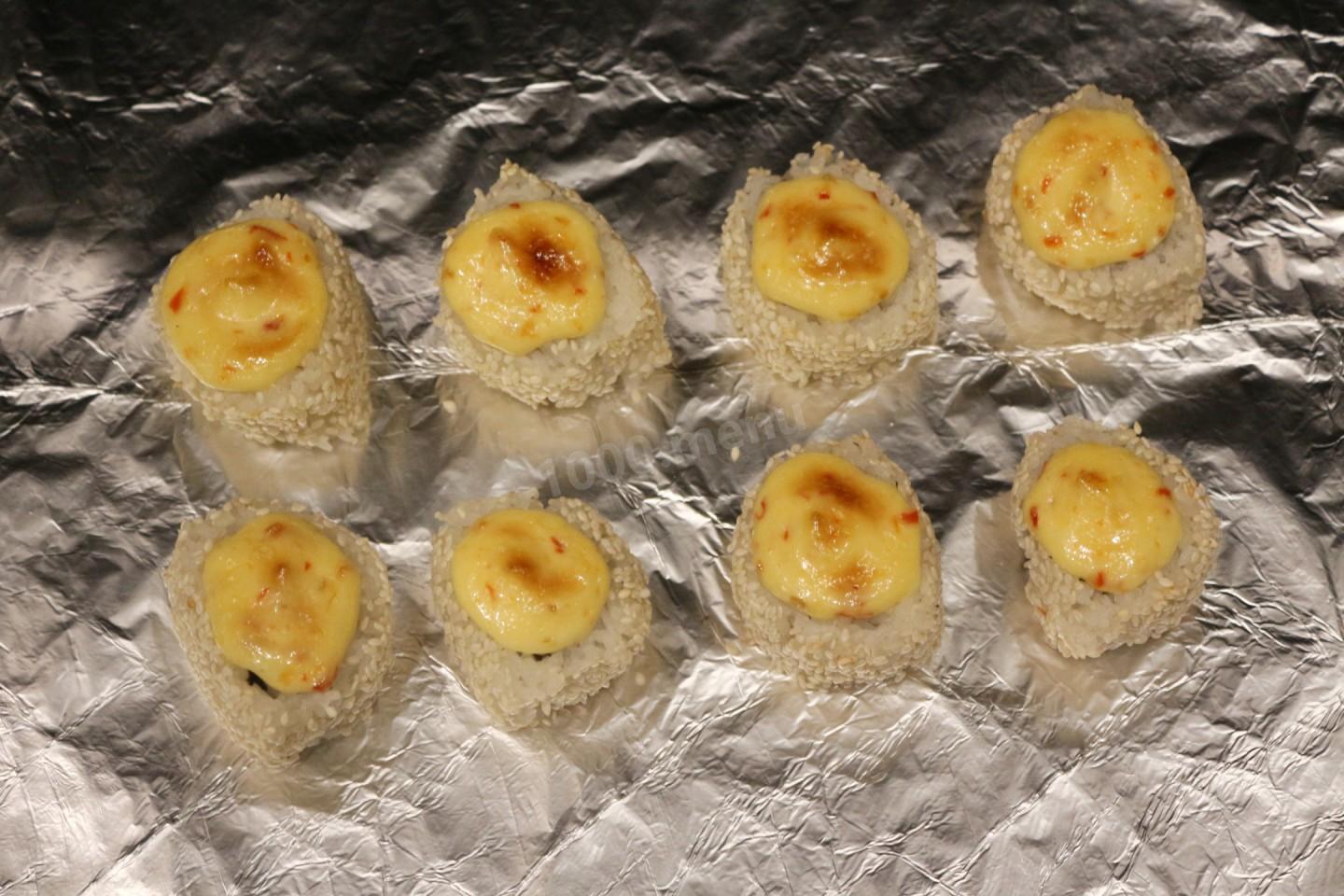
Line a baking sheet with foil and arrange the rolls on it. Put them under the oven's broiler and cook for about 4–5 minutes, until the sauce caps are nicely browned.
-
Step 14:
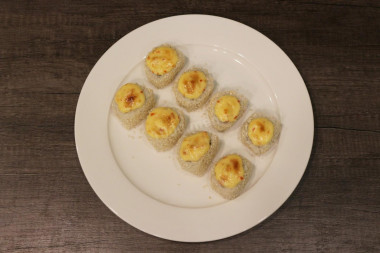
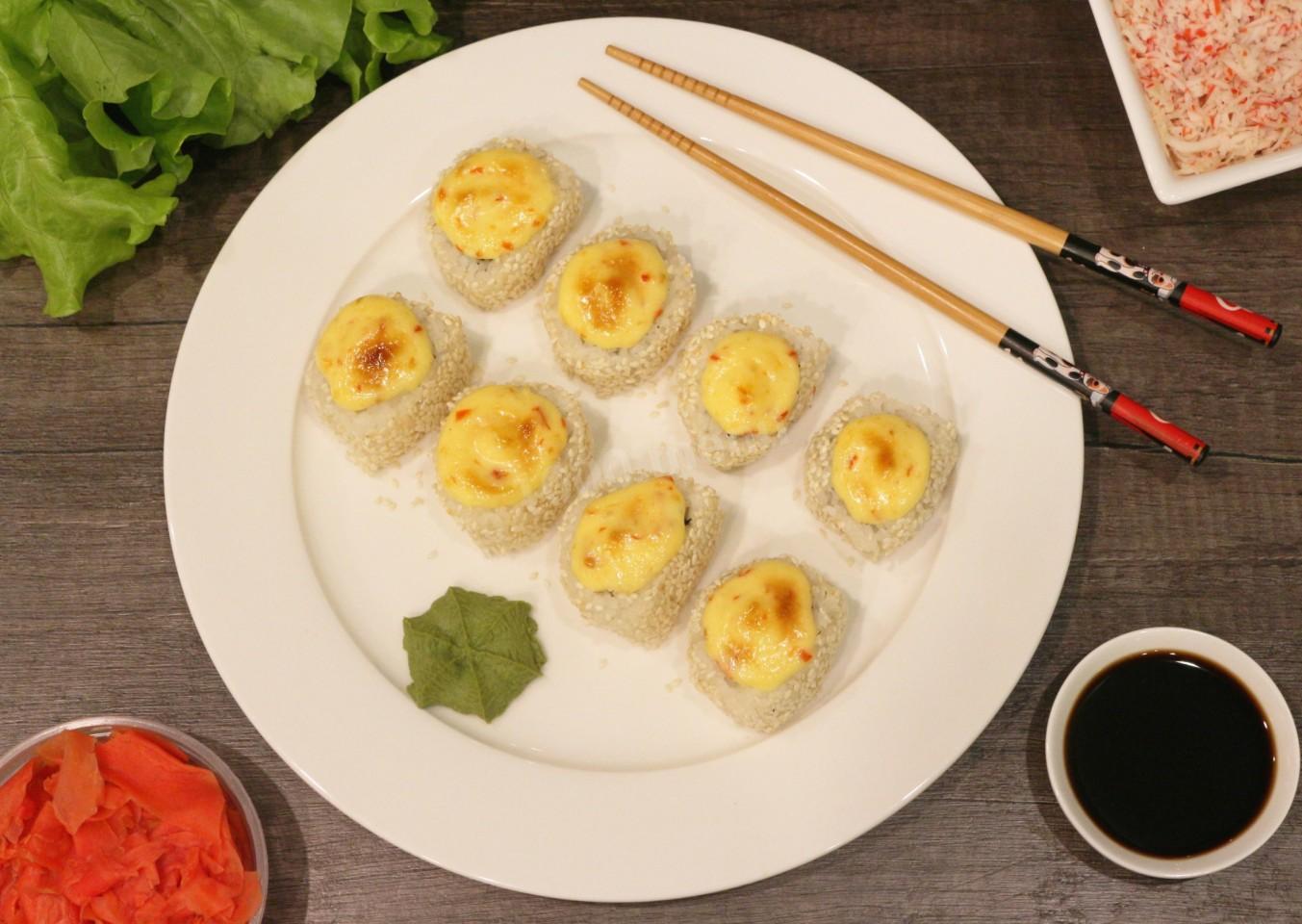
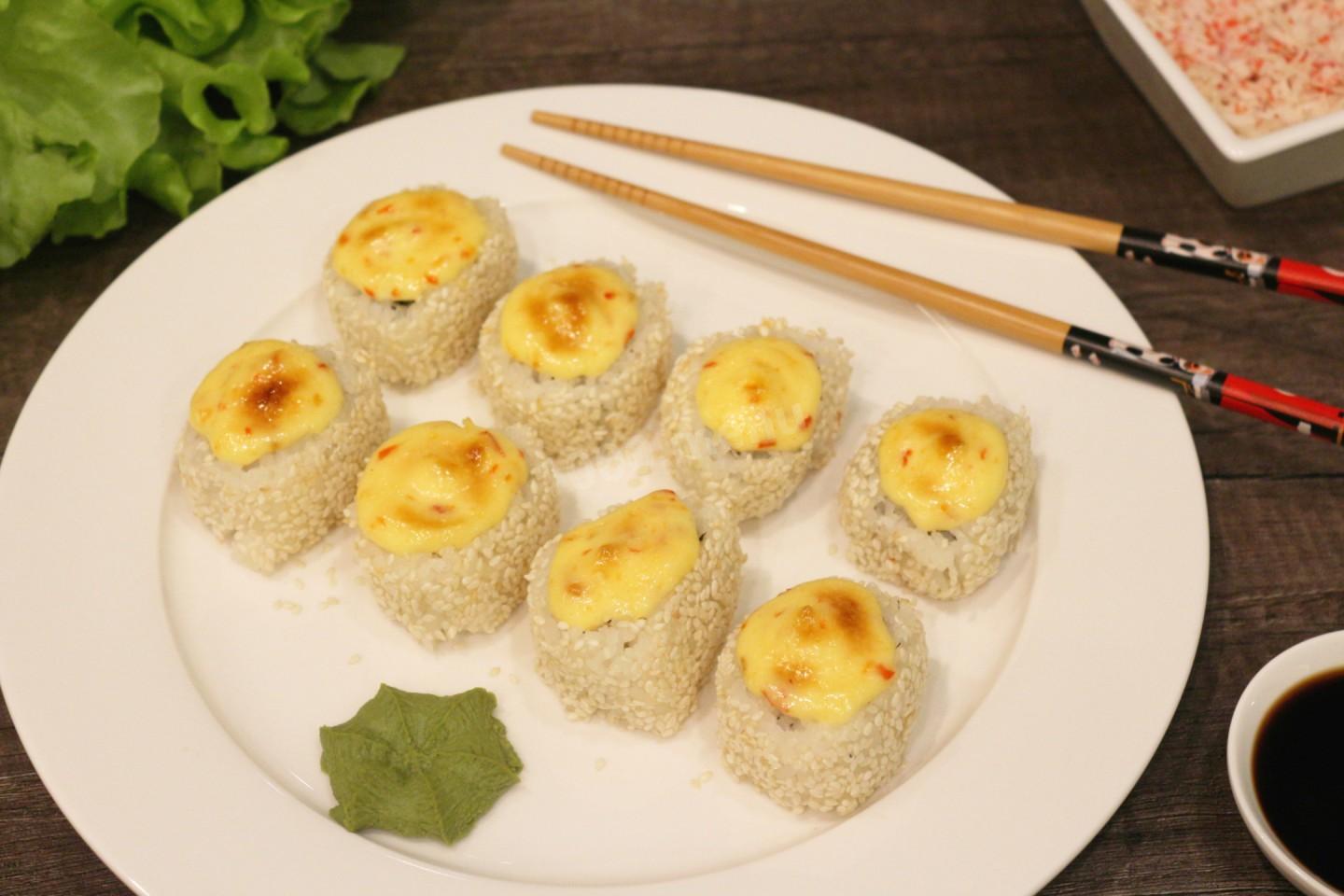
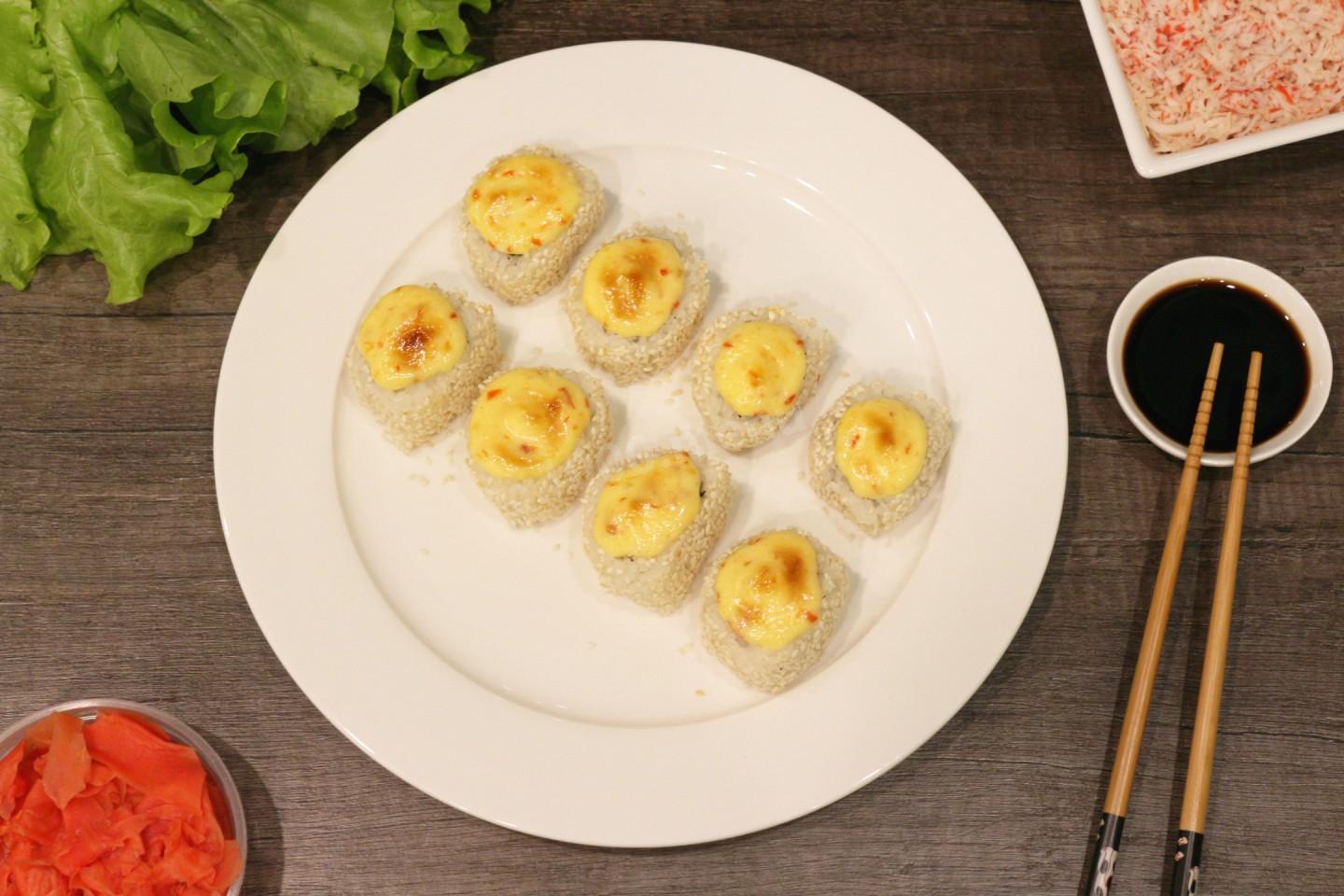
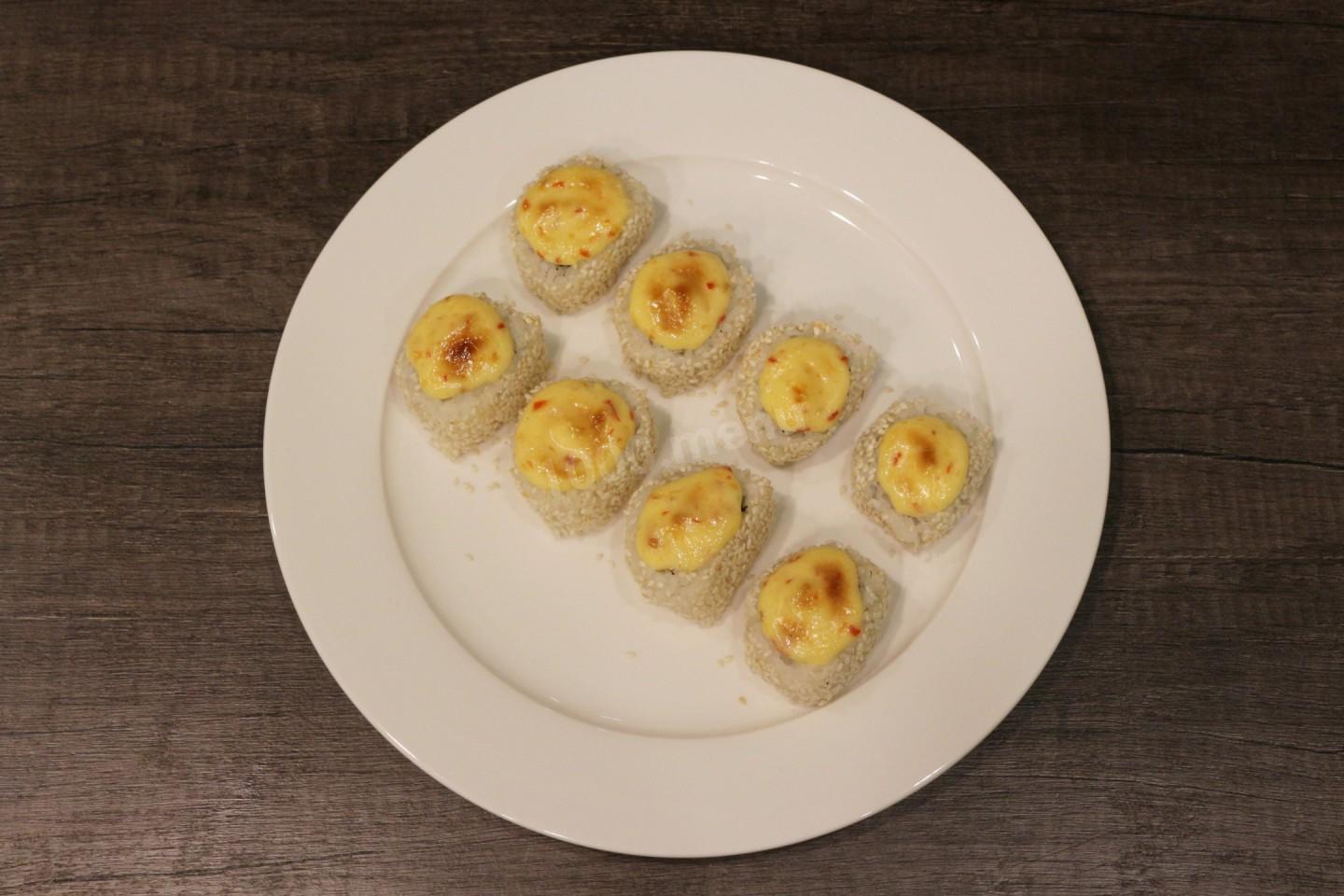
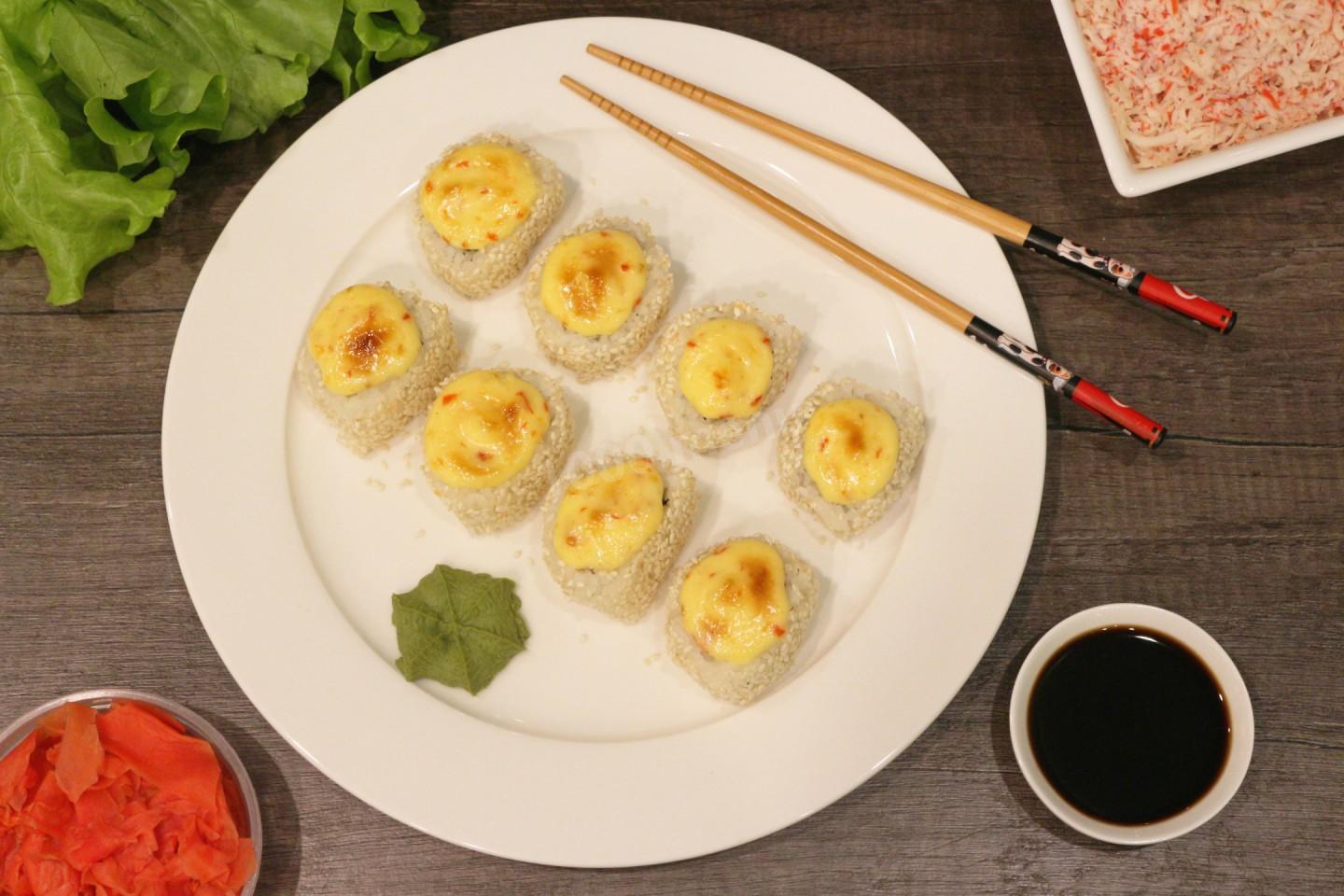
Here's what the finished rolls look like.
-
Step 15:
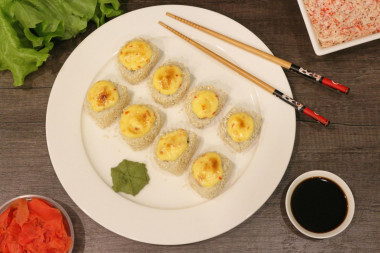
To serve, don't forget the soy sauce, wasabi, and pickled ginger.
- For cooking, it's best to use filtered or bottled water with a neutral taste. Tap water can give the dish an unpleasant off-flavor.
- Keep in mind that every oven is different. Your temperature and timing may vary from what's in the recipe — it pays to know your own oven's quirks for any baked dish!
- If the cucumber skin isn't tough, damaged, or bitter, there's no need to peel it.
Caloric content of the products possible in the composition of the dish
- Minced salmon - 130 kcal/100g
- Smoked salmon - 162 kcal/100g
- Grilled salmon - 283 kcal/100g
- Fresh salmon - 201 kcal/100g
- Salted salmon - 269 kcal/100g
- Salmon saute - 379 kcal/100g
- Fresh cucumbers - 15 kcal/100g
- Granulated sugar - 398 kcal/100g
- Sugar - 398 kcal/100g
- Salad mayonnaise of 50% fat content - 502 kcal/100g
- Light mayonnaise - 260 kcal/100g
- Provencal Mayonnaise - 624 kcal/100g
- Provencal mayonnaise - 627 kcal/100g
- Table mayonnaise - 627 kcal/100g
- Nori - 3 kcal/100g
- Dried whole sesame seeds - 563 kcal/100g
- Shelled sesame seed - 582 kcal/100g
- Salt - 0 kcal/100g
- Water - 0 kcal/100g
- Canned crabs - 85 kcal/100g
- Rice vinegar - 20 kcal/100g
- Round rice - 330 kcal/100g
Similar recipes

- National cuisine
- Snacks
- Semi-finished products
- Fish and seafood
- Seafood
- Vegetables
- Nuts
- Sweet
- Cereals and cereal products
- Spices seasonings spices
- Fats and oils
- Other
- Salt
- Vinegar
- Mayonnaise
- Water
- Asian cuisine
- Sushi
- Cooking
- Oven roasting
- Sauce
- Fish in the oven
- Fish with vegetables
- Red fish
- Algae
- Crab
- Vegetables in the oven
- From cucumbers
- No eggs
- Recipes for lean dishes without butter
- Seeds
- Sugar
- From rice