Karakol Ashlyamfu
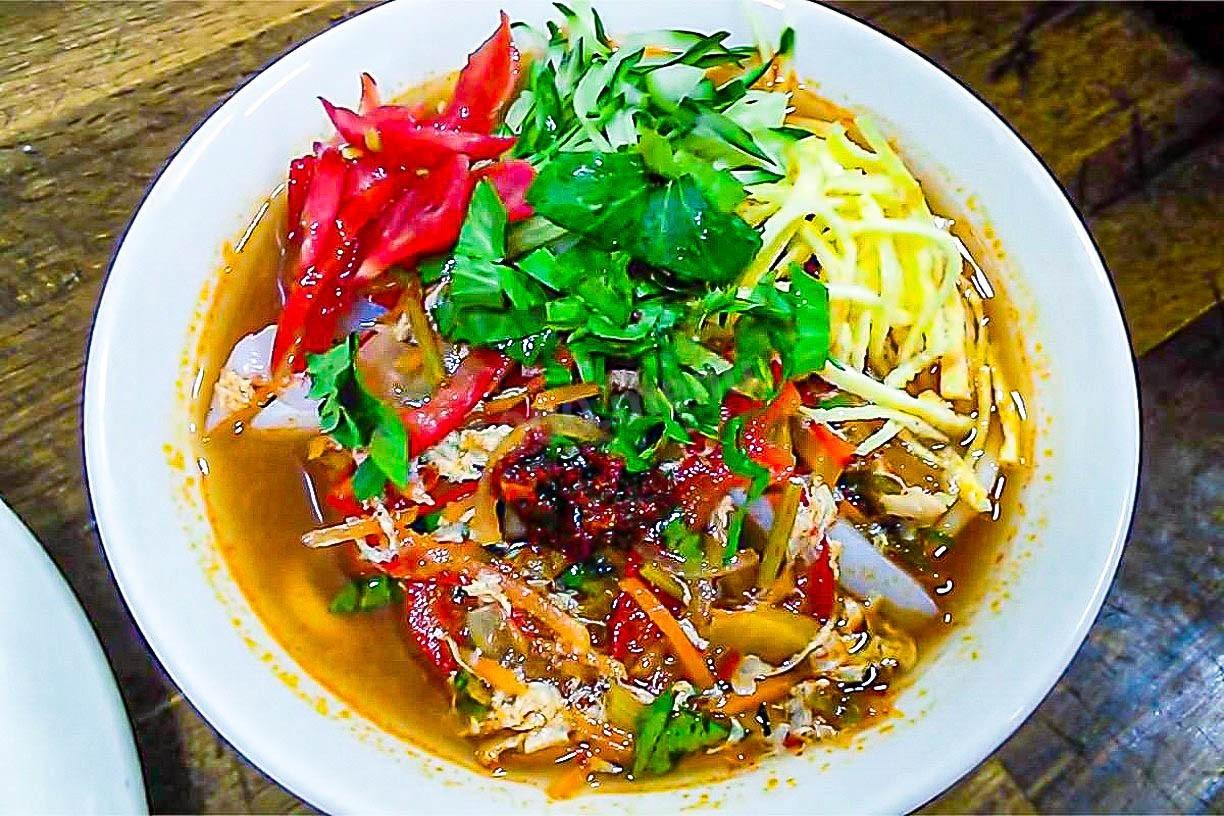
Bold, appetizing, and unlike anything else on your table! Ashlyamfu, Karakol style, is a legendary Central Asian dish. Served cold, it's a spicy, aromatic bowl layered with noodles, fresh and stir-fried vegetables, a thick starch jelly, and a tangy vinegar dressing.

Cooking method
-
Step 1:
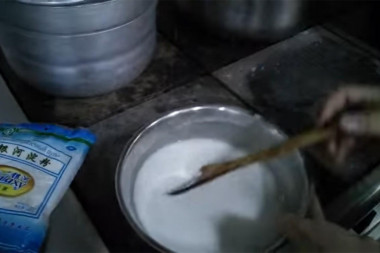
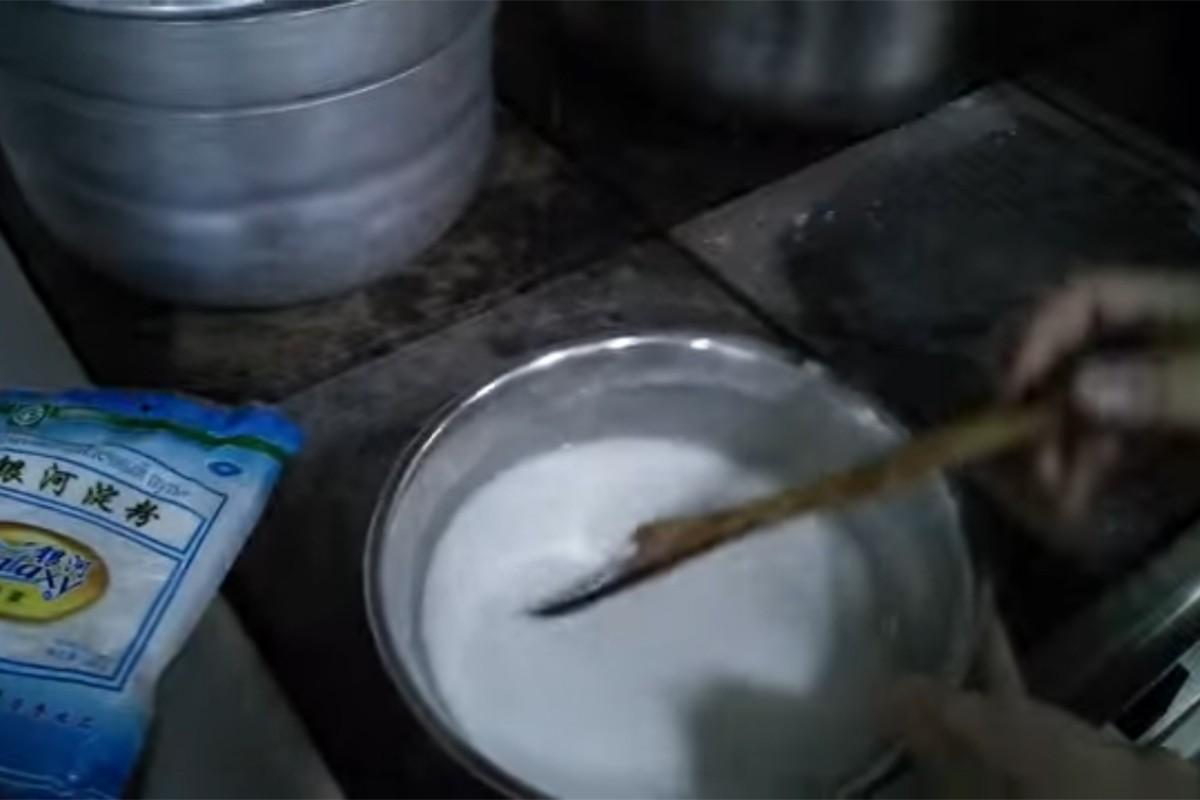
How do you make Karakol-style ashlyamfu? Start with the starch jelly. Whisk the starch into 500 ml (about 2 cups) of water, stirring well until there are no lumps left; a wooden spoon or spatula works great. Stir in 10 g (about 2 tsp) of salt until it dissolves.
-
Step 2:
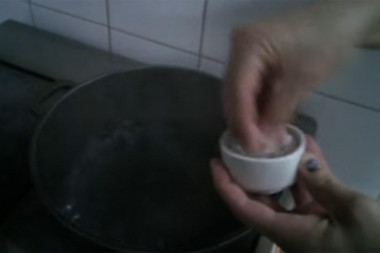
In a good-sized pot, bring 1.5 liters (about 6 cups) of water to a boil and add 10 g (about 2 tsp) of salt.
-
Step 3:
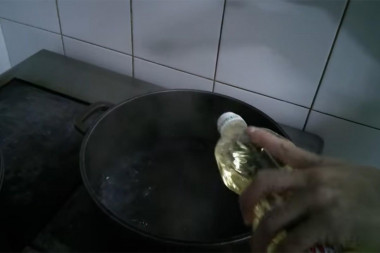
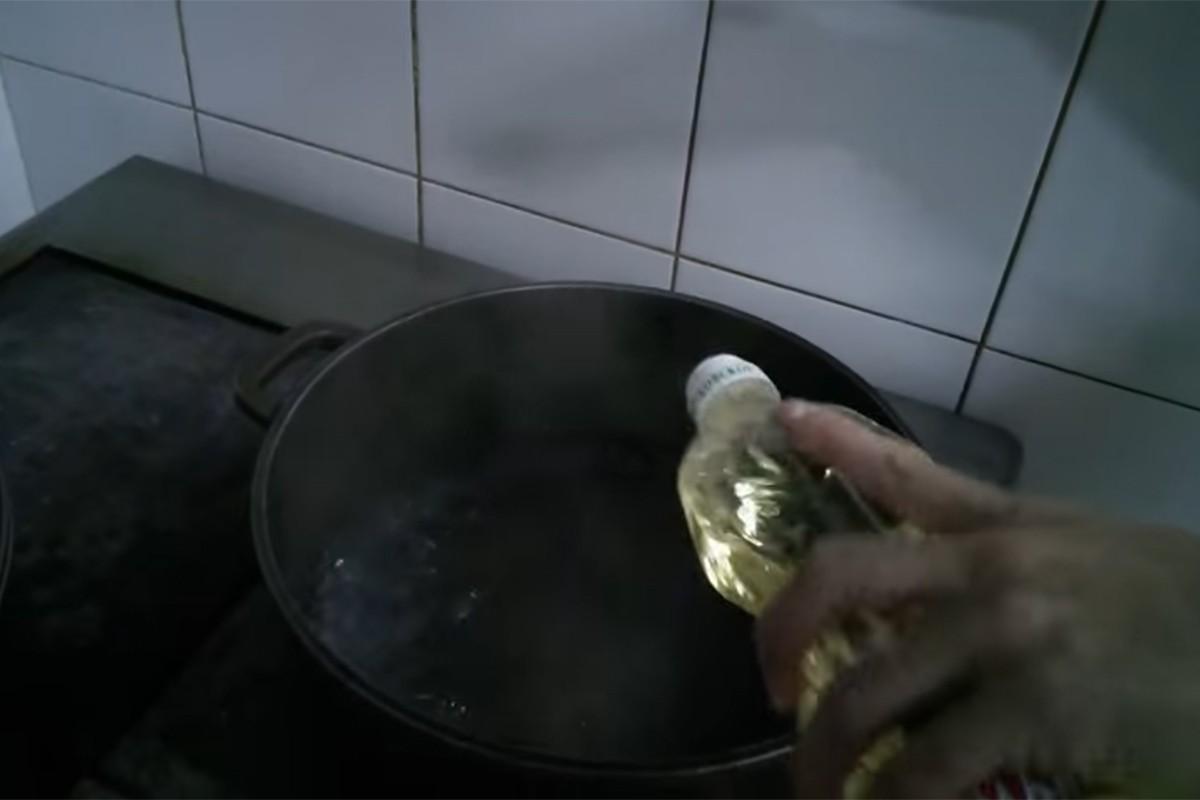
Add 2 tablespoons of sunflower oil to the boiling salted water — a neutral, odorless oil is best.
-
Step 4:
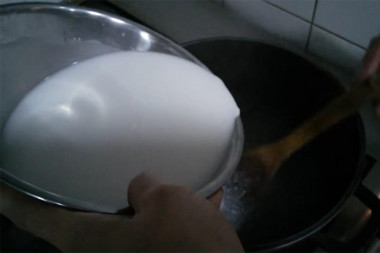
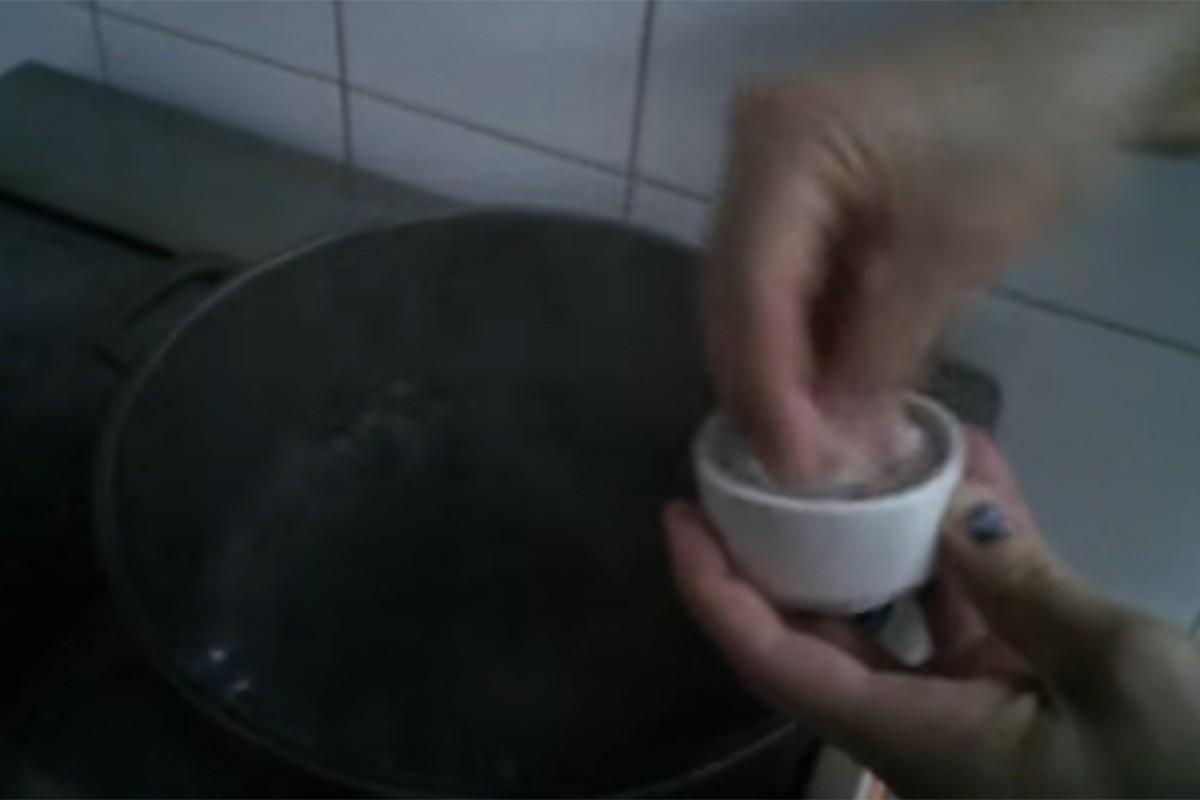
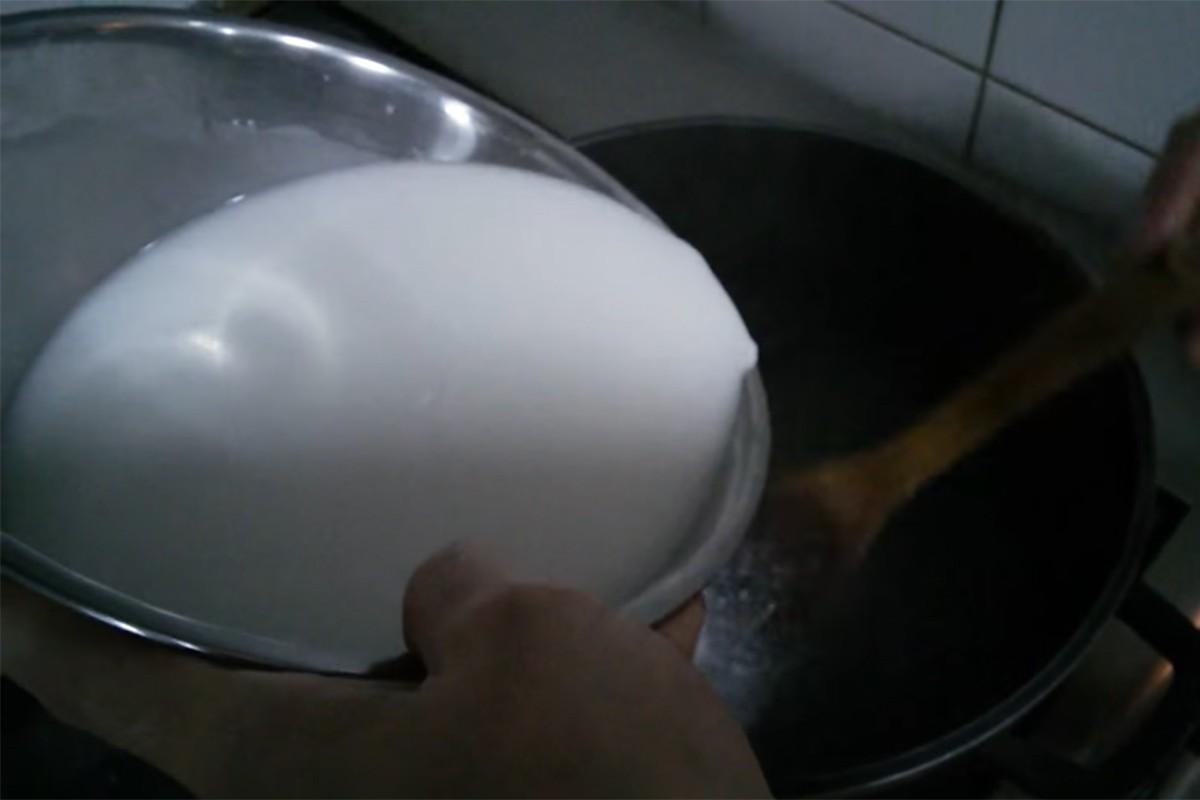
Pour the starch slurry into the boiling water in a thin stream, stirring constantly.
-
Step 5:
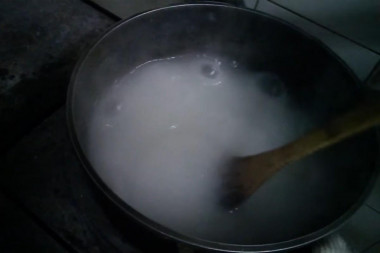
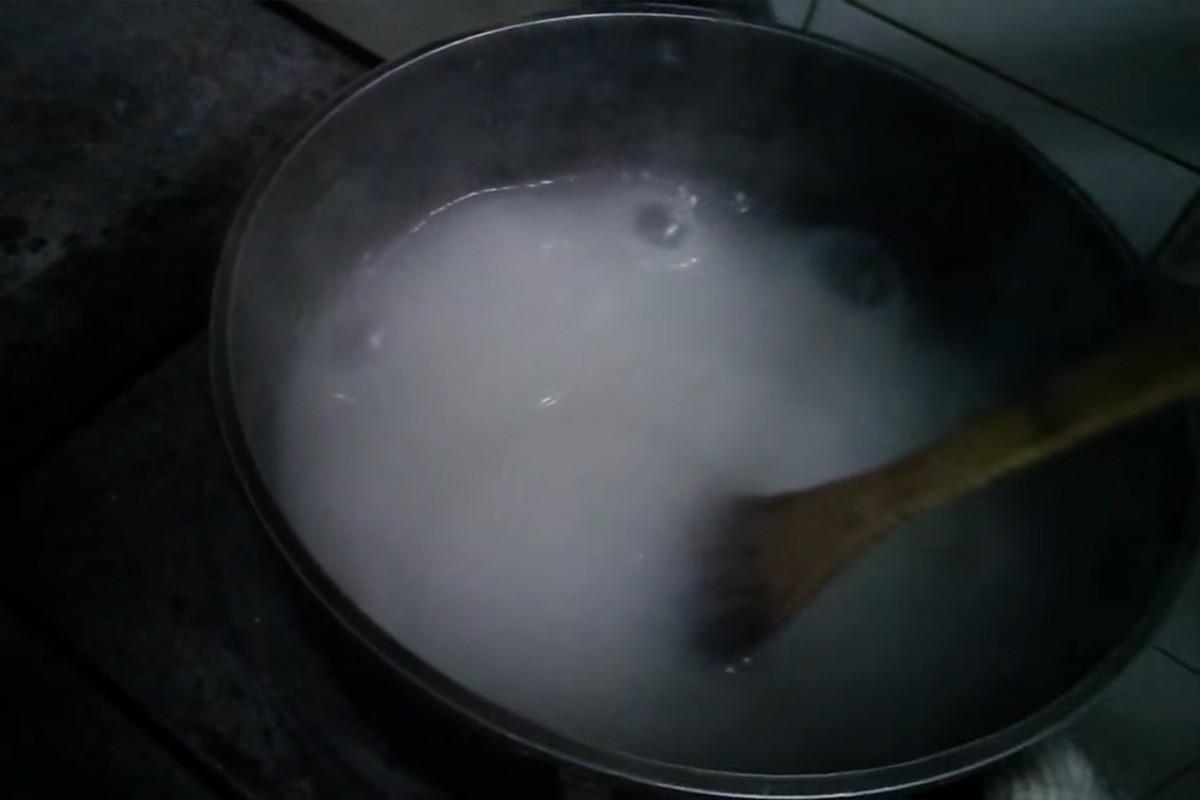
Cook the starch over fairly high heat, stirring actively, for about 8 minutes, until it turns clear and smooth.
-
Step 6:
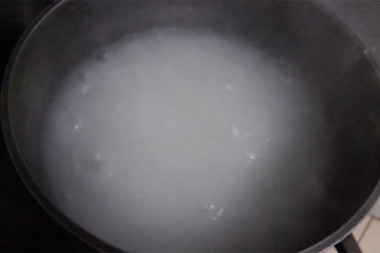
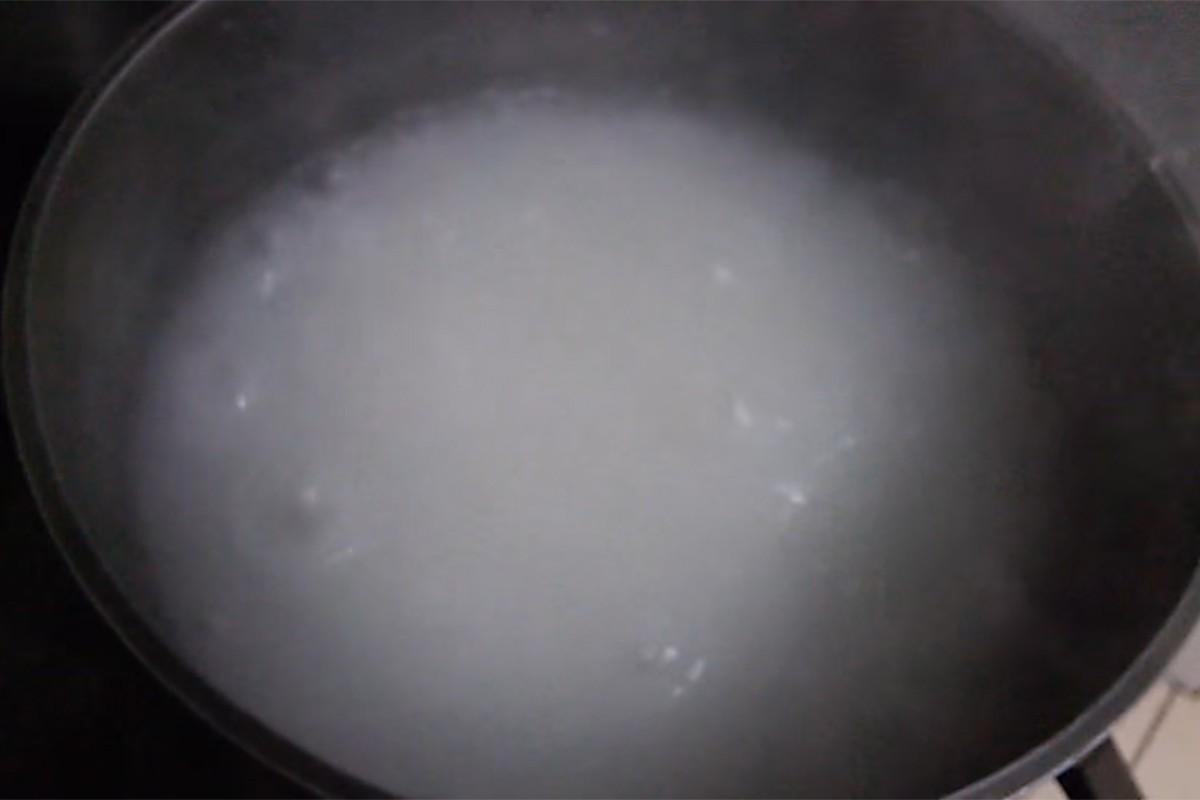
Turn the heat to low, cover the pot, and cook for another 20 minutes.
-
Step 7:

To set the starch, lightly oil a few small bowls (or one large container). Pour in the hot starch and leave it to cool and firm up overnight.
-
Step 8:
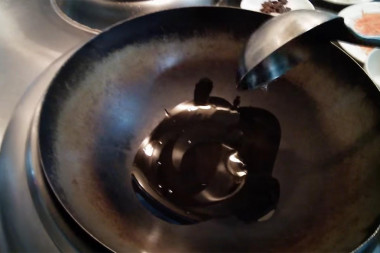
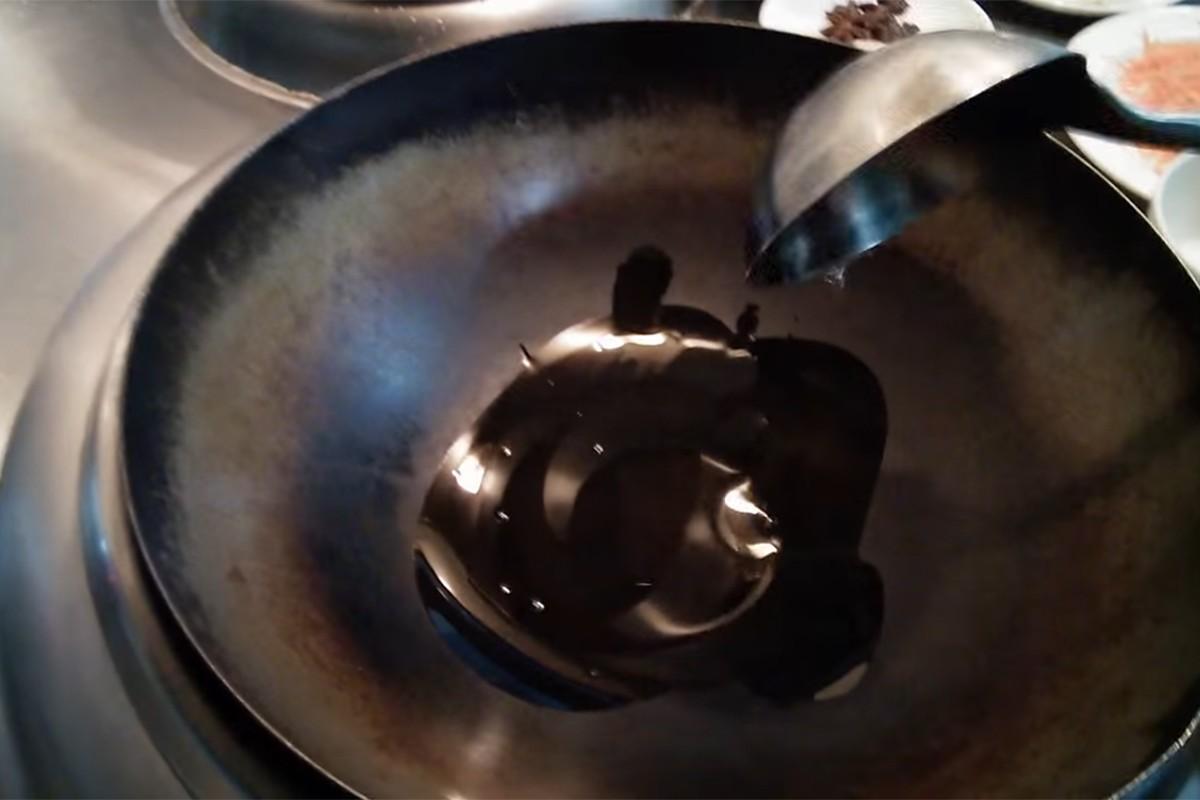
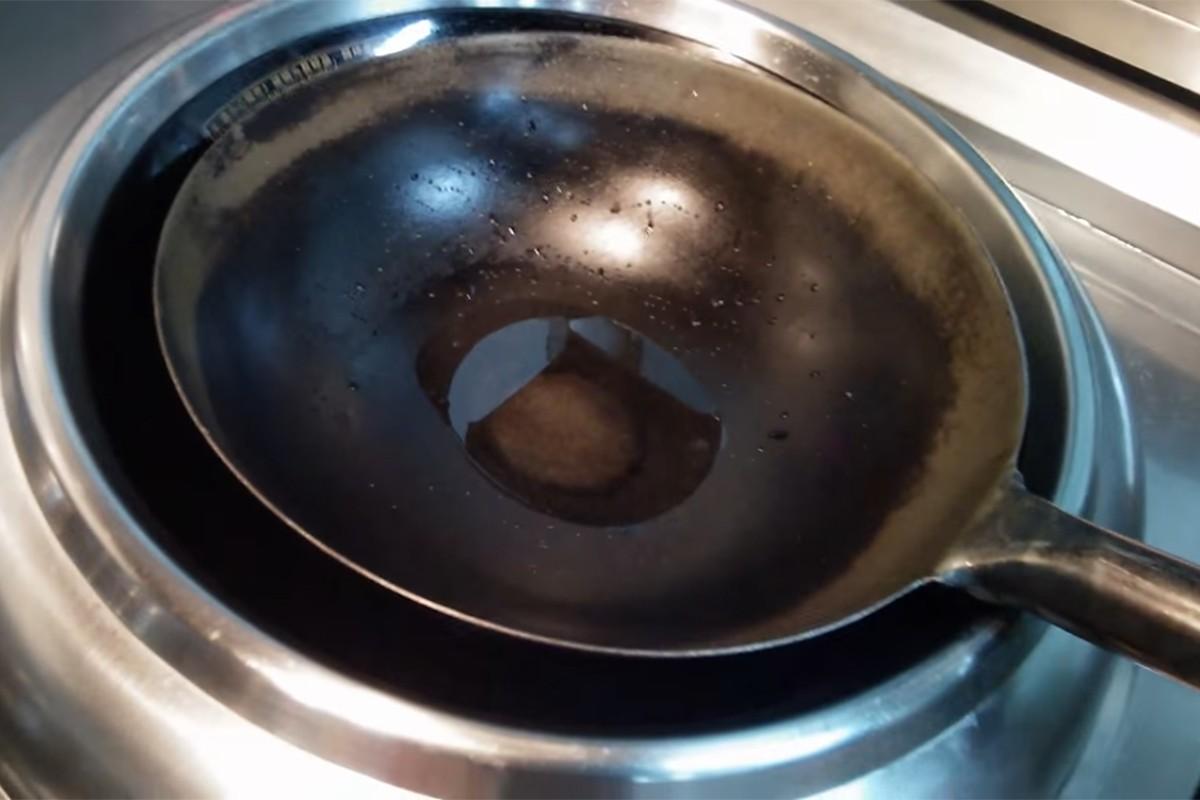
Now make the vinegar dressing. Pour 1-2 tablespoons of sunflower oil into a wok and set it over medium heat.
-
Step 9:
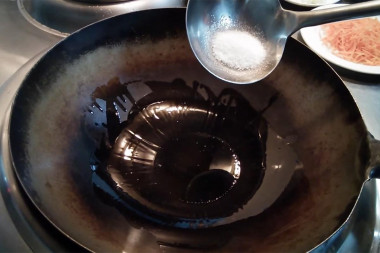
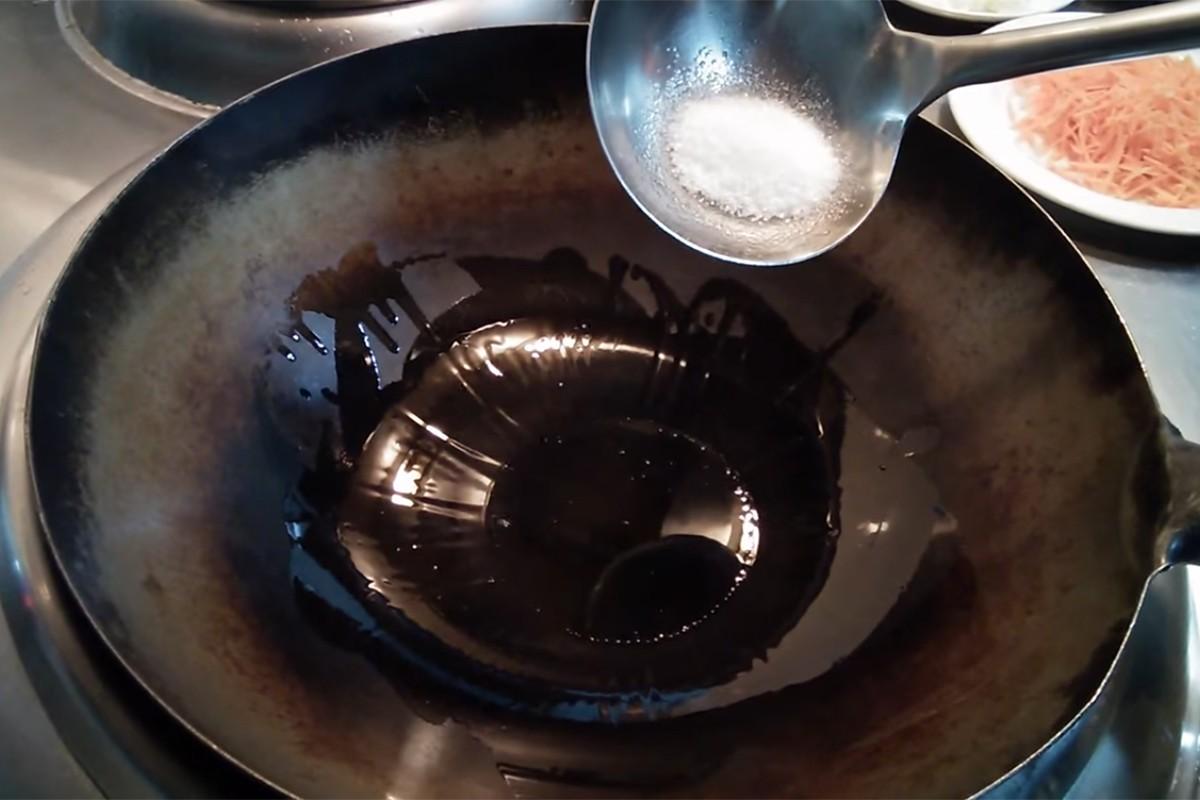
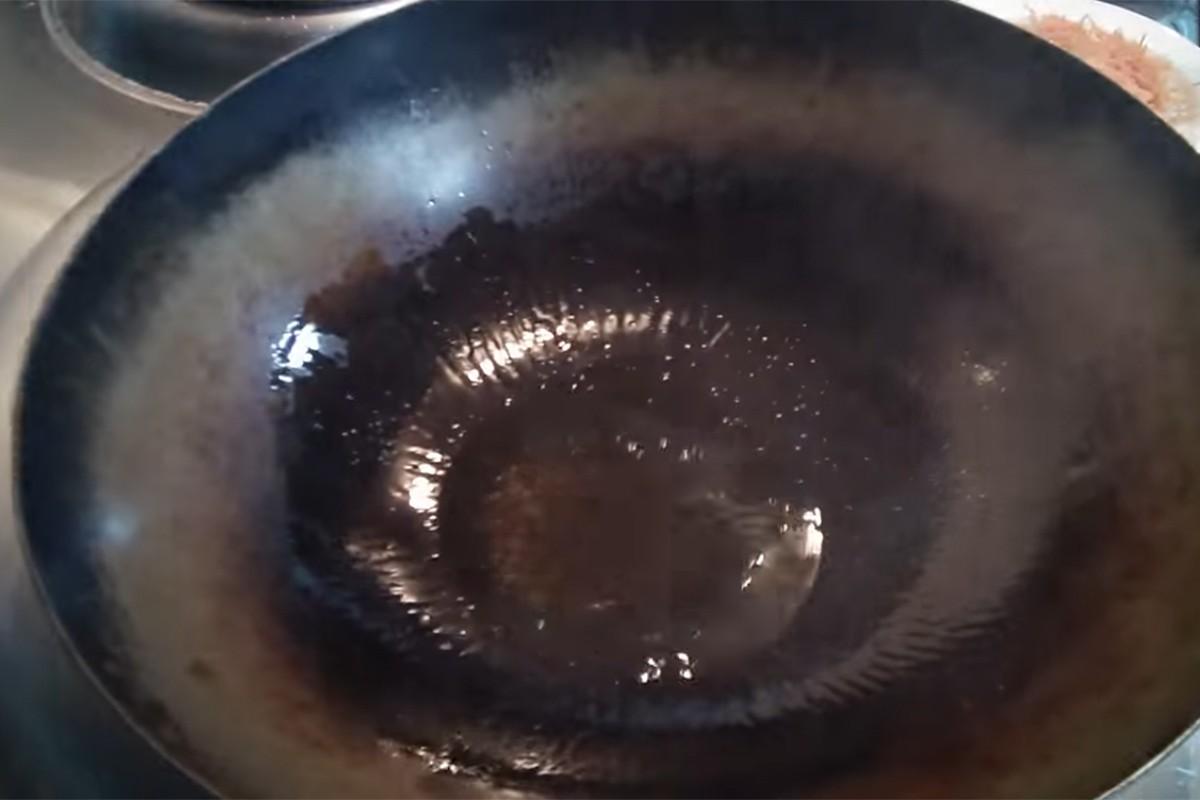
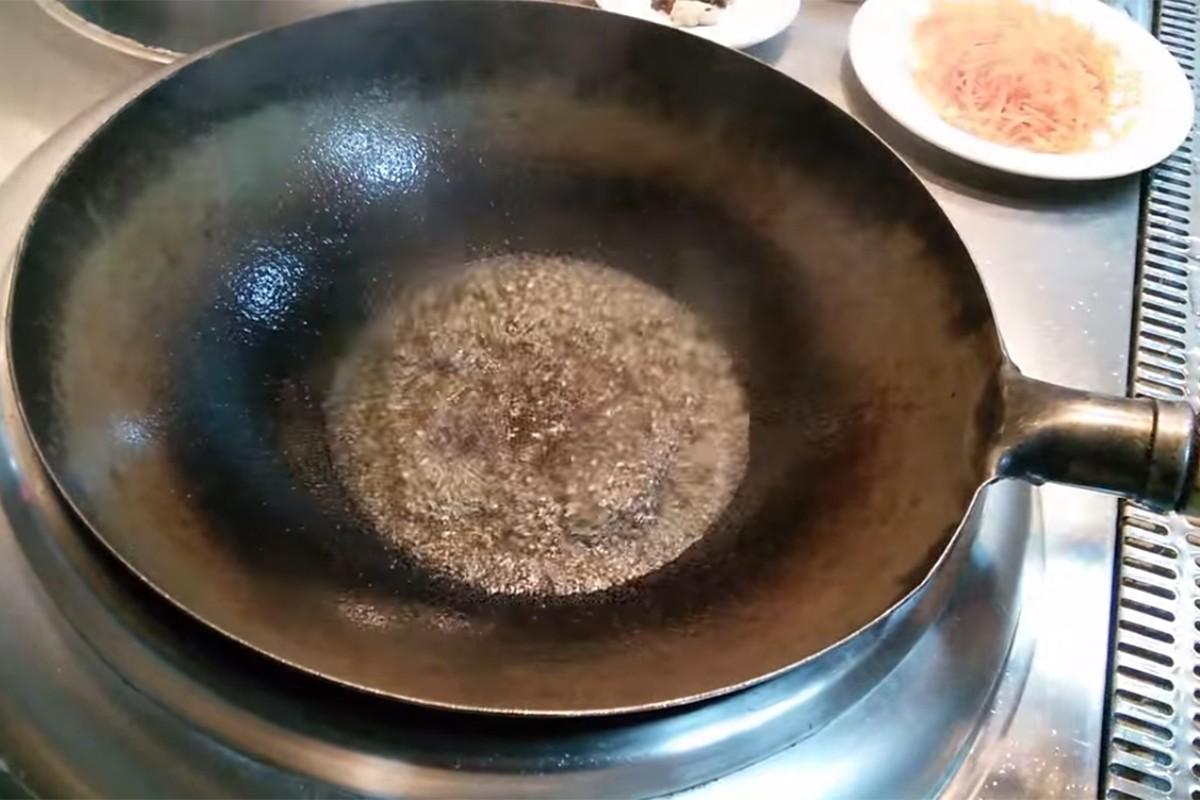
When the oil is good and hot, add the sugar and stir quickly. It turns into a caramel that gives the dressing its brown color.
-
Step 10:
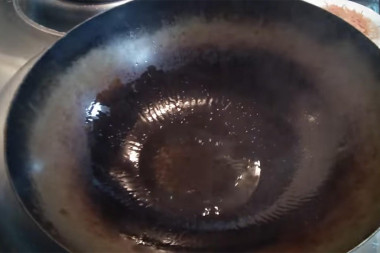
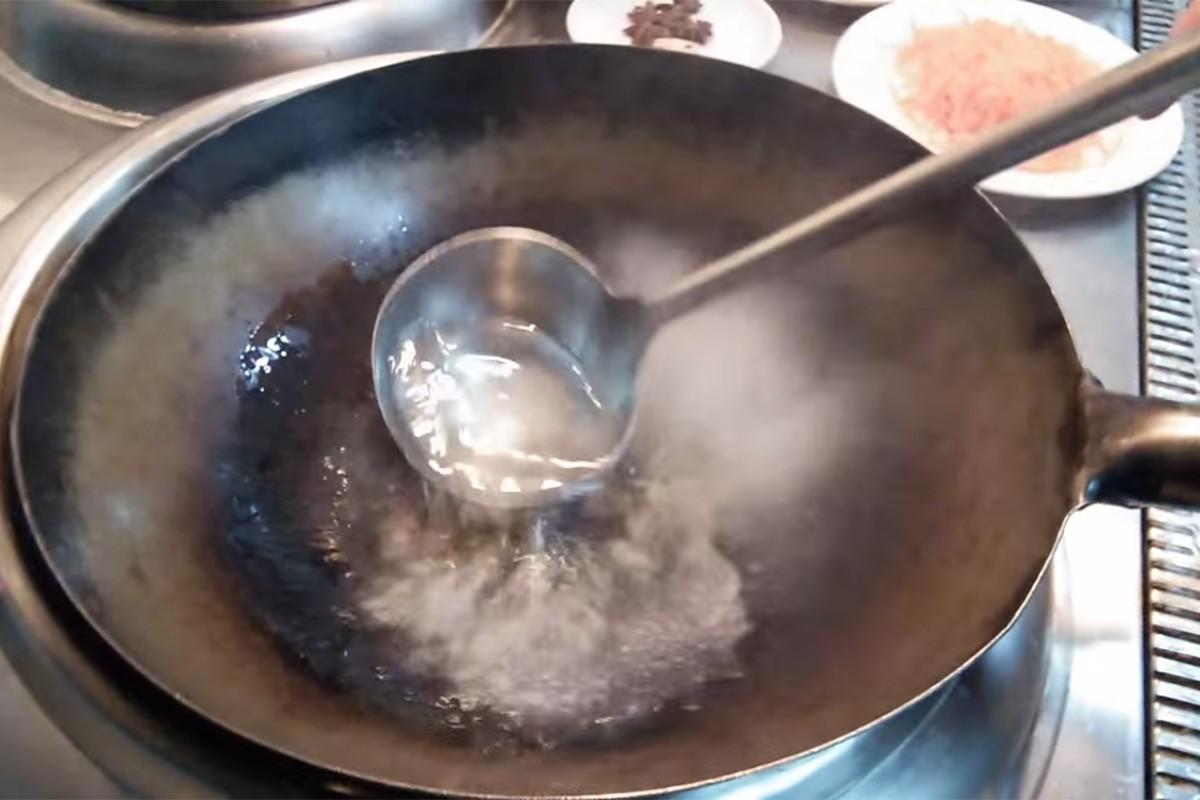
Use a pan and a long-handled spoon so you don't get burned.
-
Step 11:
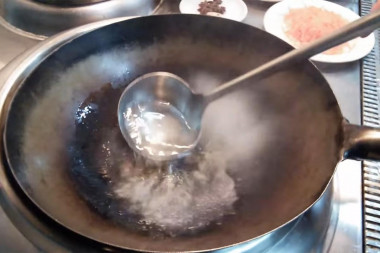
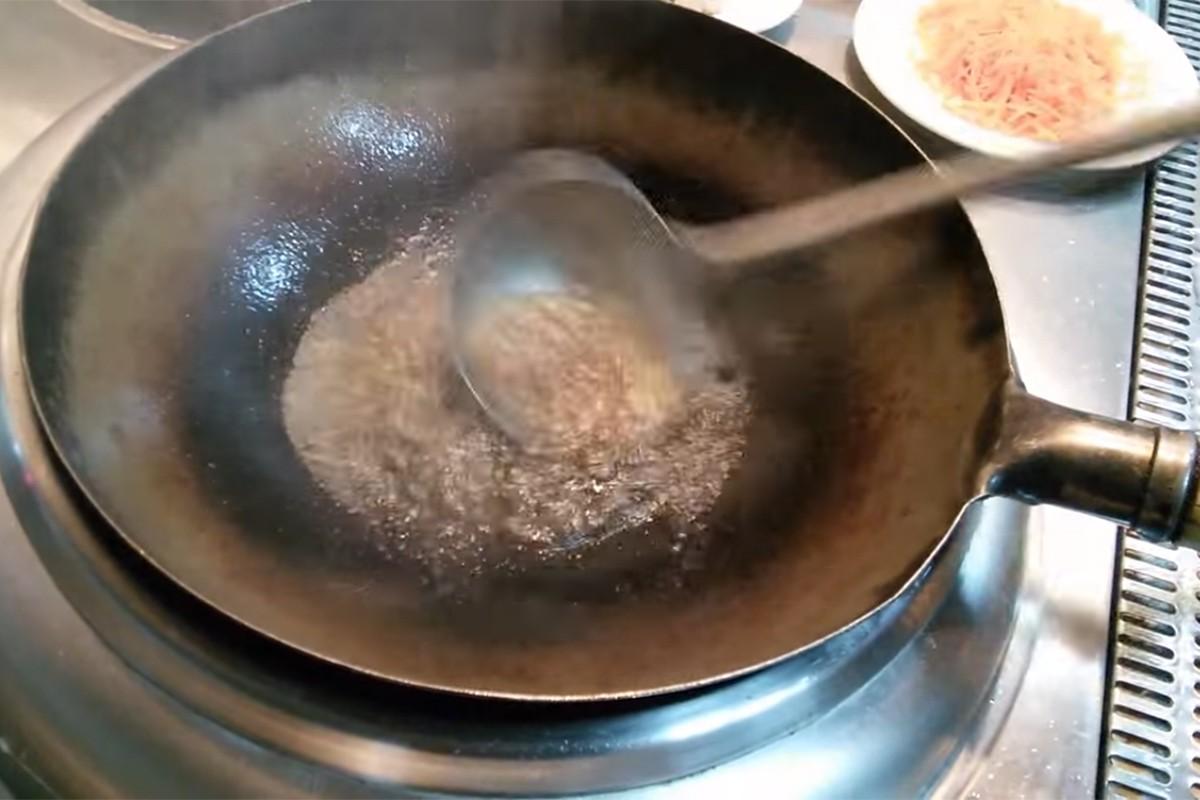
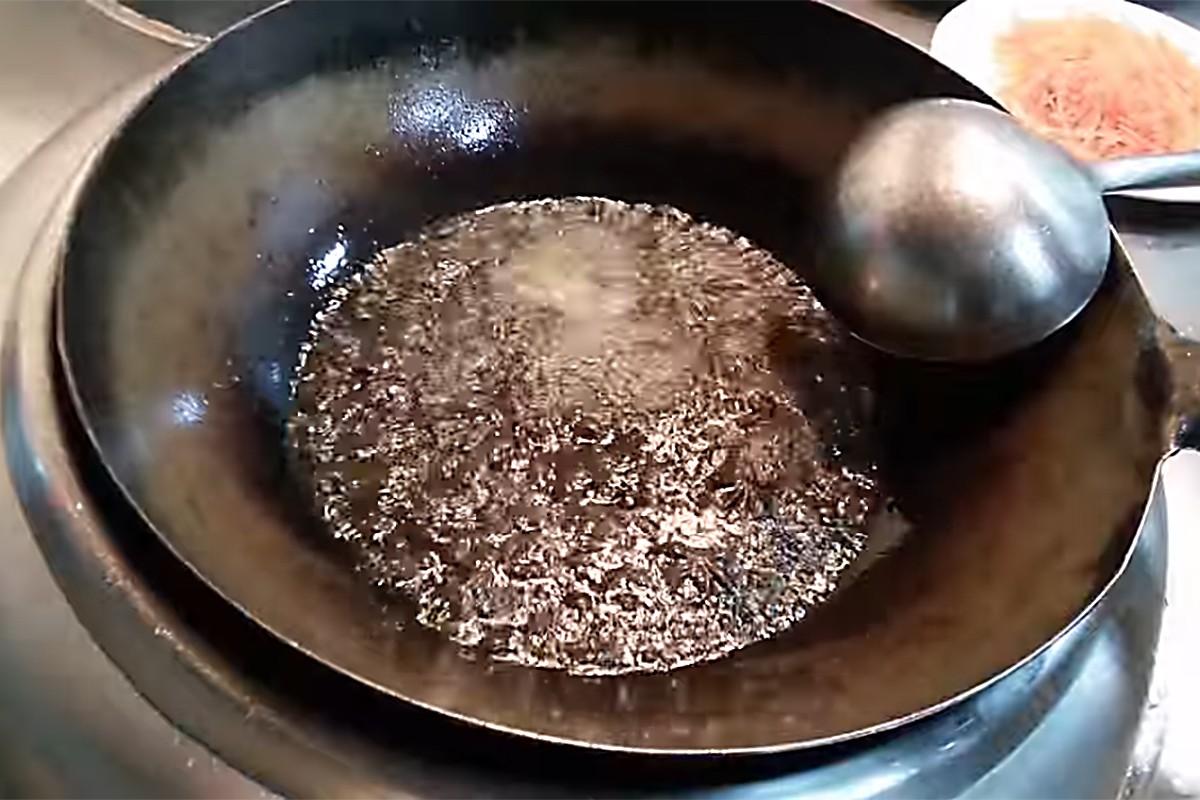
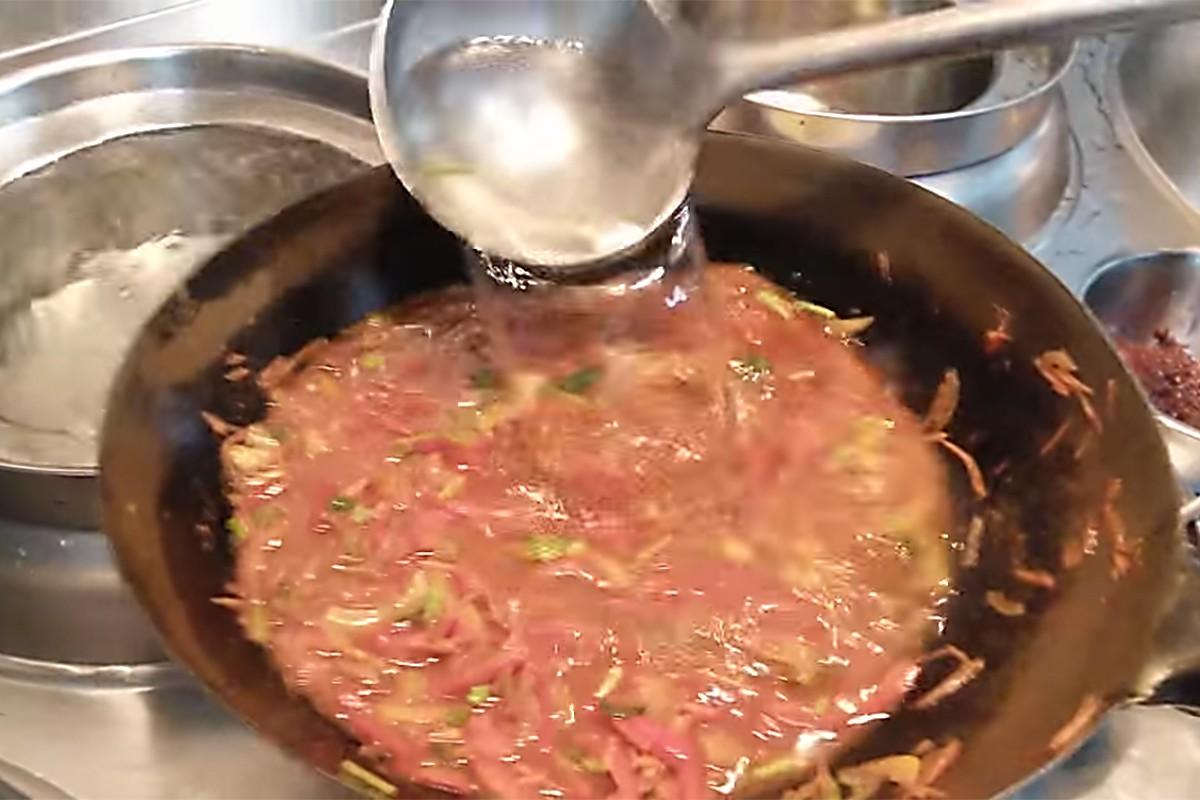
Start adding water to the caramel a ladle at a time (2 to 4 cups total).
-
Step 12:
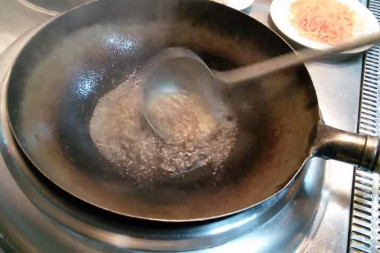
It will sizzle hard — keep stirring with a spoon.
-
Step 13:
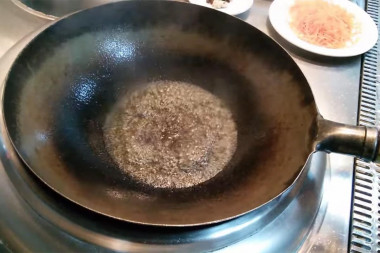
Let it boil for a minute until it's smooth and even.
-
Step 14:
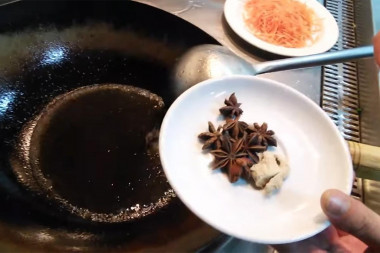
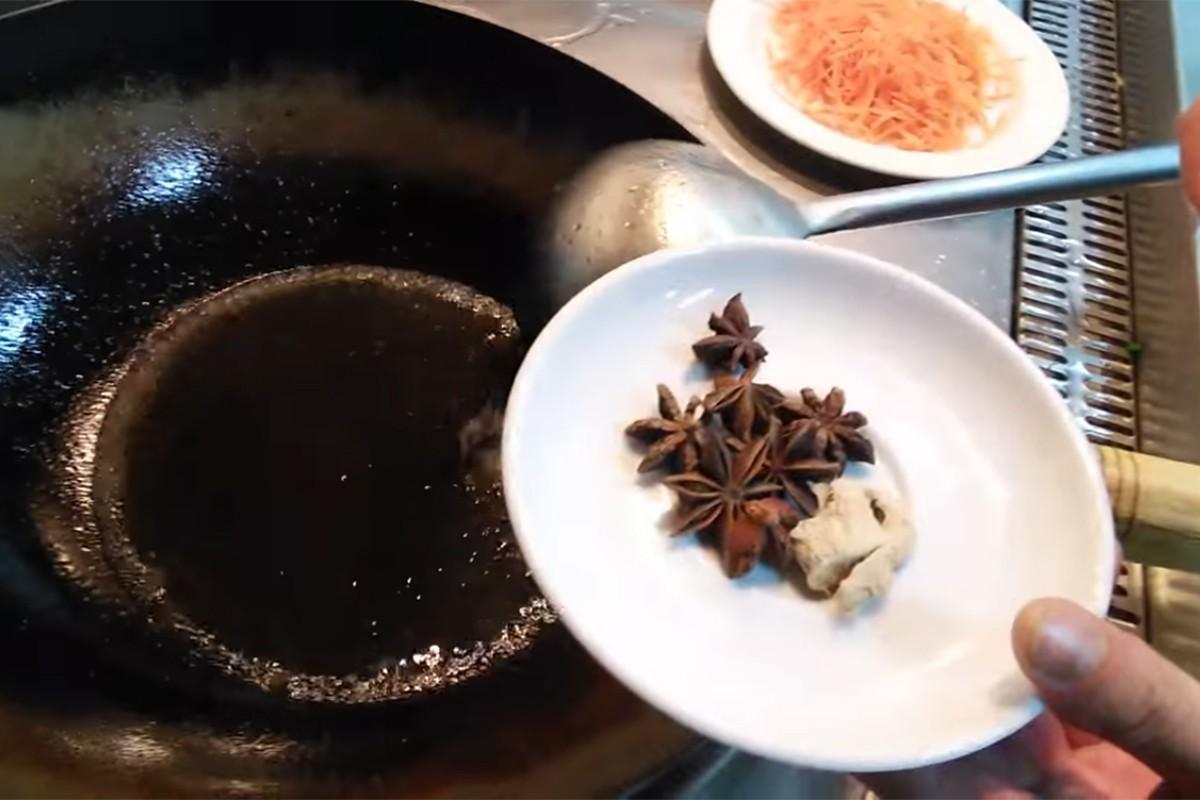
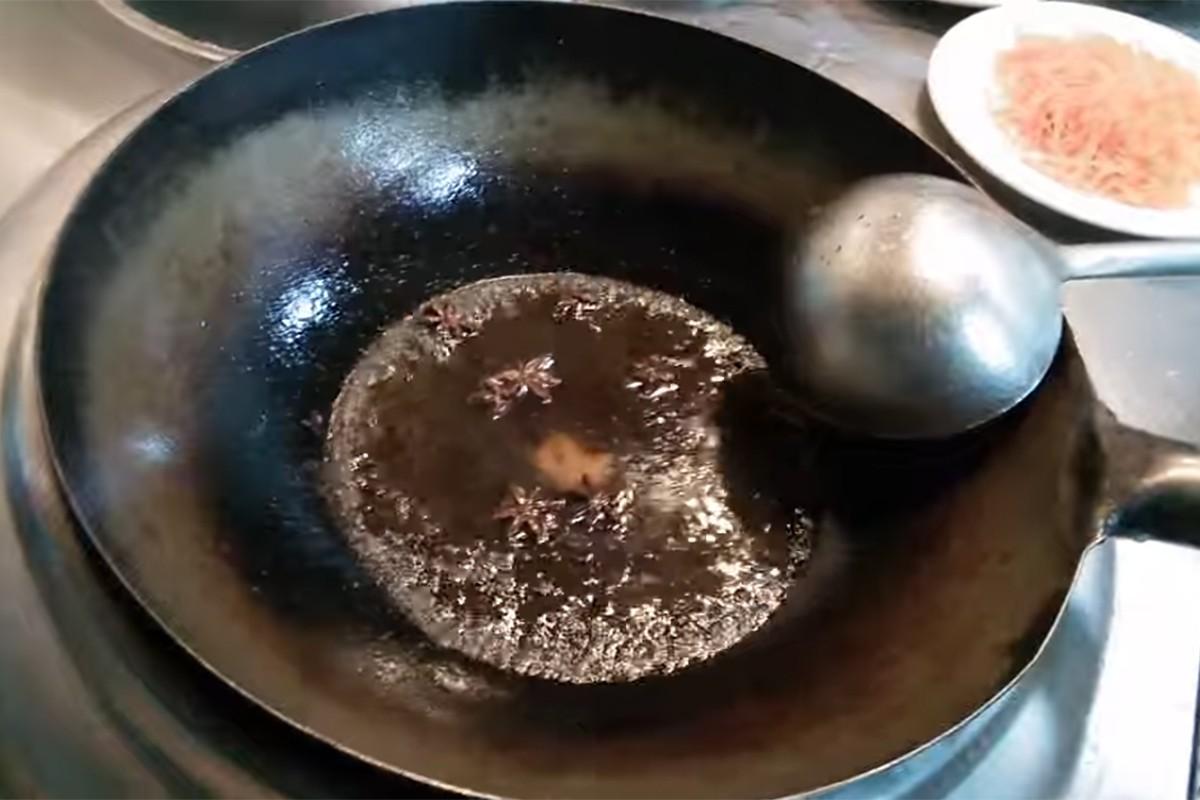
Add the ginger (peeled and sliced) and the star anise.
-
Step 15:
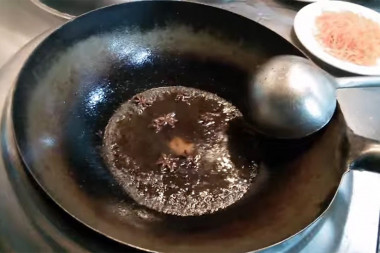
Boil for a minute, stirring constantly.
-
Step 16:
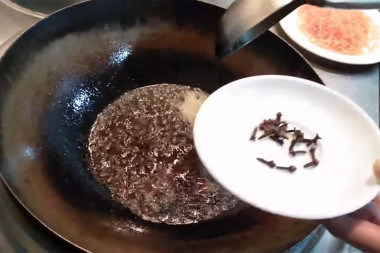
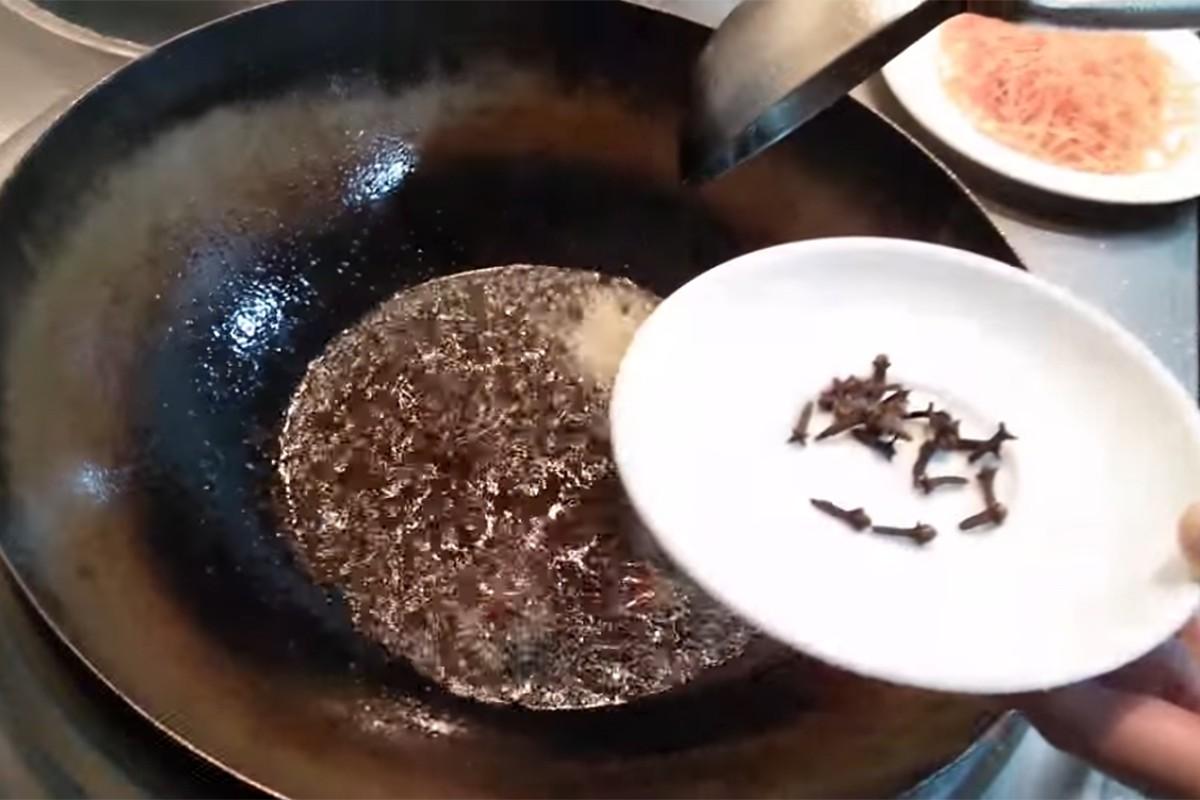
Add the cloves and the Chinese black vinegar.
-
Step 17:
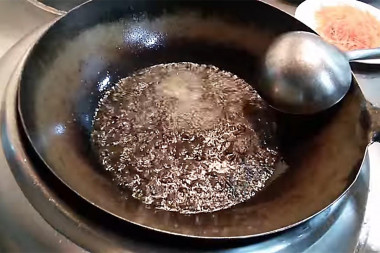
Boil a couple more minutes, then let it cool.
-
Step 18:
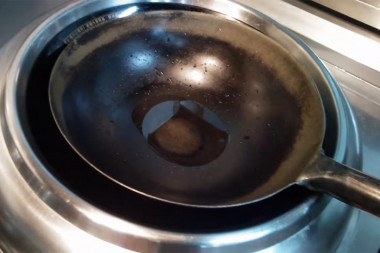
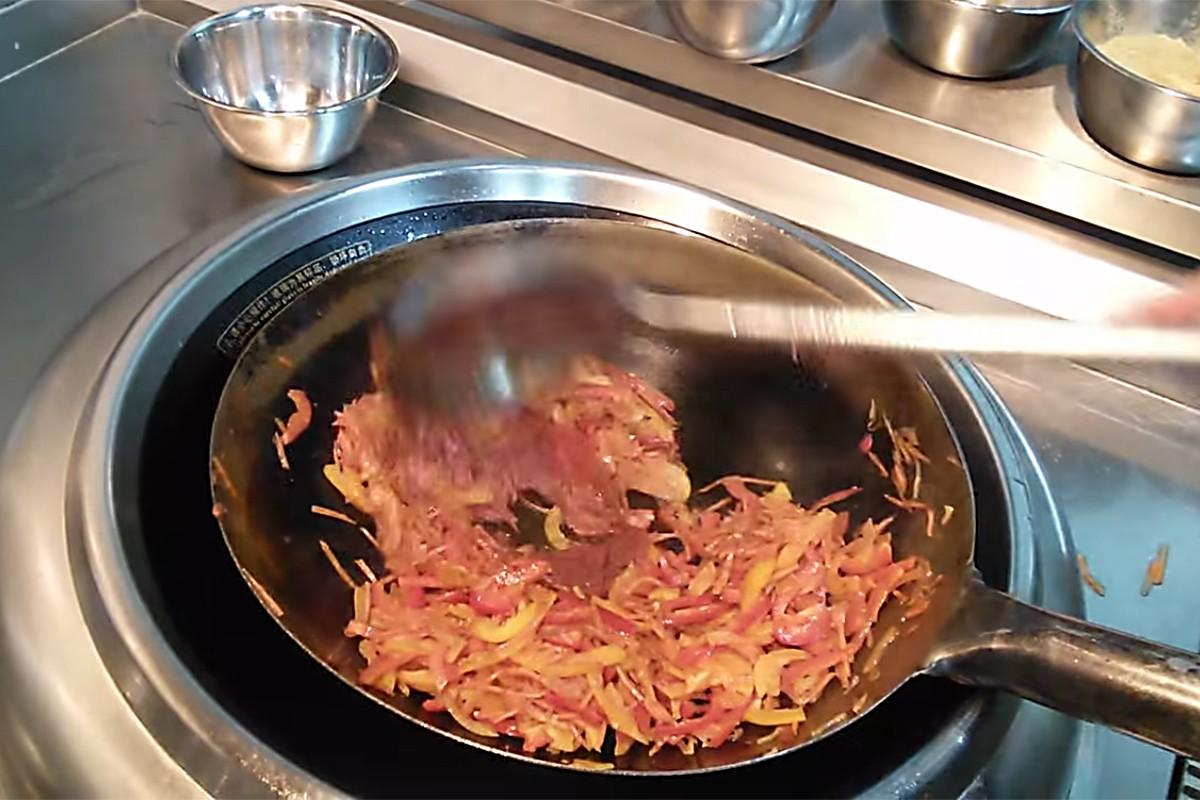
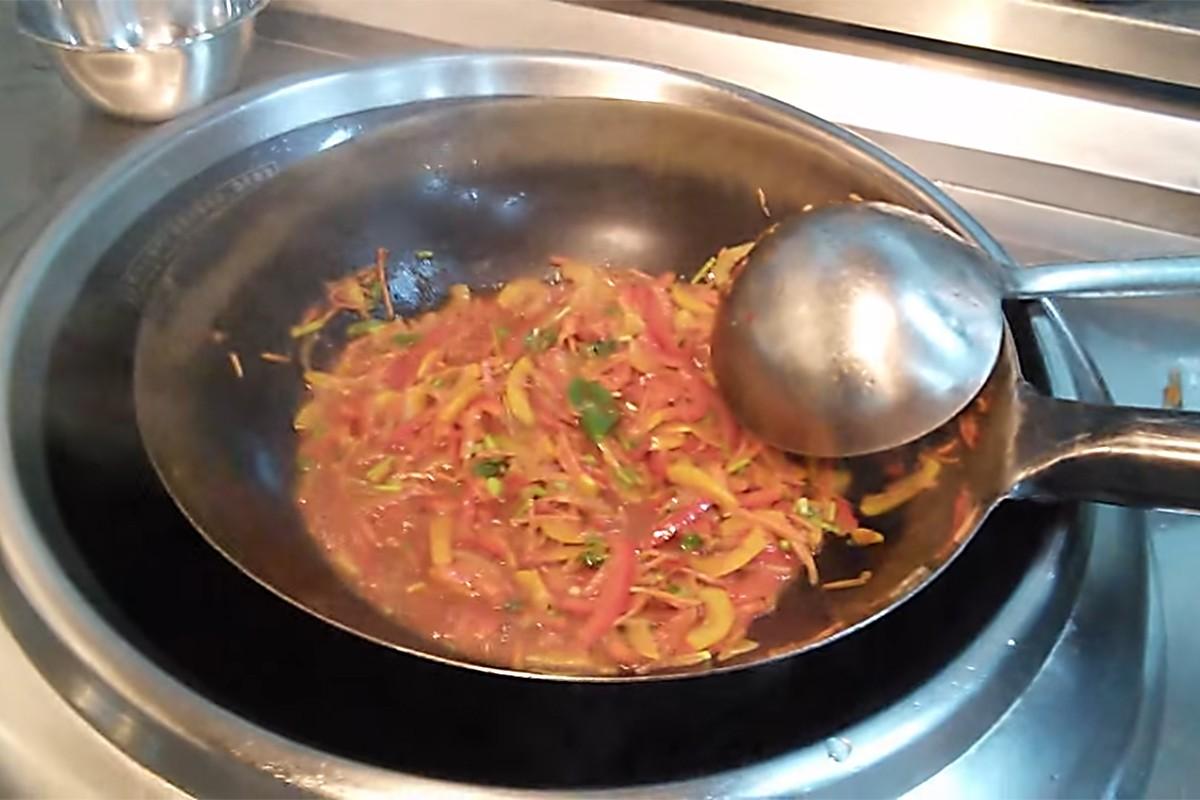
Now make the vegetable gravy. Pour 1-2 tablespoons of sunflower oil into a wok and heat it over medium.
-
Step 19:
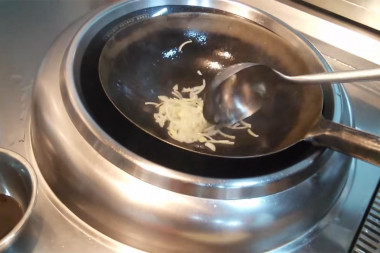
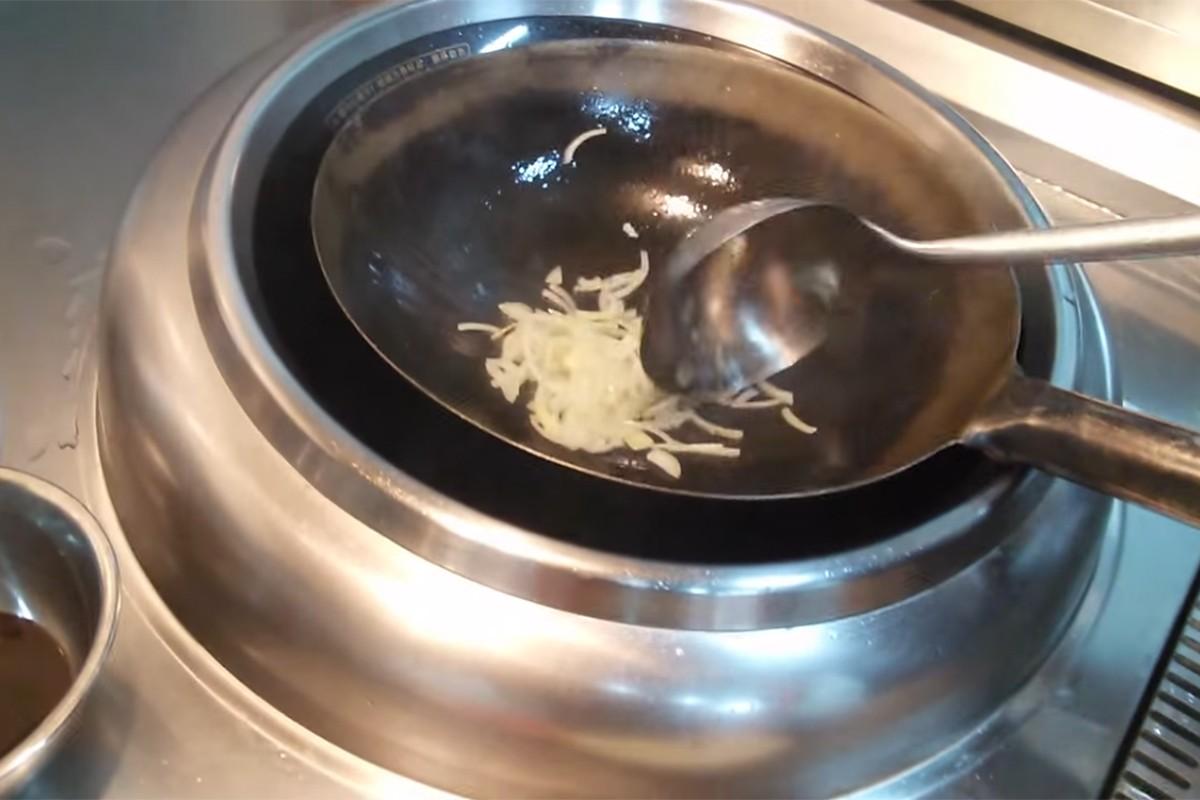
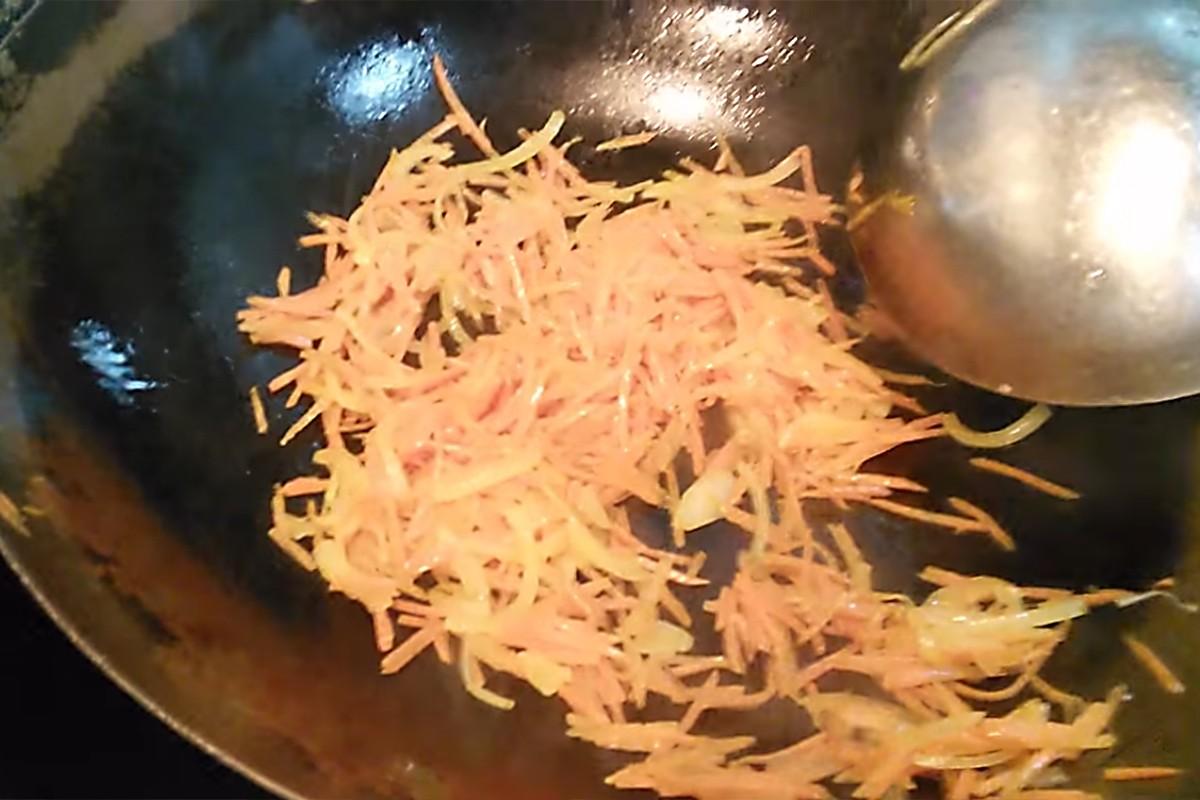
Add the thinly sliced onion and sauté briefly, stirring constantly.
-
Step 20:
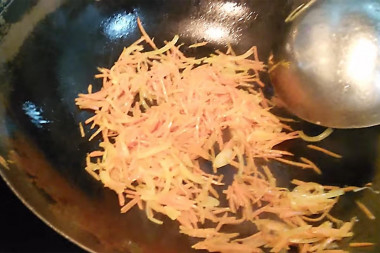
Add the carrots, cut into thin matchsticks (or shredded on a julienne grater), and sauté them with the onion.
-
Step 21:
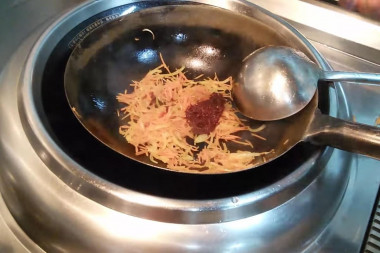
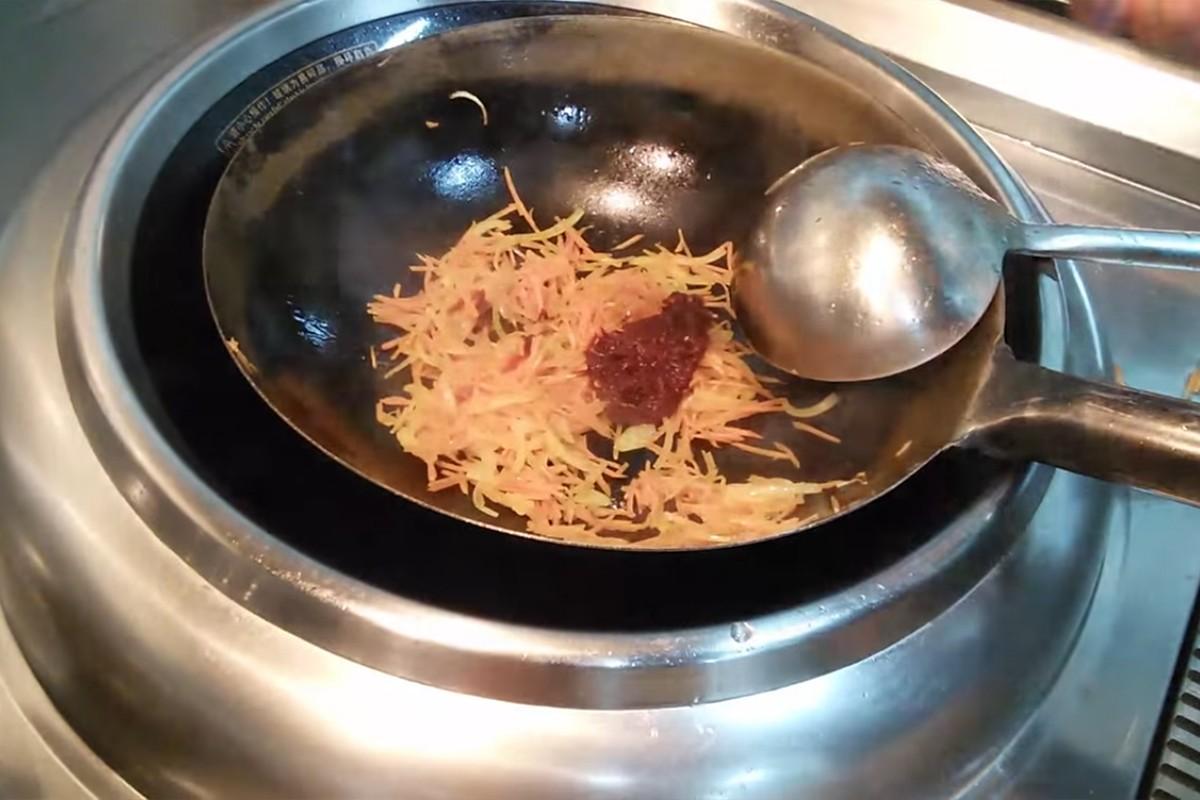
Add the dried hot pepper paste, work it in, and sauté.
-
Step 22:
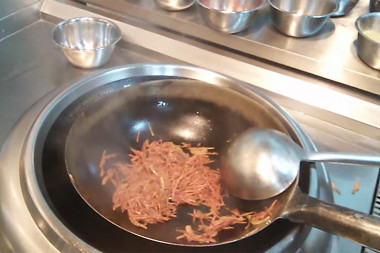
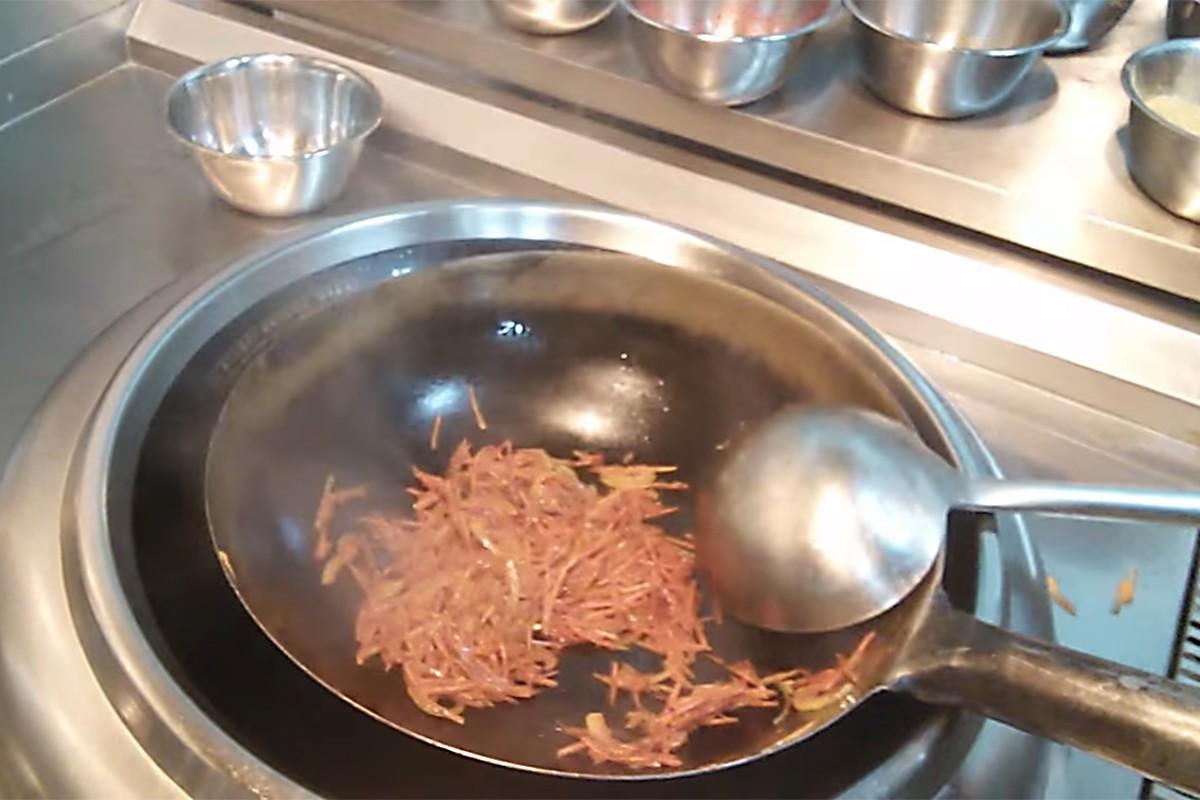
Pour in a little water.
-
Step 23:
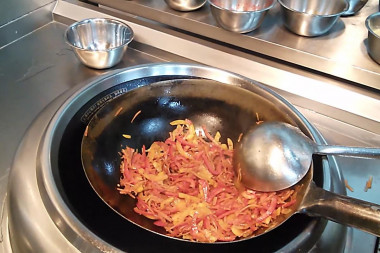
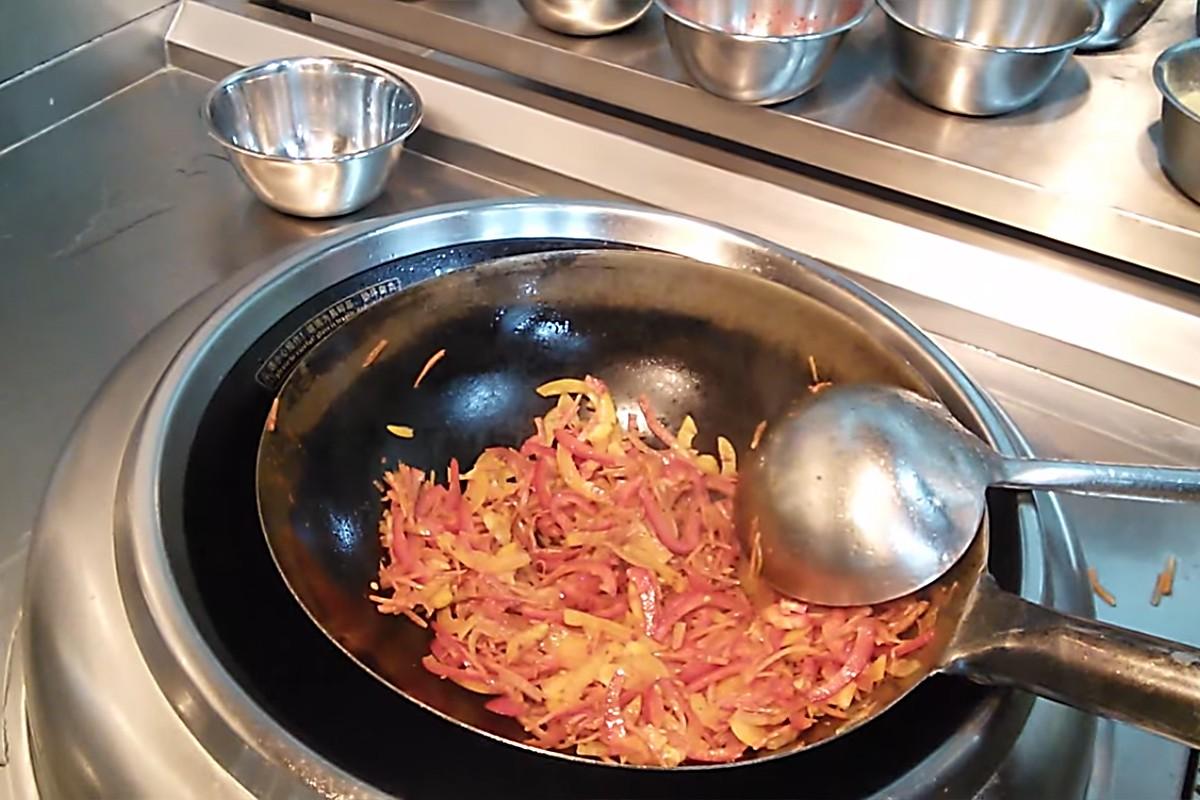
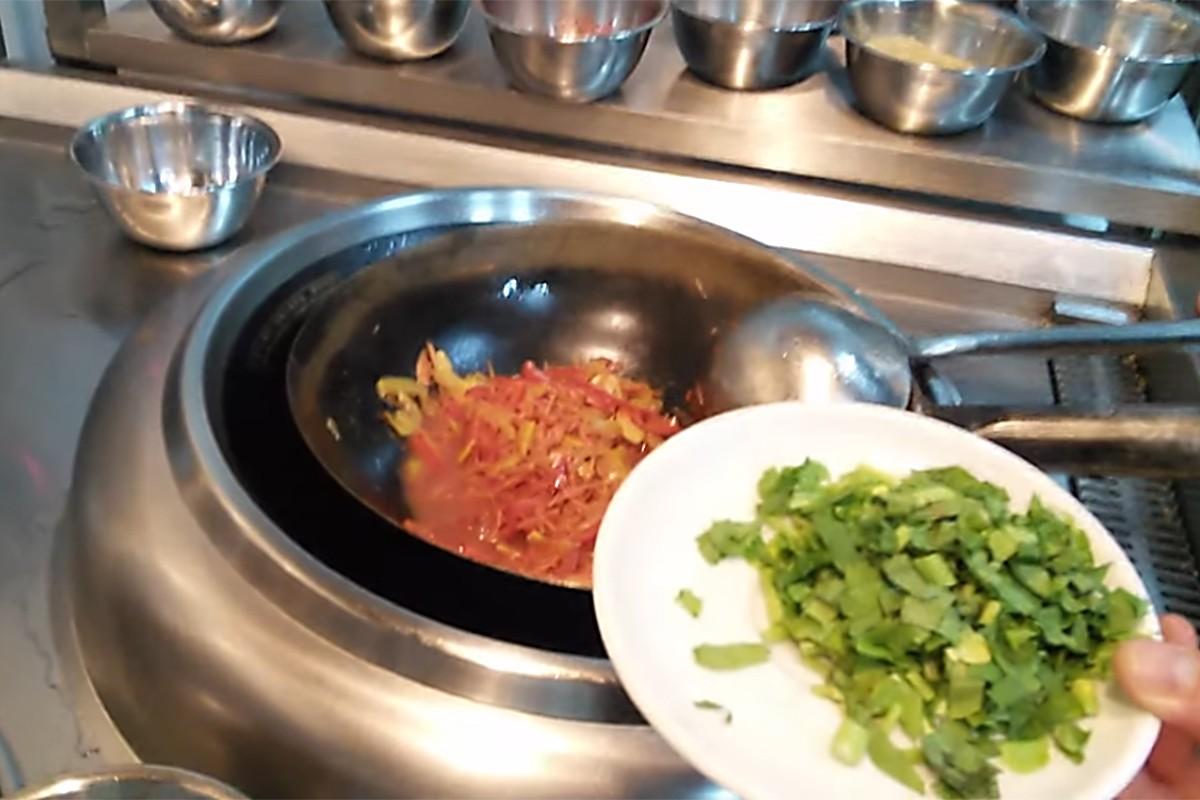
Add the thinly sliced bell pepper.
-
Step 24:
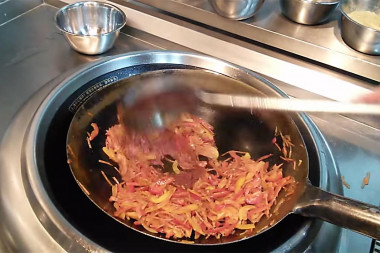
Stir and sauté.
-
Step 25:
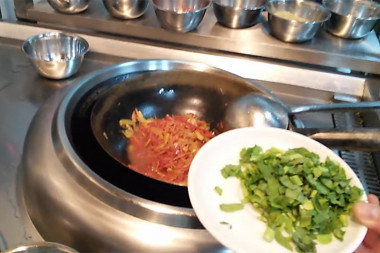
Stir in some chopped celery leaves.
-
Step 26:
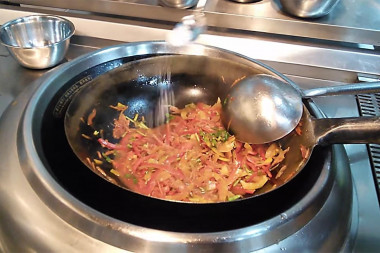
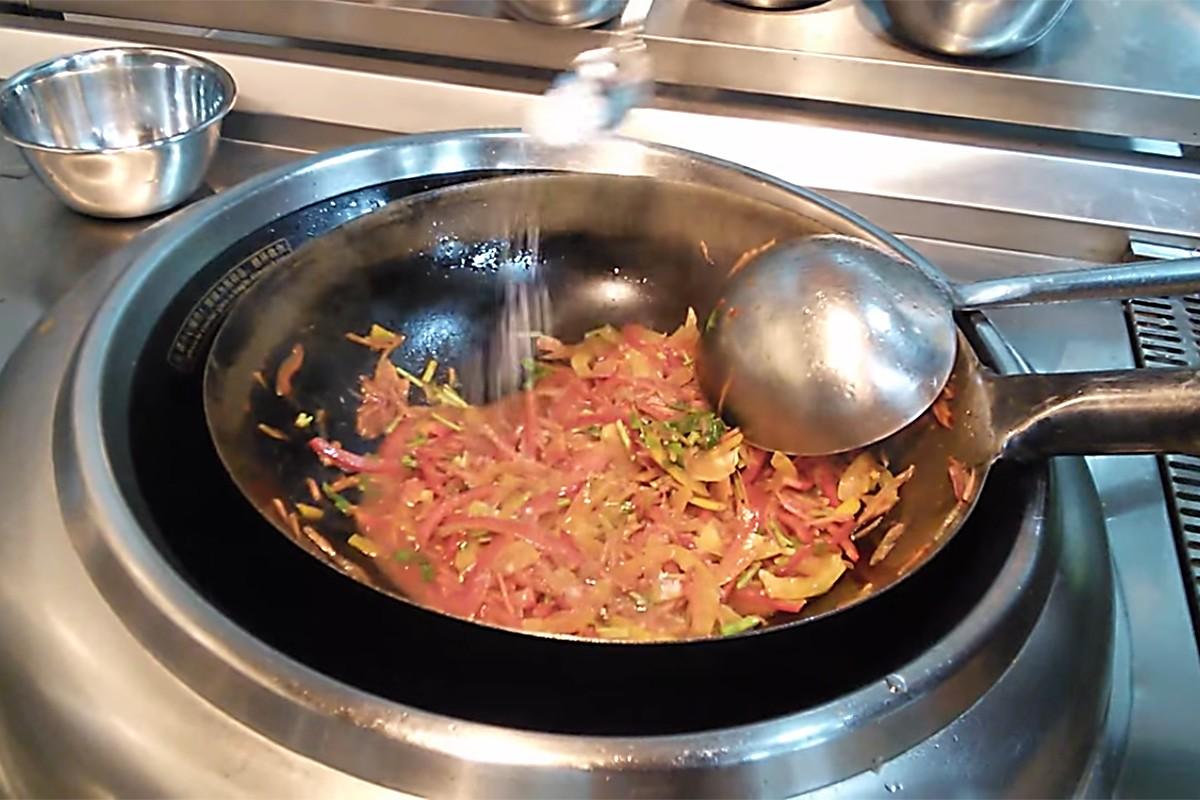
Add the salt.
-
Step 27:
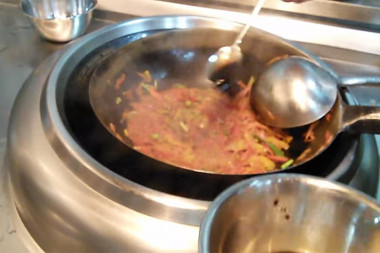
And 3 tablespoons of Chinese black vinegar.
-
Step 28:
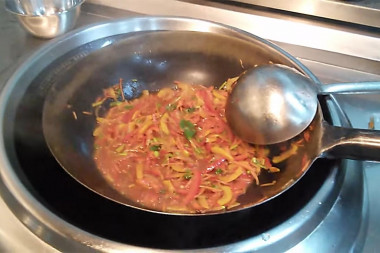
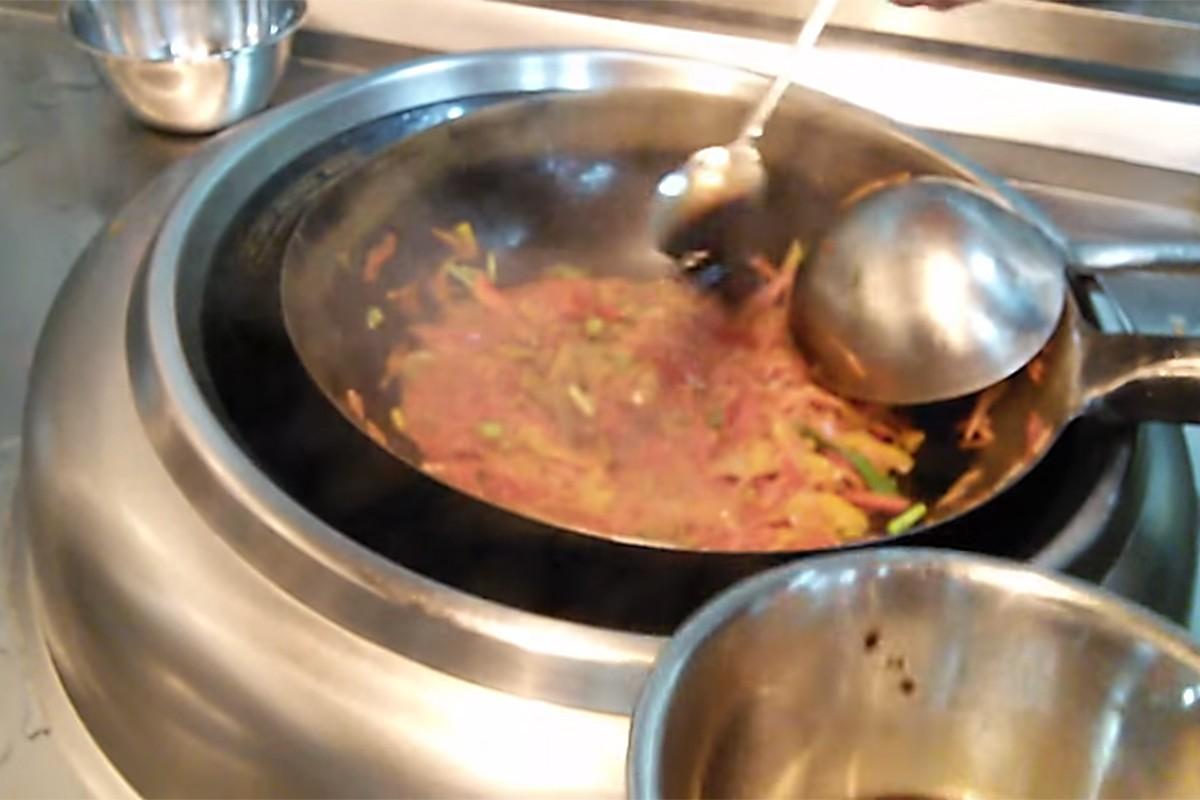
Stir in the tomato paste, a little water, and the black, hot, and white peppers. Simmer for a few minutes.
-
Step 29:
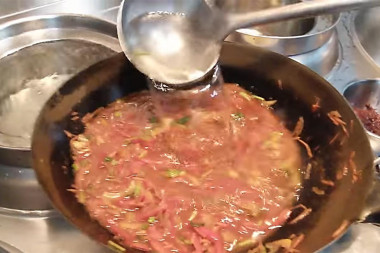
Add 2 to 2.5 liters (8-10 cups) of water, bring to a boil, and cook for 5 minutes.
-
Step 30:
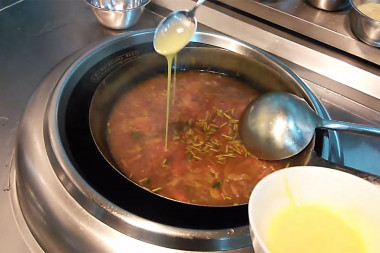
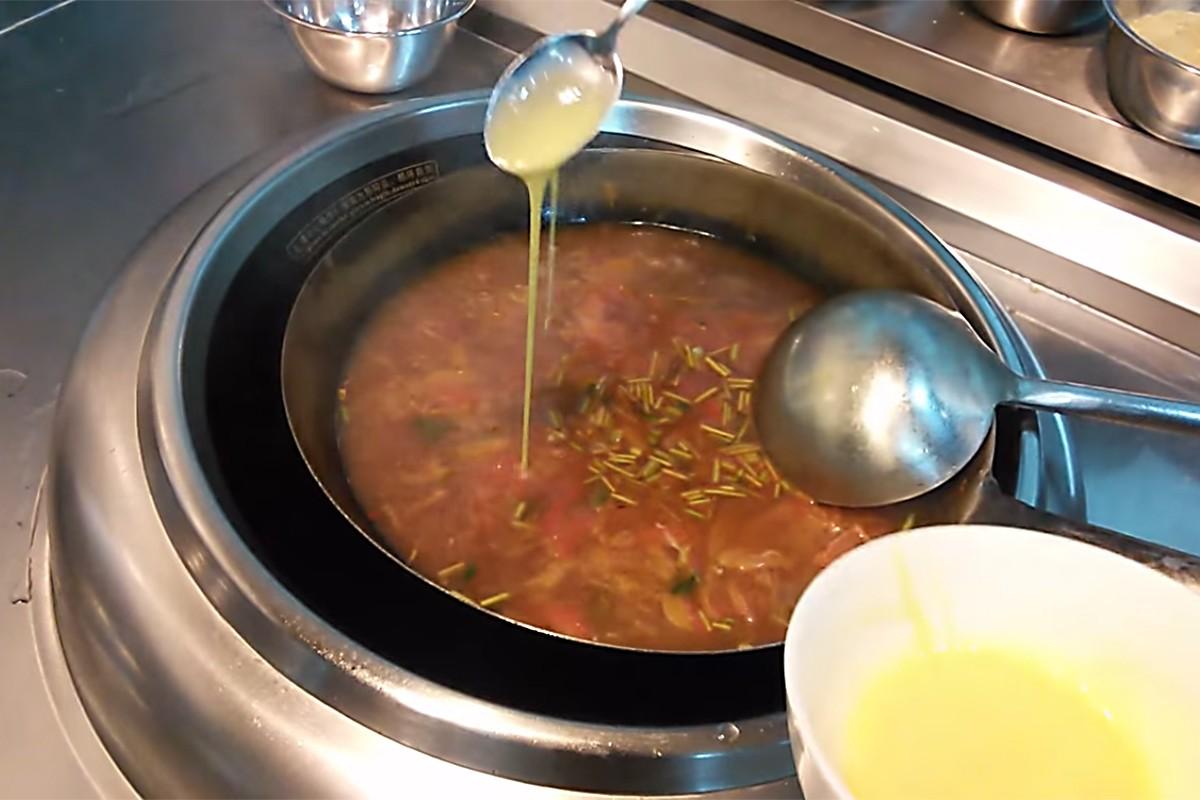
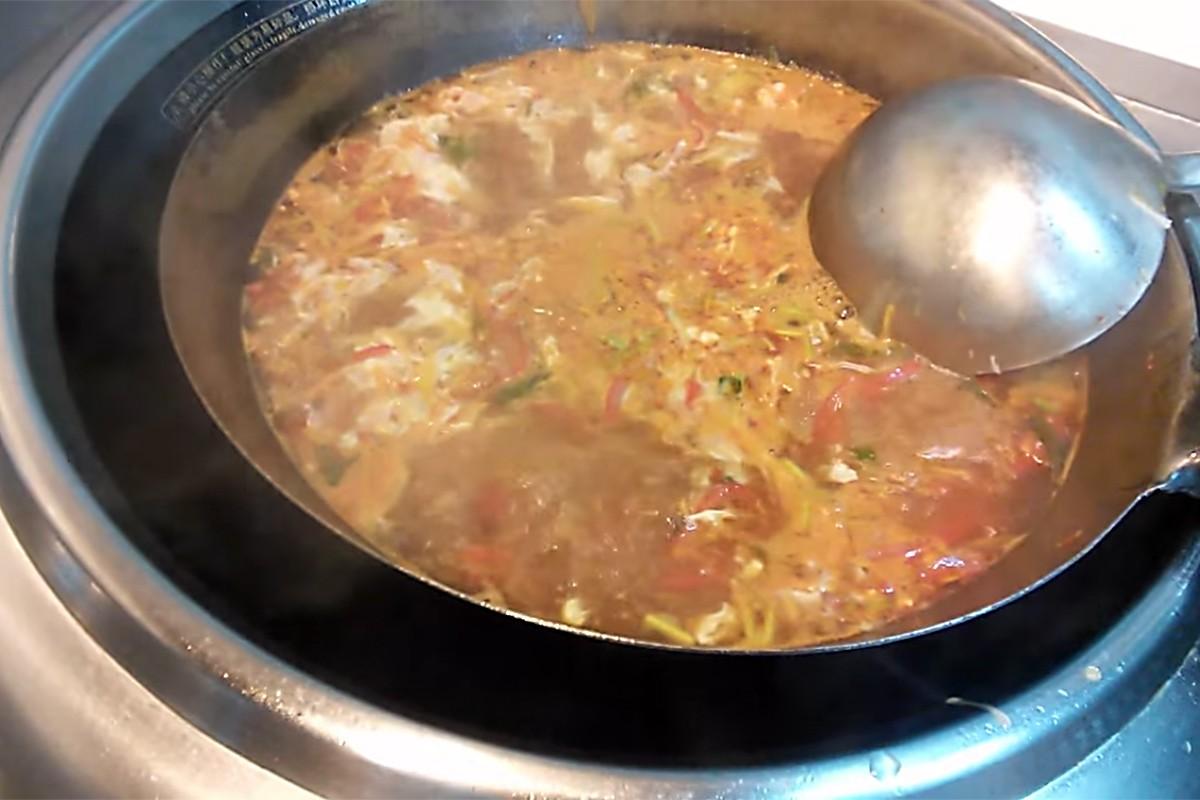
Once the gravy has simmered, drizzle in the beaten yolks a little at a time.
-
Step 31:
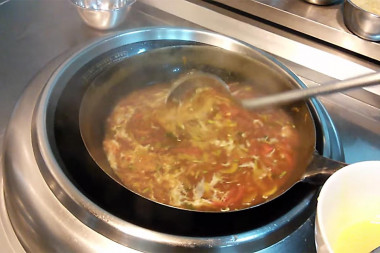
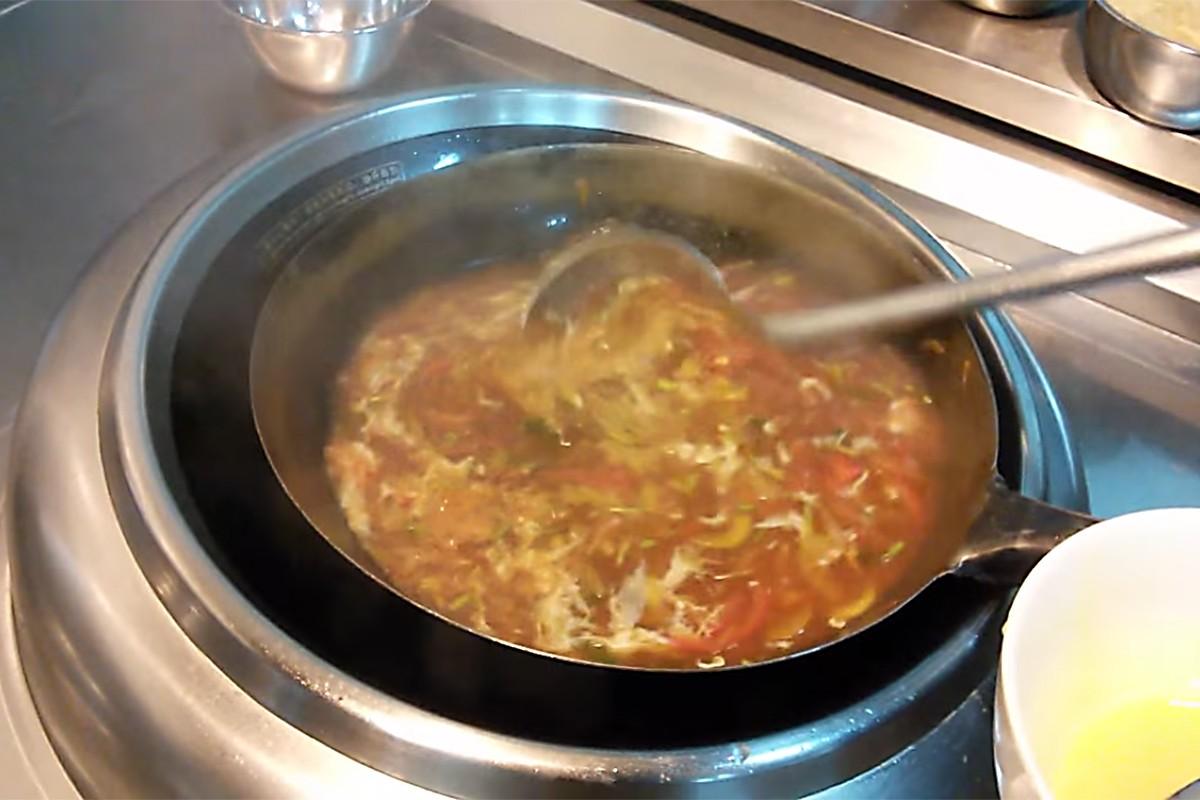
Keep stirring the whole time so they form fine threads.
-
Step 32:
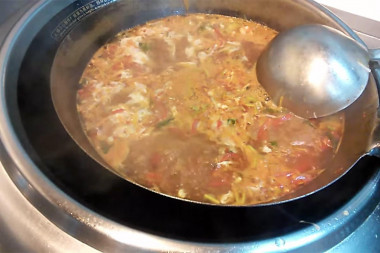
Simmer the gravy a bit longer, then take it off the heat and let it cool and steep.
-
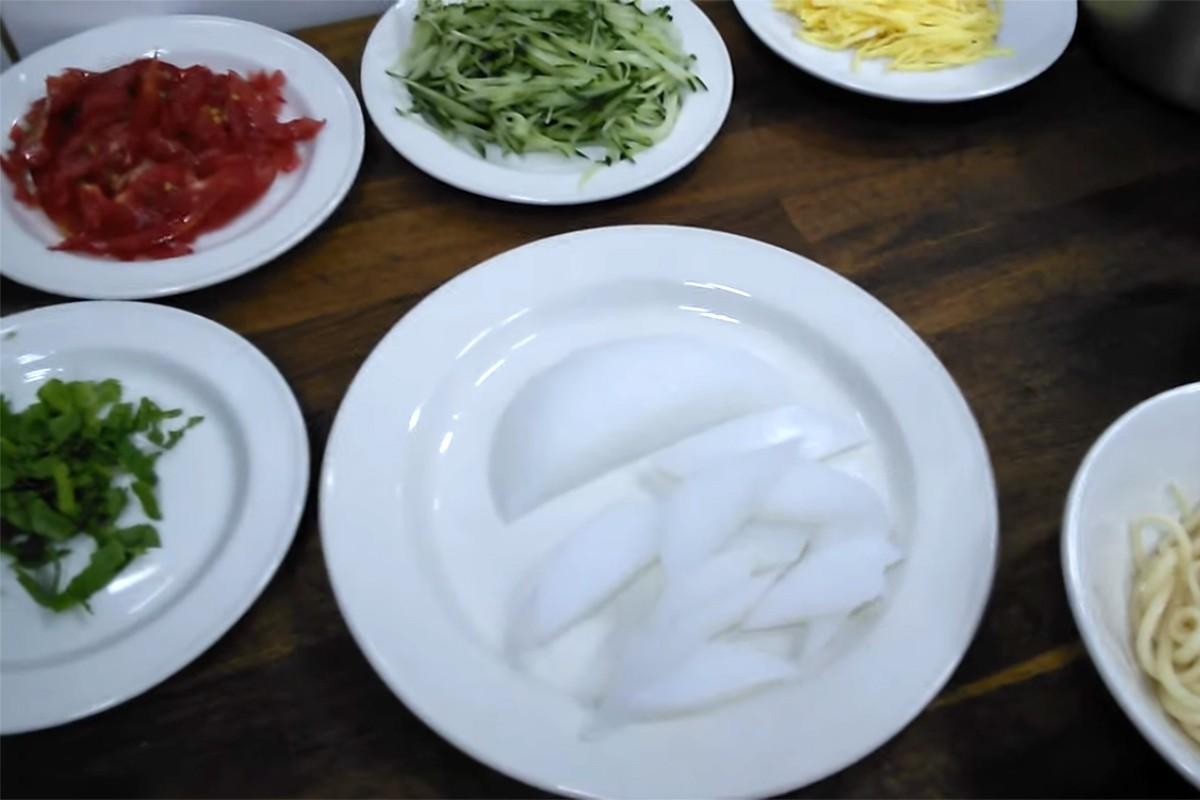
Step 33:
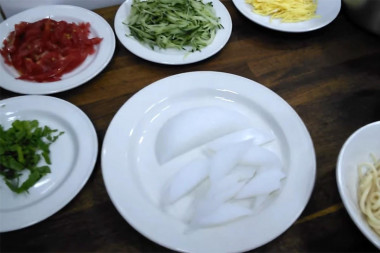
Just before serving, cook the noodles per the package directions. Ideally they're hand-pulled at home, like lagman. Cut the cucumbers and tomatoes into thin strips. Whisk the eggs with a splash of water, fry thin omelets, and slice them into noodle-like ribbons. Cut the set starch into strips or cubes, and chop the herbs.
-
Step 34:
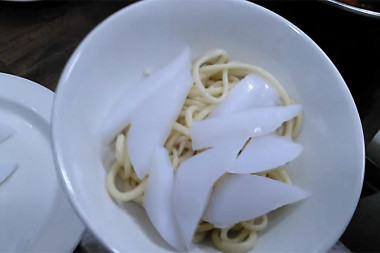
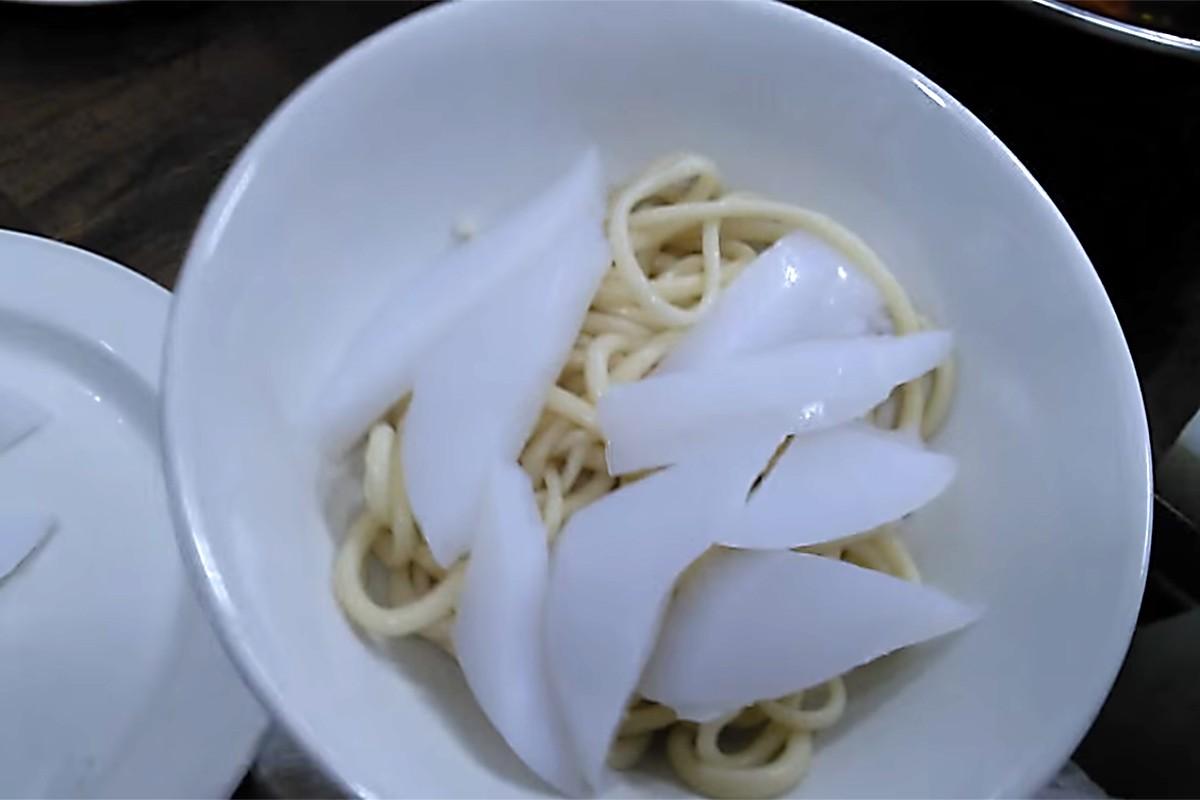
Put the noodles and starch in a bowl.
-
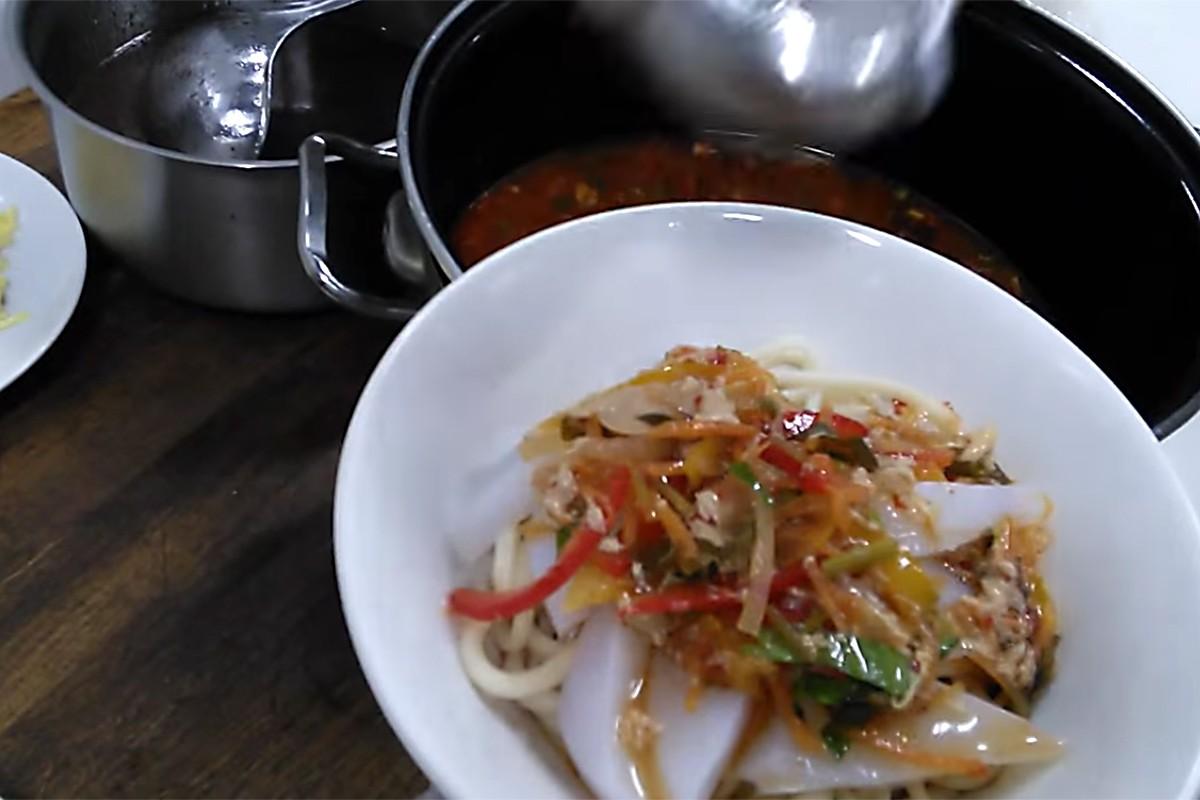
Step 35:
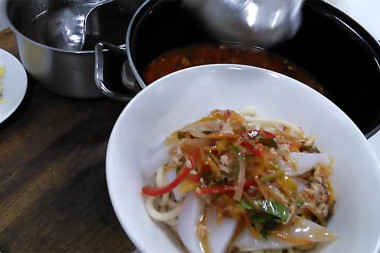
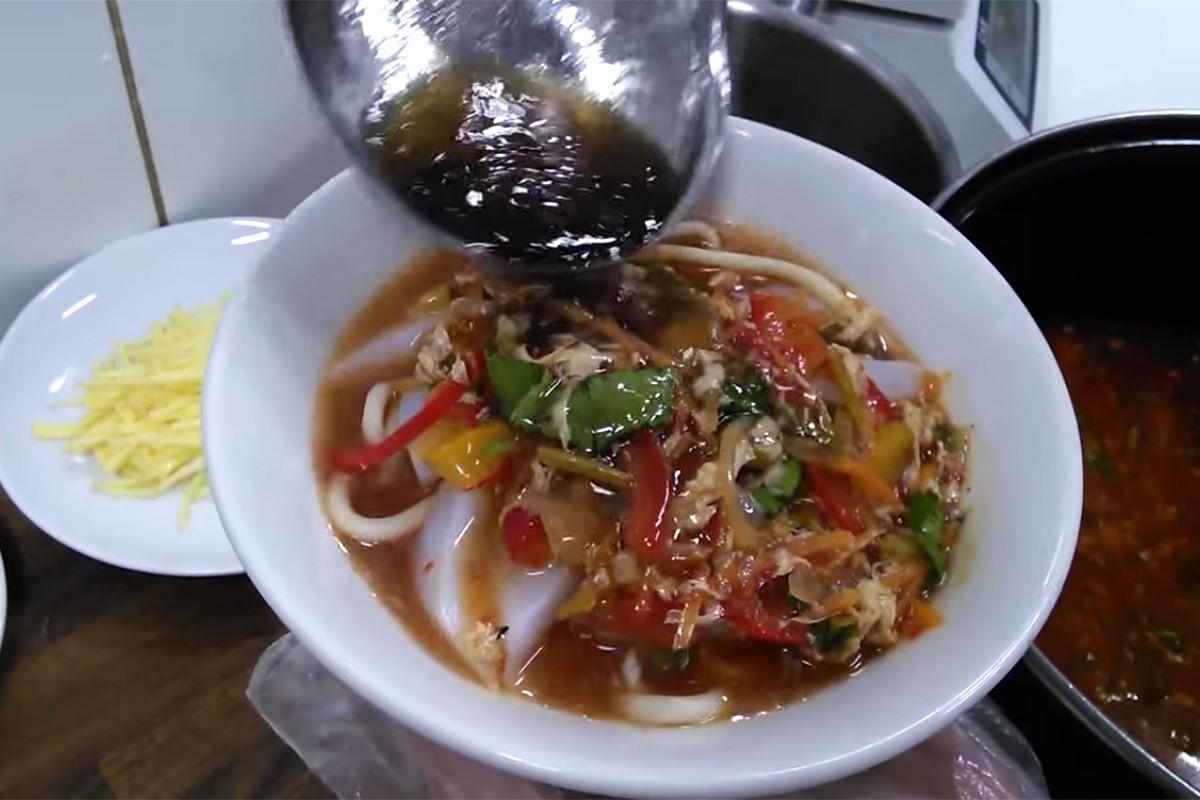
Then the vegetable gravy.
-
Step 36:
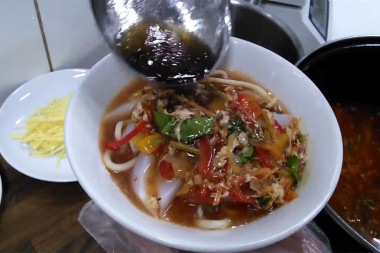
Followed by the vinegar dressing.
-
Step 37:
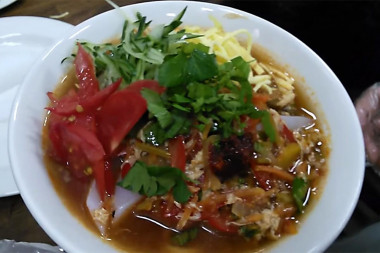
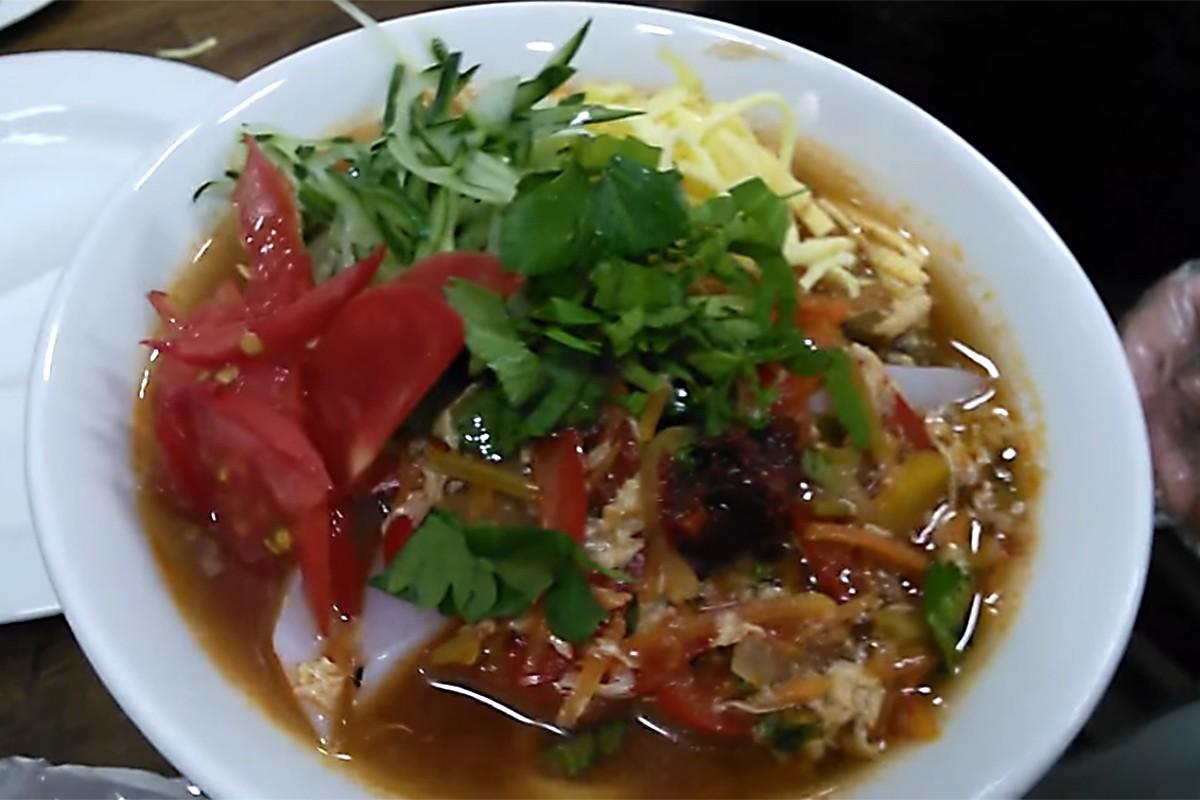
Arrange the tomato, cucumber, omelet ribbons, celery, and a little adjika on top. Serve and enjoy!

- Always wash your eggs before using them — even a shell that looks clean can carry harmful bacteria. A food-safe wash and a brush work best.
- Everyone's tolerance for salt, sweetness, bitterness, tang, and heat is different, so season to your own taste. If you're using a spice for the first time, remember that some are easy to overdo (chili pepper especially).
- The right pan matters — the wrong one can ruin even a great recipe. A wok is ideal here for the stir-fried components.
Caloric content of the products possible in the composition of the dish
- Tomatoes - 23 kcal/100g
- Fresh cucumbers - 15 kcal/100g
- Sweet pepper - 27 kcal/100g
- Carrots - 33 kcal/100g
- Dried carrots - 275 kcal/100g
- Boiled carrots - 25 kcal/100g
- Carnation - 323 kcal/100g
- Ginger - 80 kcal/100g
- Dry ginger - 347 kcal/100g
- Pickled ginger - 51 kcal/100g
- Ground black pepper - 255 kcal/100g
- Celery - 12 kcal/100g
- Celery Roots - 32 kcal/100g
- Granulated sugar - 398 kcal/100g
- Sugar - 398 kcal/100g
- Wine vinegar (3%) - 9 kcal/100g
- Vinegar 9% - 11 kcal/100g
- Balsamic vinegar - 88 kcal/100g
- Apple vinegar - 14 kcal/100g
- Vinegar - 11 kcal/100g
- Tomato paste - 28 kcal/100g
- Hot capsicum - 40 kcal/100g
- Adjika - 59 kcal/100g
- Salt - 0 kcal/100g
- Noodles - 135 kcal/100g
- Water - 0 kcal/100g
- Onion - 41 kcal/100g
- Sunflower oil - 898 kcal/100g
- Refined sunflower oil - 899 kcal/100g
- Ground hot pepper - 21 kcal/100g
- Egg yolks - 352 kcal/100g
- Chicken egg - 80 kcal/100g
- Corn starch - 329 kcal/100g
- Star anise - 337 kcal/100g
- White pepper - 0 kcal/100g
Similar recipes

- National cuisine
- Recipes from the chef
- Old recipes
- Soups
- Second course
- Eggs
- Vegetables
- Sweet
- Pasta
- Spices seasonings spices
- Fats and oils
- Other
- Ginger
- Аджика
- Бадьян
- Clove
- Pepper
- Celery
- Salt
- Vinegar
- Vegetable oil
- Water
- Starch
- Tomato paste
- Asian cuisine
- Frying
- Stewing
- In a frying pan
- Cooling
- Egg soup
- Vegetable soup vegetarian
- Tomato soup
- Meat-free soup
- Celery soup
- Soup without potatoes
- Pasta soup
- Eggs with tomatoes
- Chicken eggs
- Egg yolks
- From carrots
- From cucumbers
- From tomato
- From sweet pepper
- From onion
- Vegetarianism
- Recipes for lean dishes without butter
- Sugar
- From pasta products
- Noodles