Mashed-potato dough for pies
Pies with not a gram of eggs, yeast, or milk! This dough makes the most filling pies! A major advantage of mashed-potato dough is that it's meatless (lean). And the filling can be anything from sauerkraut, fried mushrooms, or Korean-style carrots to any ground meat or fish.



Cooking method
-
Step 1:
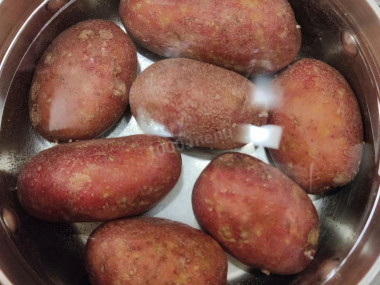
How do you make mashed-potato dough for pies? For the base, you can use potatoes boiled in their skins. Wash the potatoes, scrubbing the skin well with a vegetable brush. Pour cold water into a pot and boil the potatoes until tender. It took me about thirty minutes after the water came to a boil for the potatoes to get completely soft. But that time is approximate—go by how soft the potatoes are.
-
Step 2:
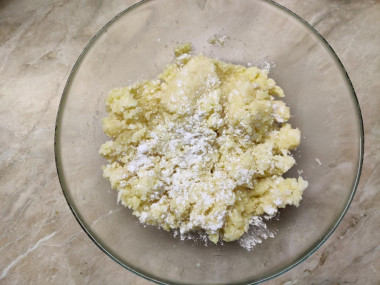
Once the potatoes are done, drain the water and let them cool. Peel them and mash them with a potato masher. Add the baking powder, salt, and a little sunflower oil—all to boost the flavor and improve how the dough behaves.
-
Step 3:
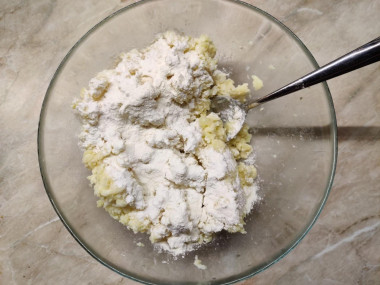
Add the flour in batches. I use all-purpose. Keep stirring the mixture so you can stop at the right moment and not overload the dough with flour, or it will turn bland and rubbery. The amount of flour given is what I use, but you may need less or more. How do you know when it's enough? Take a small piece of dough and press it between your fingers. If it sticks to your hands or crumbles, keep adding flour a little at a time.
-
Step 4:

Cover the dough with a towel or plastic wrap. I'd recommend letting it rest for ten minutes to make it easier to work with. But you can also start shaping the pies right away.
-
Step 5:
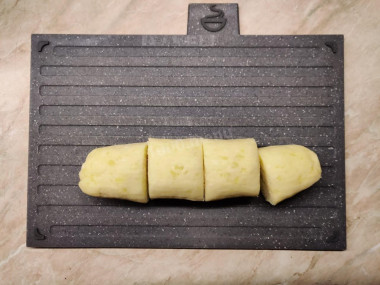
Roll the dough into a thick rope and cut it. I cut mine into four pieces, and my pies came out almost the size of a palm! I think you can safely divide the dough into six equal pieces for smaller pies. Then, right in your palm, shape an oval patty at least 1/4 inch (5 mm) thick so the dough doesn't tear, place a heaping tablespoon of filling in the center, and pinch the edges closed.


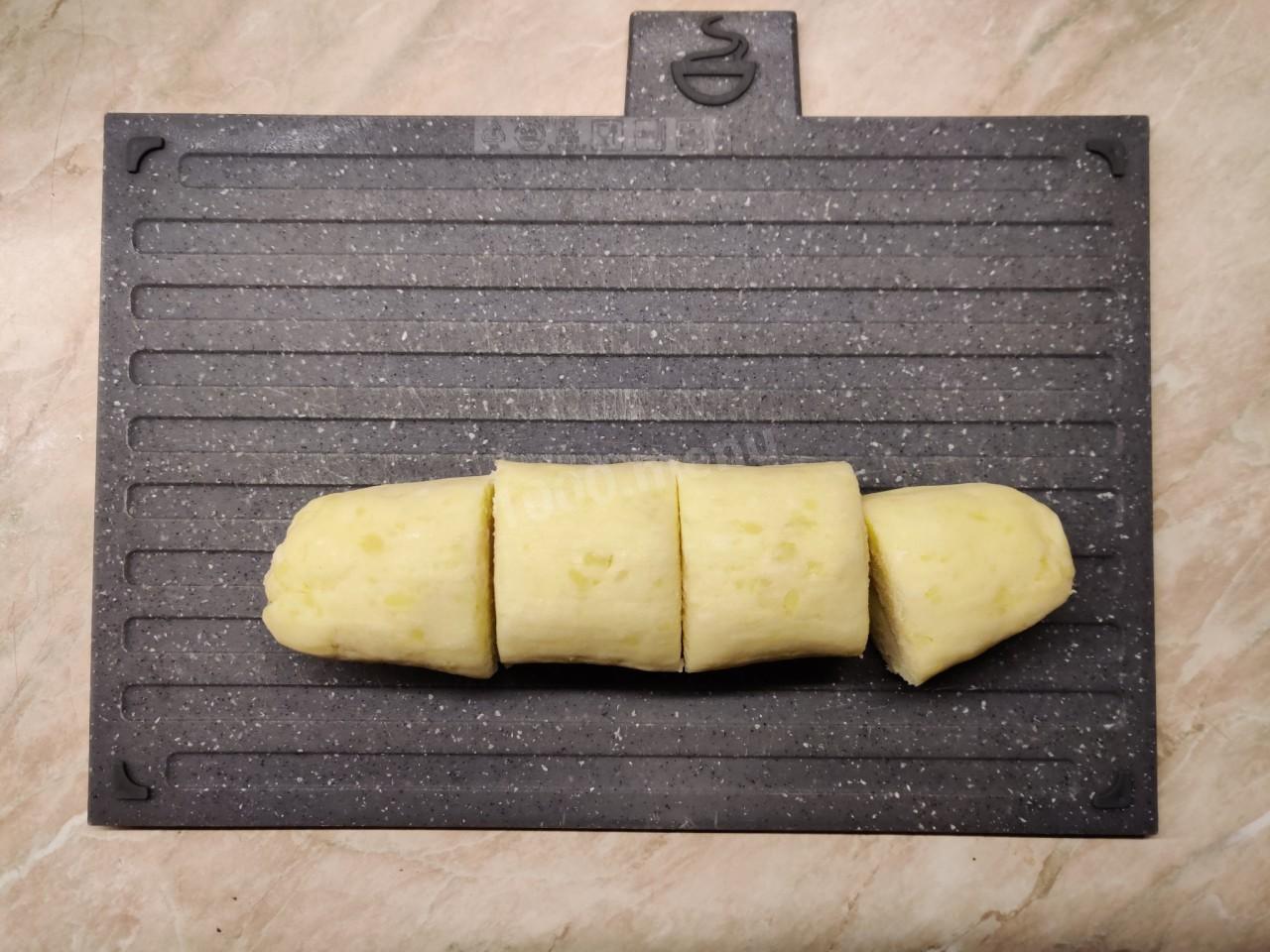
- You can also peel the potatoes for the base first and then boil them. The pies will taste a little different that way. For the filling, I chose ground chicken fried with onion. And I have to say, the pies came out as filling as could be! Even a man could easily fill up on just one. And oddly enough, my pies tasted like mashed potatoes with meat :) Enjoy your meal!
- Be prepared to need more or less flour than the recipe states. Go by the consistency of the dough rather than the exact amount of flour. To avoid mistakes, read up on flour and its properties!
- Can you swap baking powder for baking soda, how do you add each one correctly so your baking comes out fluffy, and how do you avoid an unpleasant soda aftertaste? Read all about it in the article "Baking powder or baking soda—which is better?"
- For how to choose the perfect pot for soup, porridge, or pickling cucumbers, read the article about pots.
Caloric content of the products possible in the composition of the dish
- Ripe potatoes - 80 kcal/100g
- Baked potatoes - 70 kcal/100g
- Mashed potatoes - 380 kcal/100g
- Boiled potatoes - 82 kcal/100g
- Jacket potatoes - 74 kcal/100g
- Fried potatoes - 192 kcal/100g
- Whole durum wheat flour, fortified - 333 kcal/100g
- Whole durum wheat flour, all-purpose - 364 kcal/100g
- Coarse-grind flour (krupchatka) - 348 kcal/100g
- Flour - 325 kcal/100g
- Salt - 0 kcal/100g
- Water - 0 kcal/100g
- Sunflower oil - 898 kcal/100g
- Refined sunflower oil - 899 kcal/100g
- Baking powder - 79 kcal/100g
Similar recipes
- National cuisine
- Dough recipe
- Side dishes
- Vegetables
- Flour
- Spices seasonings spices
- Fats and oils
- Other
- Salt
- Vegetable oil
- Water
- Baking powder
- Russian cuisine
- Cooking
- Dough without eggs
- Dough for patties
- Butter dough water
- Yeast-free dough
- Unleavened homemade dough
- Lean dough
- Mashed potatoes
- From potatoes
- No eggs
- Vegetarianism
- Recipes for lean dishes without butter