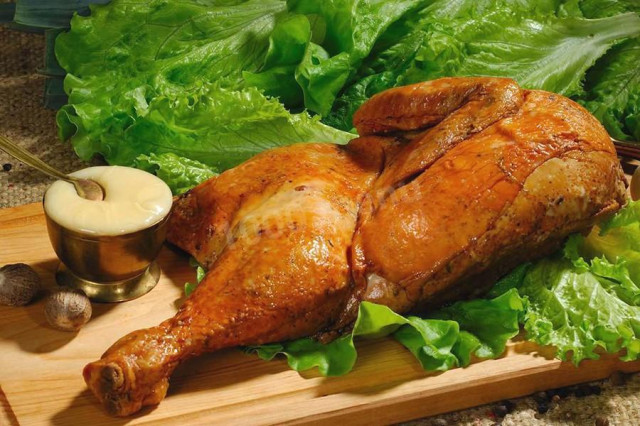
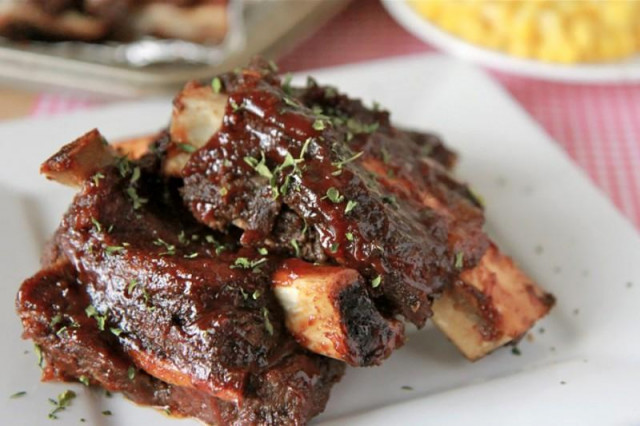
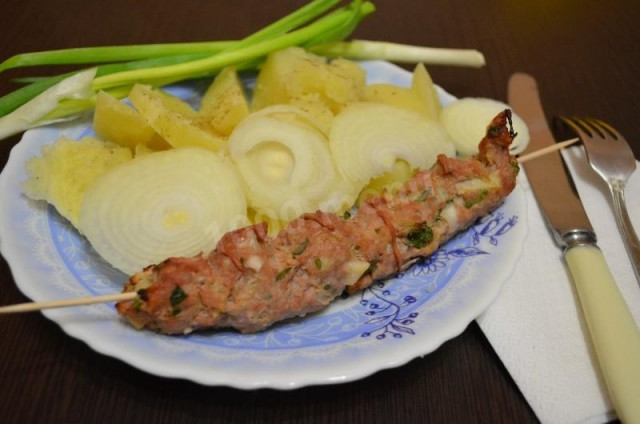
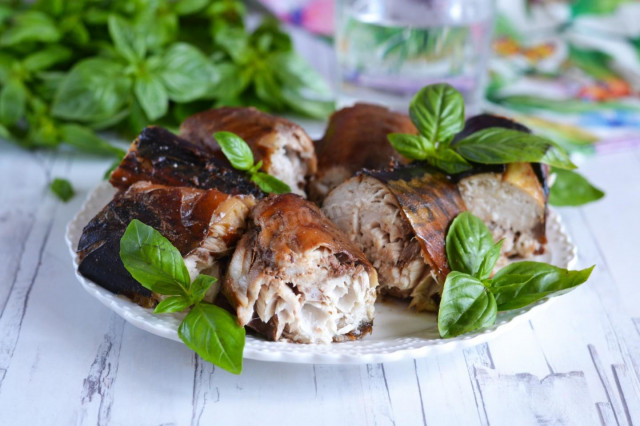
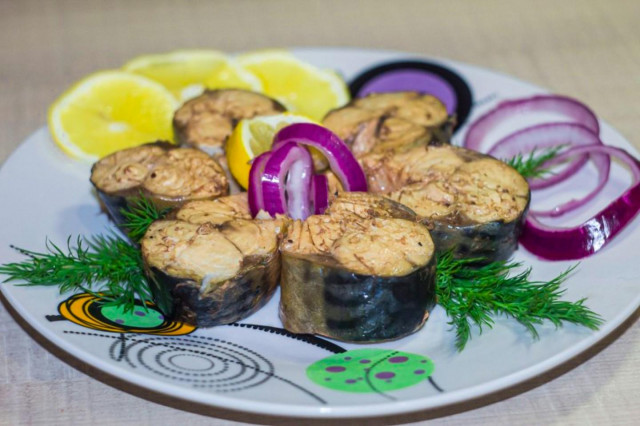

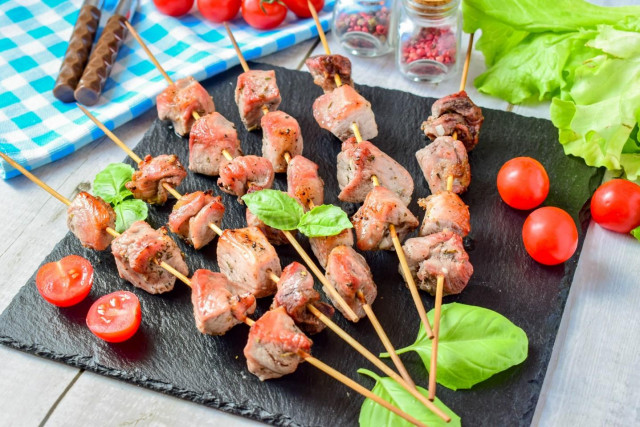
Liquid smoke comes in several forms: a dry powder, a concentrated viscous dark liquid, a spray and a marinade. All of them are added to dishes during cooking to give the food a light taste of natural smoking. So, with liquid smoke you can cook a soup with "smoked meats," as well as fish and meat.
Liquid smoke is most often found in recipes with these five products:
| Product | Number of recipes with a combination | Calories per 100g | Protein g per 100g | Fats g per 100g | Carbohydrates g per 100g |
|---|---|---|---|---|---|
| Onion skins | 4 | 0 | 0 | 0 | 0 |
| Green onion | 3 | 19 | 1.3 | 0 | 4.6 |
| Brown sugar | 3 | 394 | 0 | 0 | 99 |
| Lemon juice | 3 | 16 | 0.9 | 0 | 3 |
| Tomato sauce | 3 | 99 | 2.5 | 0 | 21.8 |
This ingredient is made from treated hardwood such as beech, alder or aspen. During condensation the wood is split into three components: two insoluble in water and one soluble. Ash and tar, two of the insoluble ones, are removed. What remains is a fraction that can be dissolved in water. It is purified once more, mainly of carcinogens. After that, flavorings, food additives and solvents in the form of alcohol, its derivatives and oils are added to it. In the next-to-last stage the concentrate matures in special barrels. In the final stage it is passed through a filter and poured into containers.
Different types of liquid smoke can vary in composition. The most common one: water — in the range of 11–92%, acids — 3–9.5%, phenols — 0.2–2.9%, carbolic compounds — 2.6–4.6%.
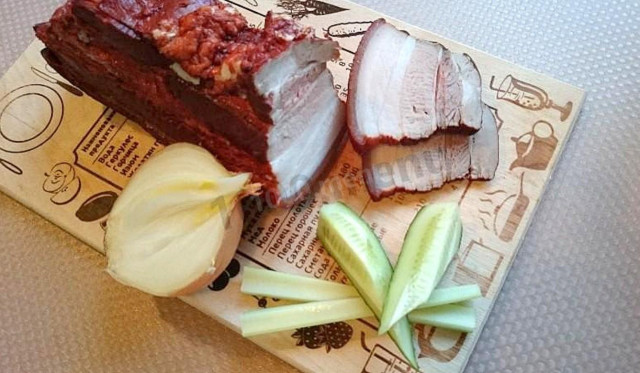
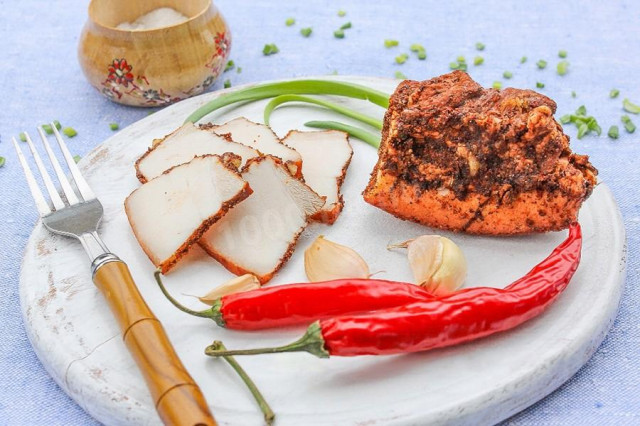
Besides the above, with liquid smoke you can make recipes for lard, cheese and any other products that can be smoked under natural conditions. Some store products are fully or partly "smoked" using liquid smoke.